MicaSense RedEdge-P Triple Sensor Expands Sensing Capabilities
.png)
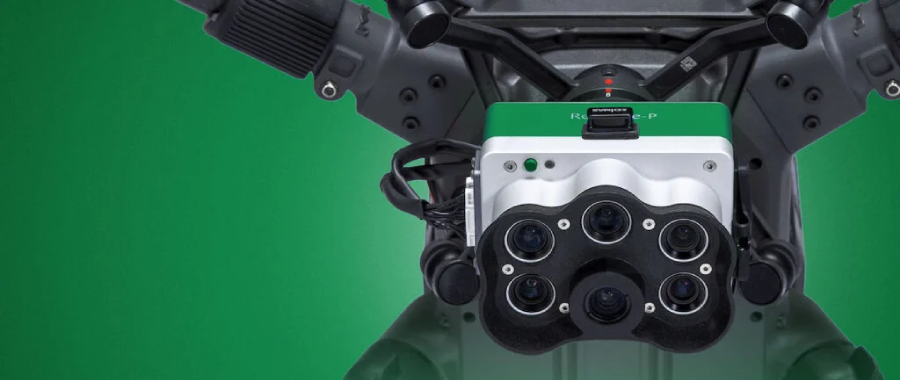
Shizuoka University has strengthened its environmental monitoring and forest research capabilities through the acquisition of a MicaSense™ RedEdge-P Green sensor, completing the institution’s new RedEdge-P Triple configuration. The upgrade gives researchers access to a 15-band superspectral imaging system designed for advanced ecological monitoring, precision forestry, and climate-related research.
The purchase follows earlier adoption of a RedEdge-P Dual system by Professor Atsuhiro Iio of the Faculty of Agriculture, Forest Science and Bioresource Sciences. In 2024, his team began using the dual-sensor setup to study the highly diverse vegetation of the Minami Alps Biosphere Reserve in southern Japan. Early projects focused on mapping vegetation mosaics and understanding how plant communities respond to environmental change across complex mountainous terrain.
Research findings from 2025 revealed measurable shifts in leaf-flushing phenology and increased signs of drought-related physiological stress, both linked to regional warming trends. These results underscored the need for more detailed spectral measurements capable of capturing subtle changes in plant biochemistry before visual symptoms appear. The newly completed Triple configuration addresses this need by adding scientifically targeted spectral bands, enabling richer and more precise analysis of vegetation health.
A major scientific goal for the system is the development of reliable airborne Photochemical Reflectance Index (PRI) measurements. PRI is increasingly recognized as a powerful indicator of plant light stress and photosynthetic efficiency. According to Professor Iio, conventional vegetation indices such as NDVI alone are no longer sufficient for high-precision ecological monitoring. By integrating PRI-related measurements, researchers hope to identify stress-sensitive tree species earlier and track physiological responses to heat and drought more effectively.
Beyond PRI, the 15-band sensor configuration allows researchers to monitor carotenoid, anthocyanin, and chlorophyll-a dynamics — pigments closely associated with plant aging, stress response, and seasonal senescence. This provides scientists with a more complete understanding of how forests adapt to short-term climate stresses and longer-term environmental change.
One of the most significant advantages of the RedEdge-P Triple system is accessibility. Historically, collecting airborne data with sufficient spectral resolution required expensive hyperspectral sensors or labor-intensive ground instruments. The new system delivers high signal-to-noise ratio measurements at approximately 2 cm per pixel resolution, packed into a lightweight, drone-compatible format. This makes advanced superspectral monitoring feasible for university research groups without requiring large budgets or specialized aircraft operations.
Bill Irby, CEO of EagleNXT, highlighted the system’s role in democratizing advanced environmental sensing. By combining affordability with scientific precision, the technology enables institutions to build high-quality datasets that support both academic discovery and practical applications.
The expanded spectral dataset also opens opportunities in machine learning and automated analysis. Researchers can generate multi-temporal data series suited for detecting weeds, plant diseases, and early signs of ecological degradation. These capabilities are increasingly valuable not only in forestry but also in precision agriculture, biodiversity conservation, and ecosystem management.
Worldwide, RedEdge-P Dual and Triple systems are already being applied to monitor alpine ecosystems, temperate forests, wetlands, grasslands, and high-value agricultural systems. In these environments, superspectral imaging helps researchers evaluate permafrost thaw, track snowmelt phenology, map disease spread, and assess nutrient status with unprecedented detail.
For Shizuoka University, the new sensor package represents more than just a technological upgrade. It supports a broader effort to understand forest resilience, carbon sequestration processes, and climate adaptation strategies at a time when ecosystems face accelerating environmental pressures. By combining airborne sensing with advanced analytics, the research team aims to produce insights that can inform both local conservation efforts and global climate science.
As environmental monitoring shifts toward data-driven, high-resolution observation, systems like the RedEdge-P Triple are likely to become essential tools for universities and research institutions seeking to bridge the gap between field ecology and remote sensing innovation.
.png)