Macron’s €2 Trillion Gamble. France Wants Big Tech and Foreign Firms to Pay for Europe’s Future

A €2 trillion budget.
That is the scale of the financial showdown brewing in Brussels, and at the center of it stands French President Emmanuel Macron with a simple message:
Don’t send the bill to European taxpayers. Send it to Big Tech, foreign polluters, and global corporations instead.
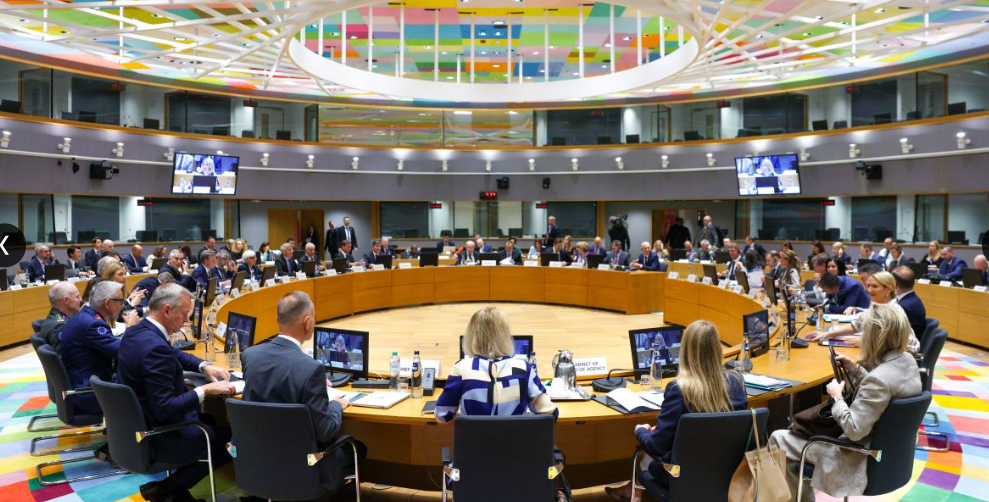
According to officials involved in the negotiations, France is aggressively pushing for a new generation of EU-wide taxes to finance the bloc’s next seven-year budget. What sounds like an obscure debate over fiscal policy is rapidly becoming one of the most consequential political fights in Europe.
Because behind the spreadsheets lies a far bigger question:
Can Europe afford strategic autonomy without asking its own governments to pay for it?
A €2 Trillion Reality Check
Europe's ambitions are expanding.
The EU wants to strengthen defense, accelerate green transition projects, finance industrial competitiveness, support Ukraine, invest in digital infrastructure, and manage growing geopolitical challenges.
None of that comes cheaply.
The next EU budget is expected to approach €2 trillion, making it the largest financial framework in the bloc's history.
The problem is obvious.
Some member states already face enormous fiscal pressures, rising debt, aging populations, and slowing economic growth.
France is one of them.
As one of Europe's most indebted major economies, Paris has limited room to dramatically increase its contributions to Brussels.
Yet France also has little interest in reducing the EU budget itself.
That creates a dilemma.
And Macron believes he has found a solution.
Tax Somebody Else
The French strategy can be summarized in three words:
Find new payers.
Rather than increasing payments from member states, France is encouraging Brussels to create new "own resources"—independent EU revenue streams collected directly from specific economic activities.
Possible targets include:
- Large technology companies
- Digital platforms
- Crypto firms
- Online gambling operators
- Carbon-intensive imports
- Foreign airlines
- Multinational corporations
Politically, it is an attractive proposition.
European voters rarely object to taxes imposed on foreign companies.
Governments struggling with budget deficits are equally enthusiastic when someone else appears willing to fund their priorities.
The challenge, however, is turning political popularity into unanimous EU approval.
The Silent Political Driver: 2027
While officials frame the debate around fiscal sustainability, domestic politics loom large.
France faces a presidential election in April 2027.
Rising EU contributions would create an easy target for Marine Le Pen's National Rally, which continues to perform strongly in national polling.
Every additional euro sent from Paris to Brussels risks becoming campaign ammunition.
For Macron's government, finding alternative sources of revenue is not simply economic policy.
It is political risk management.
The objective is straightforward: maintain European ambitions without handing populist movements an easy narrative.
A Digital Tax Means a Digital Fight
One proposal gaining support among France, Spain, and several European parliamentarians is a stronger levy on major digital companies.
The idea has circulated in Brussels for years.
The logic is simple.
Many policymakers believe large technology firms generate enormous revenues from European consumers while paying relatively little tax compared with their economic footprint.
A digital levy could generate significant new income while appealing to voters who increasingly question the power of global technology giants.
But such a move carries substantial geopolitical risks.
The United States has repeatedly opposed European digital taxes, arguing they disproportionately target American companies.
Berlin and other cautious governments fear any aggressive move could trigger commercial retaliation from Washington.
In other words, taxation could quickly become a diplomatic confrontation.
The Battle Over Sovereignty
This debate is ultimately about more than money.
It is about power.
Every new EU revenue stream strengthens Brussels' financial independence from national governments.
For federalists, that represents progress.
For skeptics, it represents a creeping transfer of authority away from national capitals.
That is why discussions over "own resources" consistently generate controversy.
The argument is no longer merely about how Europe spends money.
It is increasingly about whom Europe answers to.
Why France Refuses to Cut
Critics argue that France is trying to avoid difficult choices.
Supporters argue Paris is being pragmatic.
French agriculture remains one of the largest beneficiaries of EU farm subsidies, and France has traditionally defended these programs vigorously.
Reducing the EU budget would inevitably reopen debates over agricultural funding, cohesion programs, and industrial investments.
From Paris' perspective, preserving spending while diversifying revenue appears politically preferable.
One EU diplomat summarized the French approach bluntly:
"They're trying to have their cake and eat it."
The intriguing question is whether the rest of Europe agrees.
A Defining Moment for Europe
The negotiations are expected to intensify over the coming months, with Ireland tasked with accelerating discussions and European leaders hoping for a broader agreement before the end of the year.
What happens next could shape Europe's economic trajectory for the next decade.
If Macron succeeds, the EU will gain unprecedented independent revenue streams and potentially reduce reliance on national contributions.
If he fails, governments may face an uncomfortable choice: contribute more money or scale back Europe’s ambitions.
For now, France is betting that taxing Big Tech, foreign corporations, and cross-border industries is politically easier than asking European taxpayers for more.
The coming budget battle will reveal whether the rest of Europe shares that view.