Hunting Drones by the Pixel - How Teledyne FLIR’s New Software Pushes C‑UAS to the Edge

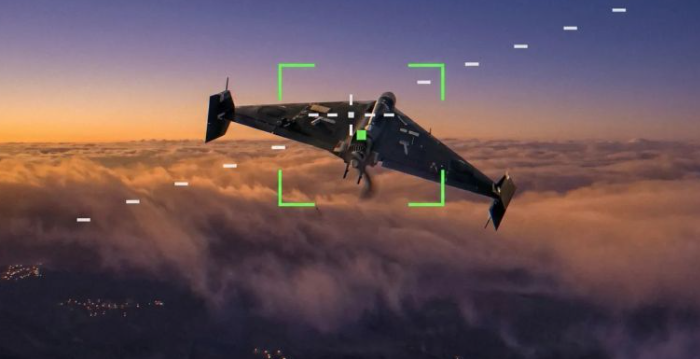
Teledyne FLIR OEM unveiled Prism C‑UAS, a counter‑unmanned aircraft system software stack designed to detect and track small, fast, and hard‑to‑see drones earlier than conventional systems allow. The company says the system can detect drones with fewer than four pixels on target, dramatically extending the time operators have to react before a threat closes the distance.
That early warning window is becoming critical.
Unauthorized drone activity has surged globally. According to figures cited by Teledyne FLIR OEM, the FAA records more than 100 drone incursions per month near U.S. airports, while the U.S. Department of Homeland Security detected over 60,000 drone flights near the U.S.–Mexico border in the final six months of 2024. What was once a regulatory nuisance has rapidly evolved into a persistent security challenge impacting airports, borders, military installations, and critical infrastructure.
Prism C‑UAS is built around a simple but hard problem: how to reliably find something that barely registers on a sensor.
The software combines patented thermal infrared image signal processing with AI‑driven perception, extracting usable target information from extremely low‑signal imagery. Rather than relying on larger or more expensive sensors, Prism focuses on improving the quality and interpretability of the raw data itself.
Under the hood, the system applies denoise, local contrast enhancement, and upsampling algorithms to increase signal‑to‑noise ratio and extend moving target indicator (MTI) detection range. Once a candidate target is identified, it is passed to an AI‑based object detector and a multi‑object tracking engine, designed to maintain persistent tracks while reducing false positives in cluttered environments.
According to Teledyne FLIR OEM, the software is optimized specifically for small, fast, and maneuvering drone targets, which are often the most difficult to detect at long range using traditional electro‑optical or radar‑centric approaches.
“Software has become a defining performance differentiator in today’s C‑UAS environment,” said Jared Faraudo, vice president of product management at Teledyne FLIR OEM. “Prism C‑UAS enables sub two‑by‑two‑pixel drone detection and tracking, providing a significant increase in drone detection range over conventional systems”.
That focus on software reflects a broader shift in counter‑drone architectures. Rather than fielding monolithic, fixed systems, many operators are moving toward layered, multisensor defenses that combine thermal, visible, and other modalities. Prism C‑UAS is designed to slot directly into those architectures.
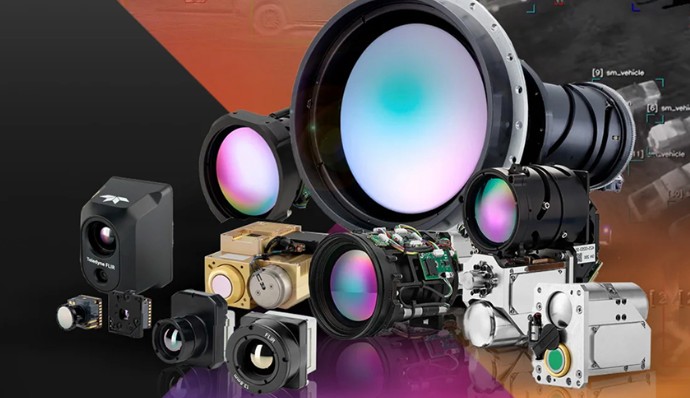
On the integration side, the software natively supports Teledyne FLIR OEM’s Boson+ and Neutrino infrared camera families, along with select commercial off‑the‑shelf visible cameras for multispectral configurations. The company says this approach reduces integration risk and allows system developers to deploy Prism across a wide range of existing and future C‑UAS platforms.
Crucially, Prism C‑UAS is a detection and tracking layer—not an effector. By extending detection range, it gives downstream systems more time to cue sensors, trigger electronic countermeasures, or hand off targets to kinetic solutions, depending on the operator’s rules of engagement.
Teledyne FLIR OEM is publicly demonstrating Prism C‑UAS this week at SPIE Defense + Commercial Sensing 2026, running April 28–30 at the Gaylord National Resort and Convention Center in National Harbor, Maryland.
In a crowded counter‑drone market often dominated by hardware claims, Prism C‑UAS makes a quieter but sharper assertion: that the future of airspace defense will be won not by bigger sensors, but by smarter pixels.