Japan’s Cardboard Drones Signal a Radical Rethink of Modern Airpower

At first glance, it sounds almost absurd: a military drone made of cardboard.
Not composites. Not carbon fiber. Cardboard.
Yet Japan’s latest move suggests that the future of warfare may belong less to exquisite technology and more to smart disposability.
This spring, Japan’s Defense Minister Shinjiro Koizumi met with Air Kamui, a domestic startup producing low-cost drones built primarily from corrugated cardboard. The meeting was more than a novelty photo-op. The Japan Maritime Self-Defense Force has already begun using Air Kamui’s drones as aerial targets, quietly marking the latest step in Tokyo’s broader shift toward expendable, mass-produced unmanned systems.
The platform at the center of attention is the AirKamuy 150. Flat-packed, assembled in about five minutes, and priced around $2,500, it costs a fraction of conventional fixed-wing drones. Its airframe—coated cardboard designed to resist moisture—is lightweight, biodegradable, and easy to produce in large volumes using standard manufacturing facilities.
That choice of material isn’t about aesthetics. It’s strategy.
Cardboard reflects far less radar energy than metal or advanced composites, giving the drone a lower radar signature and making it harder to detect. While hardly invisible, the platform exploits a critical weakness in many air-defense systems: they’re built to hunt expensive aircraft, not disposable objects that cost less than the missile used to intercept them.
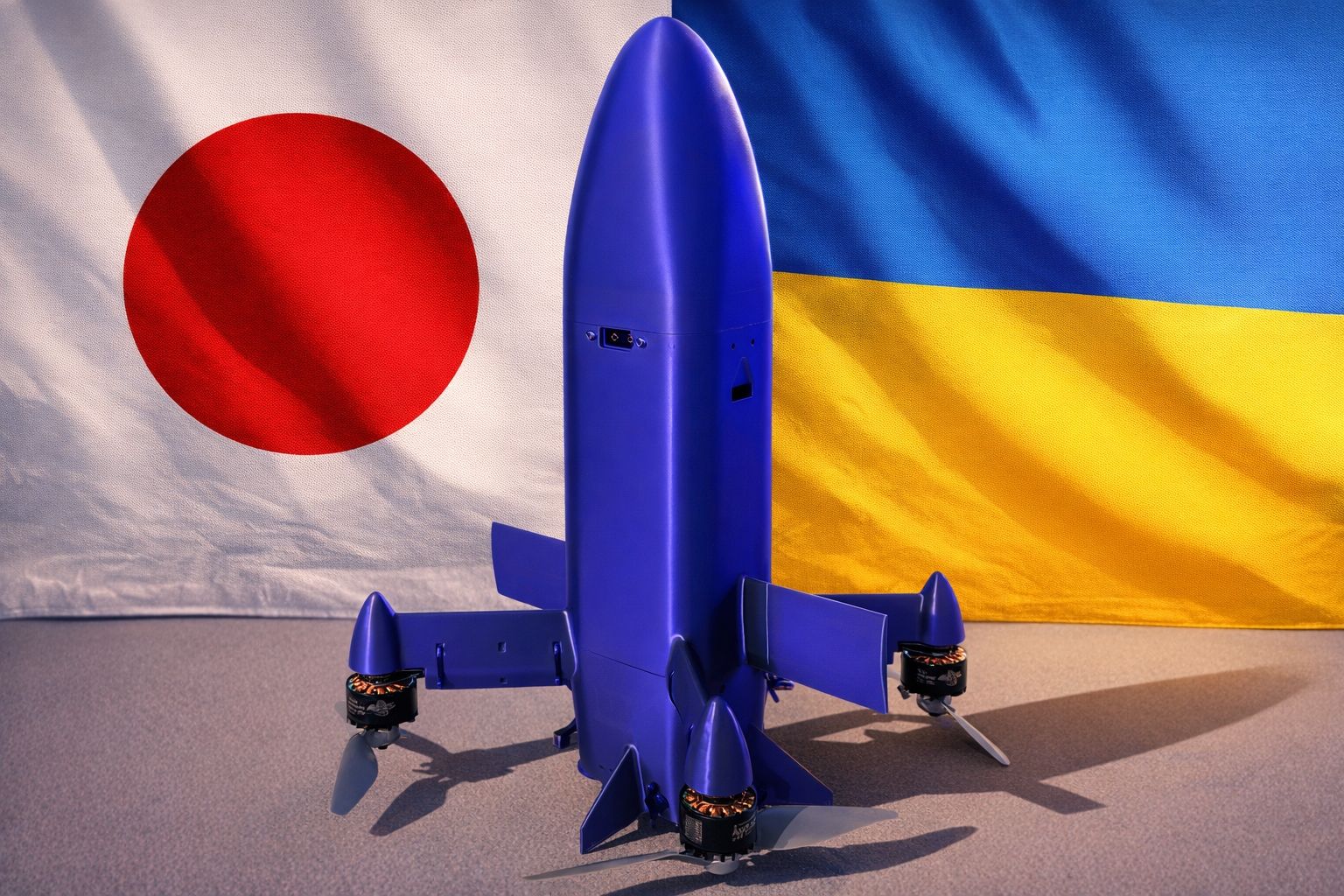
For militaries worldwide, the war in Ukraine delivered a blunt lesson. Precision and sophistication matter—but quantity, survivability through attrition, and economic asymmetry may matter more. Losing a multi-million-dollar interceptor to destroy a drone worth a few thousand dollars is a losing equation.
Japan appears to be taking that lesson seriously.
Today, the AirKamuy 150 is used primarily as a training target, enabling naval units to conduct more frequent and realistic gunnery and missile-defense exercises without worrying about recovery. But defense planners are already looking beyond training.
Its low observable characteristics could lend themselves to reconnaissance missions, particularly in contested environments where detection risk is high and asset loss is acceptable. In such scenarios, the drone’s disposability becomes an advantage, not a liability.
This approach reflects a broader doctrinal shift. Japan is moving away from isolated drone acquisitions and toward full-spectrum integration of unmanned systems—from doctrine and training to logistics and sustained deployment. Dedicated drone offices within the Ground Self-Defense Force and the development of concepts like SHIELD (Synchronized, Hybrid, Integrated and Enhanced Littoral Defense) point to a future defined by dense layers of sensors and unmanned platforms monitoring Japan’s southwestern island chain.
Low-cost drones fit naturally into that vision.
Air Kamui’s system also aligns with Japan’s industrial policy. The drones are domestically produced, rely on common materials, and reduce dependence on complex foreign supply chains. That theme is reinforced by parallel efforts like the “Shiraha” project, where Japanese startups are experimenting with wooden and other unconventional airframes priced as low as a few hundred dollars.
Critics will point out the obvious limitations. Cardboard drones are vulnerable to weather, carry modest payloads, and lack the endurance or flexibility of more advanced platforms. But Japan isn’t trying to replace high-end UAVs. It’s supplementing them—with systems designed to be lost, replaced, and redeployed at scale.
Crucially, the same characteristics that make these drones attractive to the military give them dual-use potential. Similar platforms are already being explored for disaster response, search-and-rescue, and rapid damage assessment, particularly in dangerous or GPS-denied environments.
In an era where defense innovation often means adding more complexity, Japan is betting on something radically simpler.
Sometimes, the most disruptive technology isn’t new at all.
It’s just cheaper—and everywhere.