Japanese company Terra Drone and Ukrainian startup AmazingDrones sell interceptor drones to Persian Gulf

For decades, air defense has followed a simple rule: expensive threats demand even more expensive answers.
That logic is now collapsing.
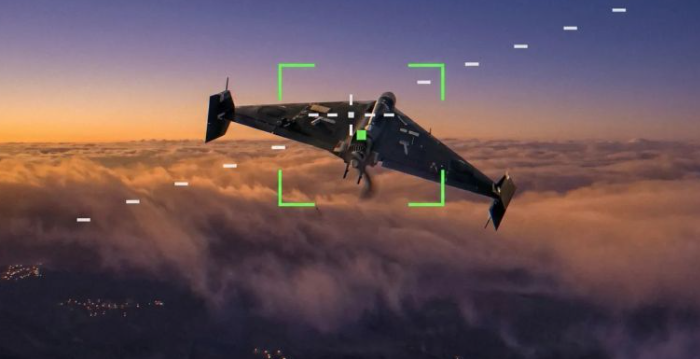
A Japanese‑Ukrainian partnership has unveiled a weapon that costs roughly $2,500 yet targets drones that routinely force defenders to fire multi‑million‑dollar interceptor missiles. The system—called Terra A1—may represent one of the most disruptive shifts in modern air defense economics.
The drone is being developed through a collaboration between Terra Drone Corporation, a Tokyo‑listed unmanned systems company, and Amazing Drones, a Ukrainian startup whose technology has been shaped inside an active war zone.
Their target is clear: one‑way attack drones, such as the Iranian‑designed Shahed systems that have reshaped both the war in Ukraine and the security calculus of the Middle East.
The imbalance is brutal. A single Patriot interceptor missile can cost around $4 million, while a Shahed drone is estimated to cost tens of thousands of dollars. Firing one at the other makes sense tactically—but not economically. Over time, defenders lose simply by running out of interceptors.
That is the problem Terra A1 is designed to answer.
According to company statements and media reporting, the electric‑powered interceptor drone can reach speeds of up to 300 km/h, has a 32‑kilometer range, and is built to detect, pursue, and neutralize incoming drones within a single short mission window.
What makes this significant is not individual performance. It is scale.
Unlike missile systems—complex, scarce, and politically sensitive—interceptor drones can be mass‑produced, rapidly deployed, and replaced without strategic hesitation. In the words of Terra Drone’s leadership, modern defense is shifting toward “countering low-cost threats with low-cost means”.
This shift is not theoretical.
Saudi Arabia and the United Arab Emirates are among the countries reportedly exploring the Terra A1 as they face persistent long‑range drone threats that have strained missile stockpiles across the region.
The renewed conflict involving Iran has only sharpened that interest. During the initial phase of the Middle East escalation, large numbers of inexpensive drones forced defenders to expend high‑value interceptors at an unsustainable rate, exposing a structural weakness in existing air defense doctrine.
Ukraine remains central to this evolution. The Terra A1 has not yet been fully battle‑tested but is expected to be delivered to Ukrainian forces for operational trials, continuing the country’s role as the world’s most intense real‑world laboratory for drone warfare.
The implications extend well beyond Ukraine or the Gulf.
If interceptor drones can reliably neutralize mass‑produced attackers, air defense will shift from boutique systems toward distributed, attritable networks. Defense will no longer hinge on a limited number of exquisite missiles—but on swarms of cheap, specialized platforms operating at scale.
That transition is already underway.
The drone era is no longer defined solely by how cheaply attackers can fly.
It is increasingly defined by how cheaply defenders can stop them.
And in that new equation, a $2,500 drone may matter more than a $4 million missile.