IPET Systems I Series Motors - The Core Power Behind 2+ Hours of Flight Endurance

As battery technology approaches practical limits, a new truth is emerging—one that is redefining drone engineering from the inside out:
endurance is no longer about energy storage. It’s about energy efficiency.
And increasingly, the battlefield for that efficiency sits inside the propulsion system itself.
The End of the Battery Illusion
Battery density has improved steadily over the past decade, but not exponentially. For engineers building long-endurance UAVs, the gains are now incremental—and painfully predictable.
This creates a hard ceiling.
Adding more battery mass often leads to diminishing returns:
- Increased weight reduces efficiency
- Larger structures increase drag
- Thermal loads grow harder to manage
In other words, more energy doesn’t automatically translate into more flight time.
This is where propulsion becomes decisive.
Efficiency Is the New Endurance
The industry is shifting focus toward a more nuanced question:
How efficiently can a UAV convert electrical energy into thrust?
That depends on a combination of factors:
- Motor weight and integration
- Aerodynamic profile of the platform
- Electrical efficiency of the system
- Thermal stability over long-duration missions
The companies that solve this equation aren’t just improving drones—they are redefining what’s possible in long-endurance operations.
Rethinking the Architecture
One of the most significant shifts is architectural.
Traditional UAV propulsion systems separate the motor and the electronic speed controller (ESC). This approach is modular—but inefficient.
It introduces:
- Extra wiring and connectors
- Additional structural weight
- Increased energy losses
- Larger physical profiles
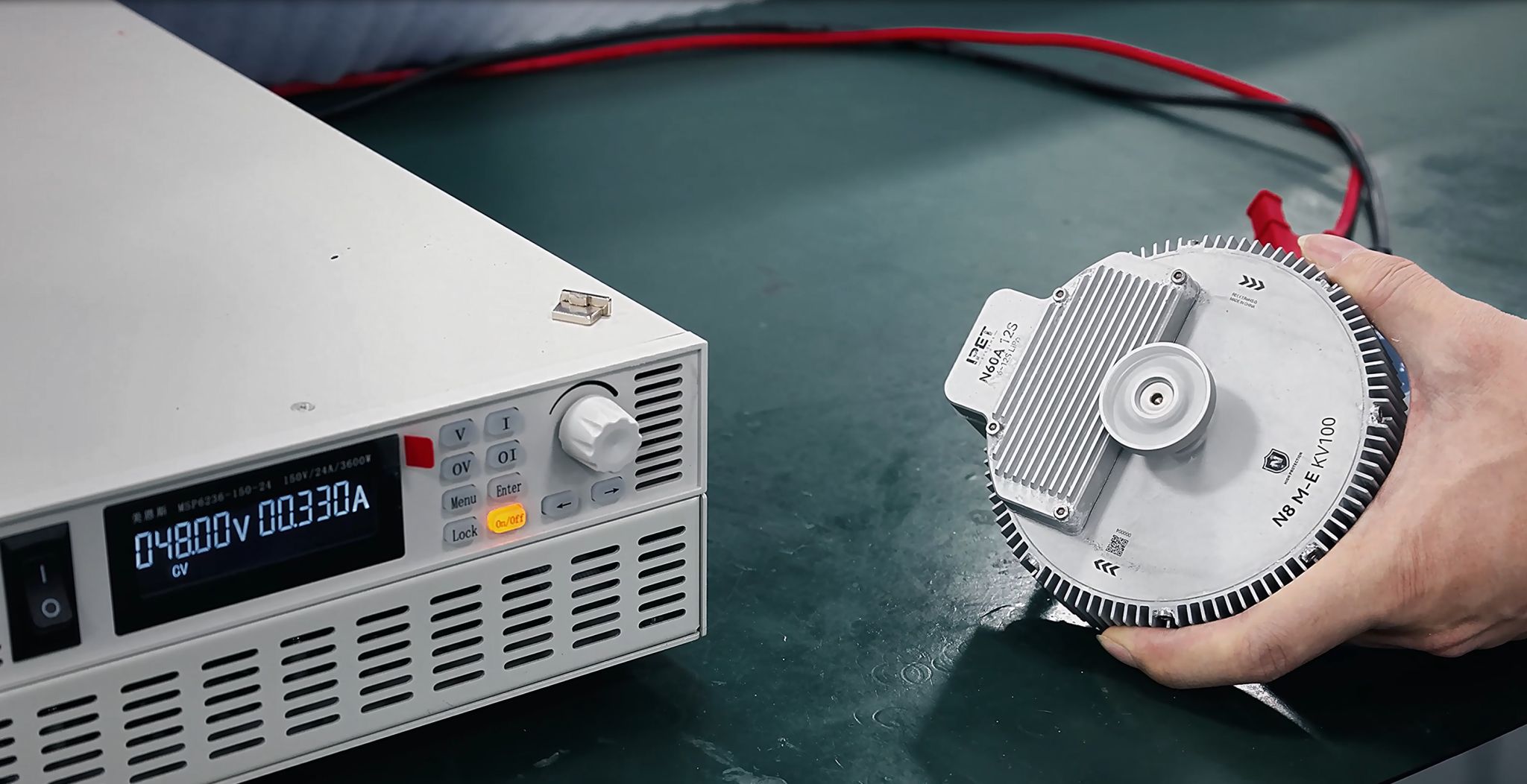
The next generation is moving toward integrated propulsion systems, where the motor and ESC are built into a single unit.
This approach collapses multiple inefficiencies at once:
- Shorter electrical paths reduce transmission losses
- Fewer components increase reliability
- Smaller form factors reduce aerodynamic drag
The result is not just incremental improvement—it’s system-level optimization.
The Silent Killer: Heat
But efficiency is only half the challenge.
The other half is heat.
Electric propulsion systems degrade under thermal stress. Over long missions, rising temperatures can:
- Reduce motor efficiency
- Damage internal components
- Cause unstable performance
- Shorten system lifespan
In long-endurance UAV missions, thermal management becomes as critical as energy management.
This is where advanced solutions—like multi-path airflow cooling systems and high-density heat dissipation structures—begin to define competitive advantage.
Keeping a motor cool isn’t just about performance.
It’s about maintaining performance consistently over hours, not minutes.
Two Hours in the Air—And Beyond
The implications of this shift are already becoming visible.
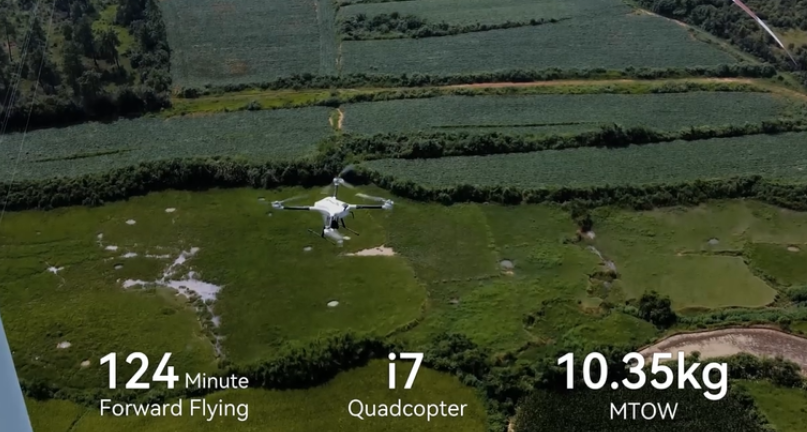
New propulsion architectures are enabling UAV platforms in the ~10 kg class to exceed two hours of flight time, while maintaining:
- Stable operating temperatures
- Consistent thrust output
- High system reliability over thousands of hours
This is not a breakthrough driven by a single technology.
It is the result of a system-wide engineering philosophy.
Every watt saved—from reduced drag, minimized electrical losses, and optimized cooling—translates directly into more time in the air.
A Strategic Shift for the UAV Industry
What makes this transition particularly significant is its broader impact.
In both commercial and defense applications, endurance is a force multiplier:
- Longer ISR missions
- Reduced need for operator intervention
- Extended coverage in surveillance and logistics
But unlike battery breakthroughs, which depend on external innovation cycles, propulsion efficiency is engineering-driven and immediately actionable.
This gives companies that master it a crucial advantage.
Conclusion: The Real Engine of UAV Evolution
The next generation of UAVs will not be defined by larger batteries.
They will be defined by:
- Smarter integration
- Better thermal control
- And above all, relentless system efficiency
Because in modern drone engineering, endurance is no longer stored in the battery.
It is engineered into the system.

.png)