How EagleNXT MicaSense Autonomous Imaging Is Changing the Future of Agricultural Research

Agricultural science has always depended on observation. The difference today is that the most important signals in the field are no longer always visible to the human eye.
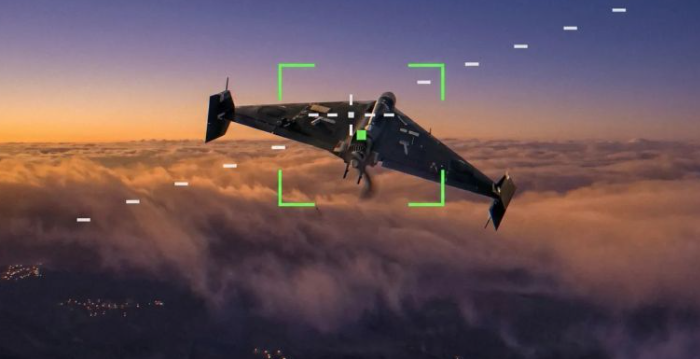
Autonomous drone technology is changing how researchers study crops, monitor plant health and evaluate biological solutions for farmers. Instead of spending valuable time manually operating drones, field scientists can increasingly focus on the work that matters most: discovery, analysis and decision-making.
That is the real promise behind autonomous workflows supported by advanced imaging systems such as MicaSense multispectral sensors. The drone becomes less of a flying machine that needs constant human attention and more of an intelligent data collection tool. It captures the field, gathers the right information and gives researchers a deeper view of what is happening in plants, soils and ecosystems.
For agricultural research, this shift matters.
Traditional field scouting is slow, labor-intensive and limited by human perception. A researcher can walk through a field and see color, growth, visible stress and obvious damage. But plants often show signs of stress before those signs are visible. Water deficiency, nutrient imbalance, disease pressure or performance differences between treatments may begin at a spectral level before they become clear to the eye.
Multispectral imaging helps reveal those hidden patterns.
MicaSense sensors are designed for advanced UAS applications in agriculture, plant research, land management, forestry and environmental monitoring. They capture data across different spectral bands, allowing researchers to analyze crop health, plant response and field variability with far greater precision than visual inspection alone.
The Altum-PT, for example, combines synchronized thermal, multispectral and RGB imagery at high resolution. With five multispectral bands, panchromatic imaging and thermal capability, it enables researchers to look at both visible and invisible indicators of plant performance. Thermal information can support the assessment of water stress or canopy temperature differences, while multispectral data helps analyze vegetation health and crop response.
The RedEdge-P family focuses on high-resolution RGB and multispectral imaging. With five multispectral bands and panchromatic capture, it provides sharp data for agriculture, environmental monitoring, forestry, land management, research and service providers. Its different versions — RedEdge-P, RedEdge-P blue and RedEdge-P green — allow users to build configurations specific to their research or operational needs.
When combined with autonomous drone workflows, these sensors can dramatically change the role of field scientists.
Instead of manually flying each mission, adjusting every step and spending too much time on operation, researchers can create repeatable data collection processes. This makes it easier to compare field conditions over time, evaluate treatments, monitor crop development and generate consistent datasets across plots, seasons and research locations.
That repeatability is critical in agricultural science. Good research depends on reliable data. If flights are inconsistent, timing is irregular or image quality changes from mission to mission, analysis becomes weaker. Autonomous workflows help reduce that variability by making data capture more structured and repeatable.
For farmers, the impact can be practical. Better research leads to better recommendations, better biological solutions and more precise understanding of how crops respond to stress, inputs and environmental conditions. For seed companies, agronomists and research institutions, high-resolution aerial data can support faster screening, stronger field trials and more confident decisions.
But perhaps the most important point is this: autonomy does not replace scientists. It gives them time back.
A drone can fly the route. A sensor can capture the data. Software can process the imagery. But people still ask the questions, interpret the results and turn information into progress. The best technologies do not remove human expertise; they remove repetitive friction so experts can focus on higher-value work.
That is why autonomous drones and MicaSense imaging matter for the future of agriculture. They help move field science from simple observation toward deeper understanding.
The future of agricultural innovation will not be built only in laboratories. It will also be built above fields, through autonomous flights, high-resolution sensors and data that reveals what plants are saying before the human eye can see it.
In that future, the drone is not the scientist. It is the tool that helps scientists see further.

.png)