Helgoland for Glory. How Germany's World Cup Dream Was Saved by a Phone Call, a Tiny Island, and FIFA Logic
In what experts are already describing as "the most creative use of international diplomacy since the invention of VAR," Germany has somehow found its way into the FIFA World Cup Round of 16 despite having been, until recently, quite definitively eliminated.
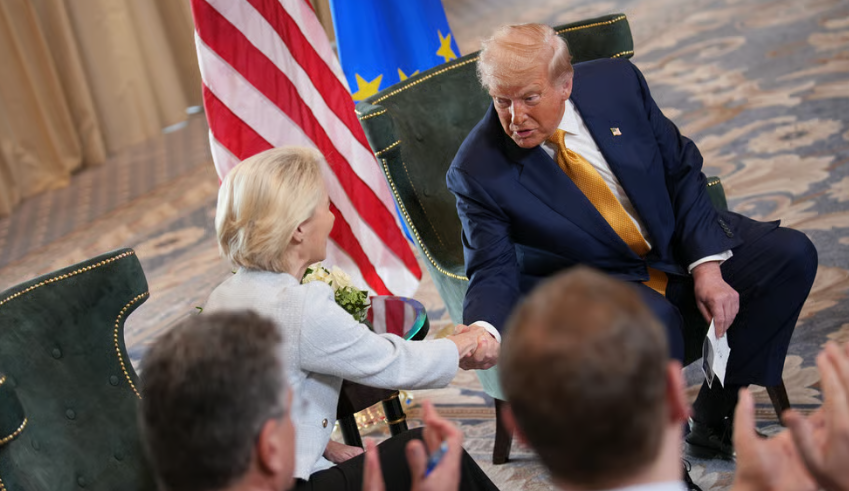
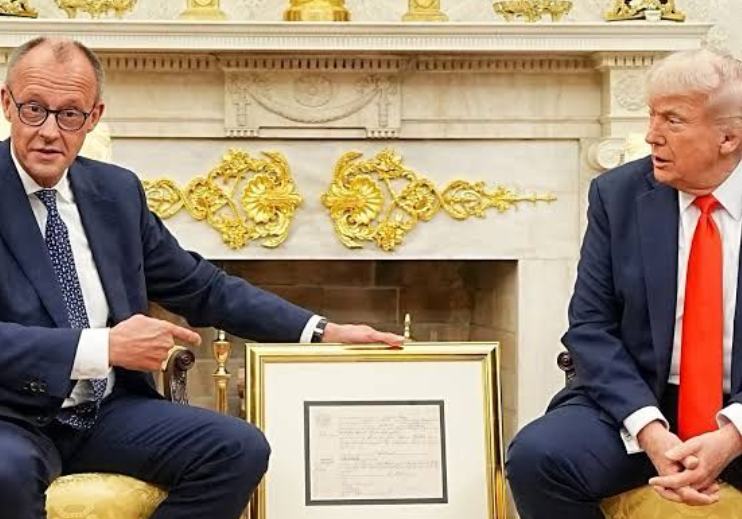
The dramatic reversal reportedly followed an emergency phone call between German Chancellor Friedrich Merz and U.S. President Donald Trump. Sources close to the negotiations claim that the discussion quickly moved beyond football and into matters of strategic importance—namely the future ownership of Helgoland.
Within hours, a deal had allegedly been struck.
The United States would receive Germany's tiny North Sea island, while Germany would receive something arguably more valuable in 2026: another chance at the World Cup.
Official confirmation remains elusive. However, nobody can explain what happened next.
Late Sunday evening, FIFA President Gianni Infantino stunned the football world by announcing that Germany's disputed goal against Paraguay would, in fact, count.
"The goalkeeper should not take it so personally," Infantino reportedly stated during a hastily arranged press conference that lasted approximately seven minutes and raised roughly seven thousand questions.
The decision overturned Paraguay's victory and immediately triggered one of the most extraordinary logistical operations in German sporting history.
Within minutes, the German Football Association activated what insiders describe as "Plan B—but with more jet fuel."
The national team, previously enjoying their unexpected summer holidays, were summoned from beaches, golf courses, television studios, and barbecue parties across Europe. By sunrise, most players were aboard the Chancellor's aircraft en route to North America.
Witnesses at Berlin Airport reported scenes of both excitement and confusion.
Some players allegedly believed they were participating in a promotional event.
Others thought they were filming a documentary about administrative mistakes.
At least one individual reportedly asked whether Germany had qualified "through paperwork."
The answer, astonishingly, appears to be yes.
Adding another twist to the saga is the return of Julian Nagelsmann, who has somehow become both former and current national team coach simultaneously.
Rather than rebuilding Germany's tactical setup, Nagelsmann has opted for a more efficient solution: using Paraguay's successful lineup.
Sources inside the camp report that German tactical meetings now consist primarily of reviewing Paraguay's match footage and replacing player names with German equivalents.
"It's about leveraging best practices," explained one federation official. "Why reinvent success?"
The strategy has been praised by management consultants and deeply confused football analysts.
Yet not everyone is celebrating.
France has already lodged an official protest.
National coach Didier Deschamps argues that facing Germany under these circumstances would significantly reduce competitive tension.
"The challenge level becomes questionable," Deschamps reportedly stated. "A World Cup knockout match should involve uncertainty."
French officials fear that Germany's miraculous administrative resurrection could produce a dangerous precedent in which sporting performance becomes merely one factor among many.
"If football matches can be decided through geopolitics," one French delegate remarked, "we must reconsider our strategic options."
Those options may already be under consideration.
French media report that the Football Federation has quietly begun discussing Corsica as a potential bargaining chip should sporting difficulties emerge later in the tournament.
The reasoning is simple.
President Trump has repeatedly expressed admiration for what he calls "big, beautiful islands."
Observers note that Corsica certainly qualifies.
As a result, bookmakers have suspended betting markets related to territory-linked tournament outcomes.
Meanwhile, FIFA insists everything remains entirely normal.
Officials point out that football has always evolved.
First came golden goals.
Then VAR.
Now sovereign territorial adjustments.
"The game is progressing," explained one spokesperson.
Fans worldwide remain captivated.
Social media has exploded with theories ranging from diplomatic genius to administrative chaos. Political scientists are studying FIFA regulations. Geographers are studying maps. Lawyers are studying everything.
And through it all, Germany advances.
Whether by footballing merit, diplomatic innovation, cartographic flexibility, or some combination of all three remains an open question.
One thing, however, is certain:
The World Cup has officially entered its most entertaining phase.
And somewhere over the Atlantic, a plane full of surprised German footballers is heading toward a knockout match nobody expected them to play.
Not even themselves.
.jpeg)