Trump Acting and Fractured US–EU Deal Is Sliding from Partnership to Pressure Politics
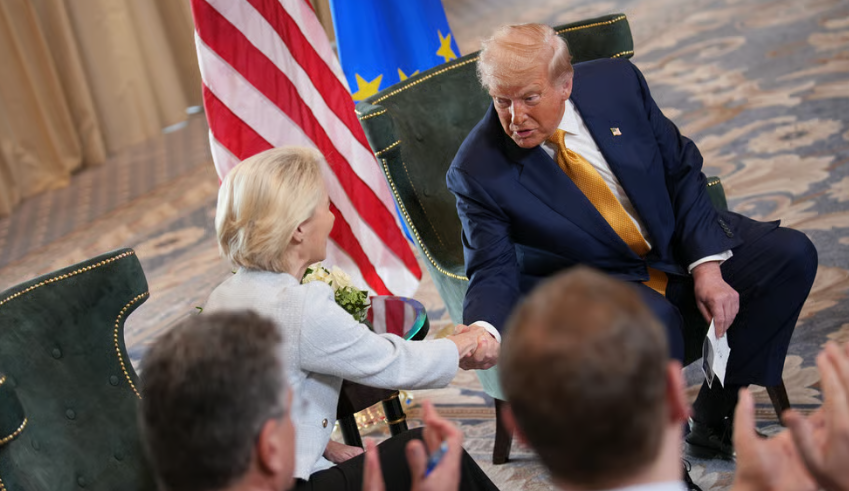
Beneath the political rhetoric lies a deeper story: the fragility of modern trade agreements and the growing difficulty of sustaining trust between even the world’s closest economic partners.
At its core, the argument is built around a simple premise—reciprocity has failed. According to the text, the U.S. fulfilled its commitments under the 2025 framework agreement, lowering tariffs on European goods, particularly in critical sectors like automotive imports. In contrast, the EU is portrayed as benefiting from these concessions while delaying its own obligations, including removing tariffs on U.S. industrial exports and reducing non-tariff barriers.
This framing is crucial because it repositions tariffs from being aggressive tools of economic nationalism to corrective instruments. In this narrative, the reimposition of higher tariffs on EU automobiles is not escalation, but a response to non-compliance. The language used—“narrow, surgical and proportionate”—reinforces the idea that these measures are targeted enforcement actions rather than the opening shots of a broader trade conflict.
However, the text also reflects a broader strategic shift in how trade policy is being used. Traditional trade agreements rely heavily on mutual trust and gradual implementation. Here, that trust appears to have eroded. Instead, tariffs are being deployed as immediate leverage, designed to compel action rather than encourage negotiation. This raises an important question: are modern trade deals becoming less about cooperation and more about enforcement mechanisms?
The historical backdrop of the trade relationship adds further complexity. The text highlights a significant U.S. trade deficit with the EU—more than $235 billion in goods—as evidence of structural imbalance. This argument aligns with a longstanding concern in U.S. trade policy, particularly under the Trump administration, which emphasizes bilateral deficits as indicators of unfairness. While economists often debate the validity of this metric, politically it serves as a powerful justification for assertive action.
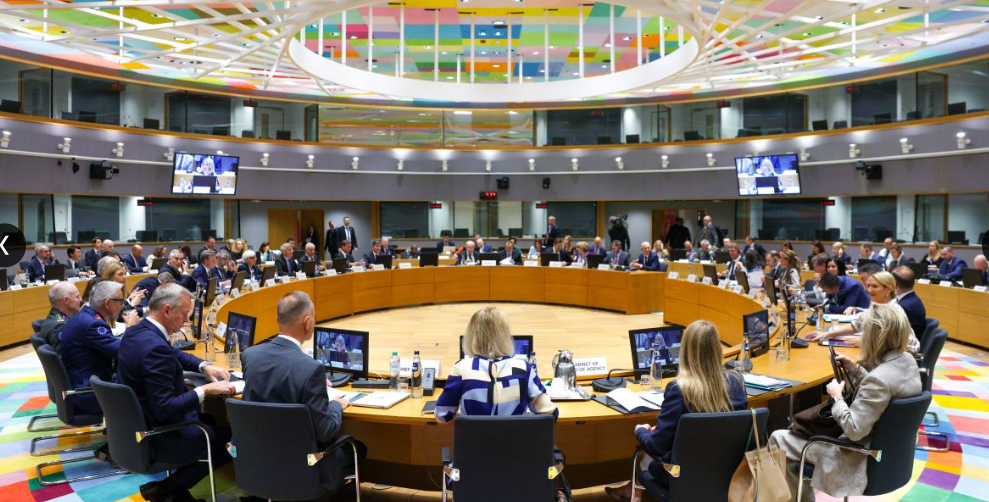
Another key feature of the text is its critique of the European Union’s internal processes. The European Parliament’s attempt to amend the agreement—introducing mechanisms like safeguards and conditional clauses—is portrayed as “moving the goalposts.” From a legal perspective, such amendments may reflect standard institutional procedure. But politically, they are framed as a breach of trust, reinforcing the perception that the EU is renegotiating terms after already benefiting from U.S. concessions.
This tension reveals a fundamental challenge in transatlantic trade negotiations: asymmetry in decision-making structures. The United States can move relatively quickly through executive action, while the EU, as a multi-layered political entity, requires approval across institutions and member states. What may appear as delay or non-compliance in Washington may be seen as procedural necessity in Brussels. Yet in high-stakes negotiations, perception often outweighs nuance.
The text also highlights the strategic use of deadlines and extensions. By repeatedly setting and extending tariff deadlines, U.S. leadership maintains pressure while leaving room for negotiation. This approach blends confrontation with flexibility, signaling willingness to escalate while keeping the door open for resolution. It is a tactic that reflects a broader shift toward transactional diplomacy, where agreements are constantly renegotiated in response to perceived imbalances.
At the same time, the narrative positions the U.S. as the enforcer of a “trade peace” rather than the disruptor of it. This rhetorical framing is significant. It seeks to preempt criticism of protectionism by redefining the purpose of tariffs, suggesting that they are necessary to uphold fairness rather than undermine it.
Yet the broader implications are less certain. The use of tariffs as enforcement tools introduces volatility into global trade relationships. Even targeted measures can trigger retaliatory dynamics, undermine investor confidence, and complicate long-term planning for industries on both sides of the Atlantic.
Ultimately, the situation reflects a deeper shift in global trade dynamics. Agreements are no longer static frameworks but living instruments shaped by ongoing negotiation and pressure. The challenge for both the U.S. and the EU is to balance enforcement with cooperation—ensuring that short-term leverage does not erode long-term partnership.
Whether this dispute leads to resolution or escalation will depend not only on policy decisions, but on the willingness of both sides to rebuild trust in a system increasingly defined by skepticism.


.jpg)