Ghost Bat Lands in Germany. Europe’s Defense Industry Prepares for a New Era of Autonomous Airpower
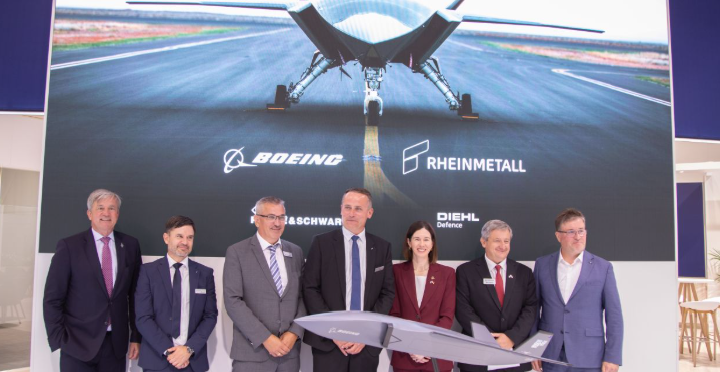
A new player has officially entered the European battlefield conversation—and it doesn’t need a pilot in the cockpit.
With the formation of “Team Ghost Bat Germany,” a powerful industrial alliance has taken shape, bringing together Rheinmetall, Diehl Defence, and Rohde & Schwarz to localize and adapt Boeing’s MQ‑28 Ghost Bat for the Bundeswehr. At first glance, it may look like another multinational defense cooperation. In reality, it signals something much bigger: Europe is accelerating its move toward autonomous combat aviation—and it is doing so with urgency.
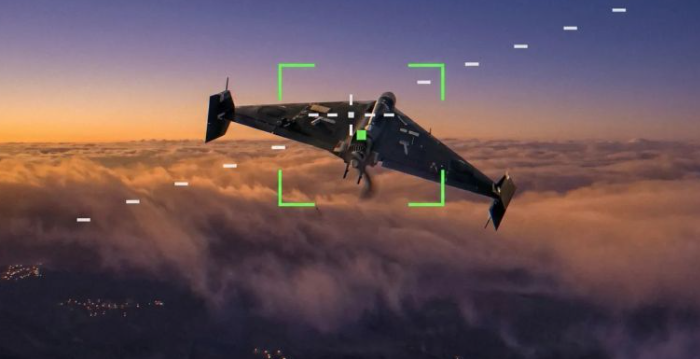
Originally developed by Boeing Defence Australia in close collaboration with the Royal Australian Air Force, the MQ‑28 Ghost Bat is not just another unmanned aerial vehicle. It is a loyal wingman—a force multiplier designed to operate alongside crewed fighter jets, extending their reach, survivability, and combat capability.
But in Germany, the Ghost Bat is about to become something else: a testbed for sovereignty.
The inclusion of Diehl Defence and Rohde & Schwarz is not incidental. It is strategic. Both companies bring critical expertise in weapons integration, sensor systems, and electronic warfare—domains that increasingly define modern combat effectiveness. Combined with Rheinmetall’s role as system integrator, the partnership promises not just adaptation, but transformation.
This is the real story behind Team Ghost Bat Germany: not import, but ownership.
Because the MQ‑28’s capabilities are as disruptive as they are versatile. Its mission spectrum spans intelligence, surveillance, and reconnaissance (ISR), electronic warfare, and even kinetic strike against air and ground targets. In practice, this means a single platform that can scout, jam, deceive, and strike—all while operating in coordination with manned aircraft.
The implications are profound. For decades, air combat doctrine has relied on highly trained pilots supported by increasingly sophisticated systems. The Ghost Bat challenges that paradigm by shifting complexity away from the cockpit and into the network.
Autonomy becomes the co-pilot.
And this shift is happening at a time when Europe is rethinking its entire defense posture. The war in Ukraine, rising geopolitical tensions, and renewed debates over defense spending have exposed both capability gaps and dependency risks. In this context, the Ghost Bat is more than a technological solution—it is a strategic statement.
Germany is not just buying into autonomy; it is shaping it.
Yet, there is a tension that cannot be ignored. The rise of loyal wingmen raises difficult questions about control, accountability, and escalation. If autonomous systems are tasked with electronic attack or kinetic strike support, where does human oversight begin and end? How much decision-making is delegated—and how quickly?
These are not theoretical concerns. They sit at the heart of tomorrow’s air warfare doctrine.
What Team Ghost Bat Germany demonstrates is that industry is moving faster than policy. While governments discuss frameworks and rules of engagement, companies are already building the systems that will define them. The integration of sensors, communication systems, and weapon payloads is advancing rapidly—enabled by AI, networked architectures, and modular design.
And that speed matters.
Because in a future conflict, the advantage will not belong to the nation with the most platforms—but to the one whose systems can adapt, communicate, and act together at machine speed.
The MQ‑28 Ghost Bat embodies this shift. It does not replace the pilot—it reshapes the role. It expands the battlespace, multiplies options, and introduces a level of operational flexibility that traditional systems cannot match.
With Rheinmetall, Diehl Defence, and Rohde & Schwarz now in the cockpit—figuratively speaking—Germany has signaled that it intends to be not just a participant, but a driver of this transformation.
The Ghost Bat has landed.
And Europe’s airpower doctrine may never be the same.