Germany’s Drone Doctrine Evolves. Quantum Systems and STARK AI Swarms Move From Concept to Combat Reality
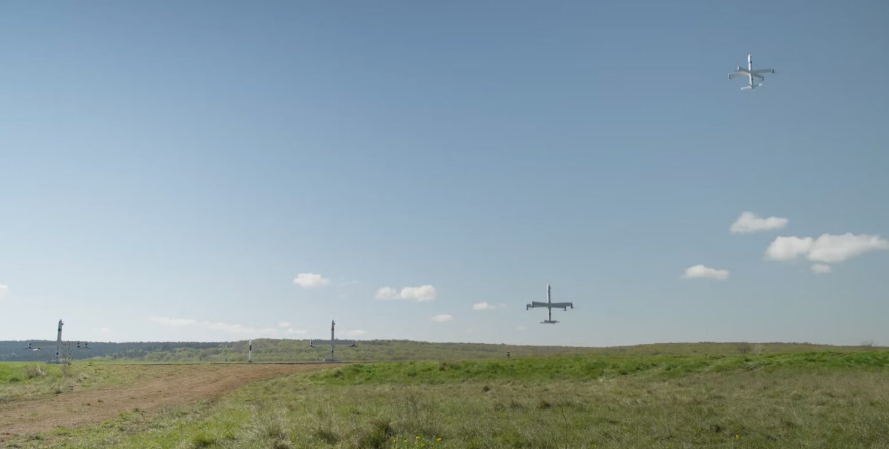
What used to be a vision in defense white papers is now unfolding in real-world trials: autonomous drone swarms are no longer experimental—they are becoming operational doctrine.
The Bundeswehr’s latest trials, involving STARK and Quantum Systems, mark a decisive step toward that reality. But the significance of this development goes far beyond technical validation. It signals a fundamental shift in how wars will be fought—and how fast decisions must be made.
At the center of the exercise was a simple but transformative objective: reduce the time between detection and destruction. In modern warfare, this “sensor-to-shooter” loop is everything. Seconds matter. Minutes can be fatal. The faster a system can identify a target, process the data, and execute a strike, the greater its strategic advantage.
What STARK and Quantum Systems demonstrated is that this loop can now be compressed—not by human speed, but by machine intelligence.
The exercise combined three essential elements: reconnaissance drones from Quantum Systems, loitering strike munitions from STARK, and an integrated command-and-control layer powered by Minerva software. Individually, these systems are impressive. Together, they represent something far more disruptive: a networked ecosystem where drones don’t just operate—they cooperate.
This is where the concept of “swarm” becomes real.
Unlike traditional UAV operations, where a single platform executes a defined mission, AI-enabled swarms distribute tasks across multiple assets. One drone detects. Another verifies. A third engages. The command system coordinates the entire sequence in real time, potentially with minimal human intervention.
In that moment, the battlefield changes shape.
The operator is no longer piloting a drone—they are managing a network. The mission is no longer linear—it is parallel, adaptive, and continuous. And perhaps most importantly, the decision-making hierarchy begins to shift from human-first to algorithm-assisted.
This evolution comes with both urgency and pressure.
Germany’s armed forces have faced sustained calls to modernize since the geopolitical shock of 2022. The war in Ukraine did not just expose vulnerabilities—it demonstrated, brutally, how drone-centric warfare has become. Cheap FPV systems, loitering munitions, and coordinated strikes have rewritten tactical playbooks across multiple domains.
Against that backdrop, the Bundeswehr’s 2027 target for scalable swarm capability is not ambitious—it is necessary.
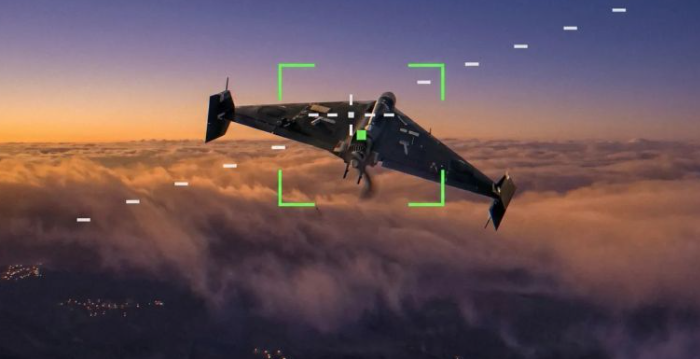
STARK’s Virtus loitering munition reflects this urgency in its design philosophy. Modular, adaptable, and built for integration into existing Battle Management Systems, it is engineered less as a standalone weapon and more as a node within a network. That distinction matters. In swarm warfare, isolated excellence is irrelevant if systems cannot communicate, synchronize, and respond collectively.
Equally critical is the role of command and control.
Without effective C2 integration, a swarm is just a cluster of drones. With it, it becomes a coordinated force multiplier. STARK’s Minerva software, tested in the exercise, provides the connective tissue—linking sensors, shooters, and operators into a unified operational picture. This is where AI adds its most immediate value: filtering data, prioritizing targets, and accelerating decisions beyond human cognitive limits.
Yet this technological leap raises deeper questions.
If AI systems begin to manage detection, prioritization, and engagement, where does human control begin—and where does it end? What happens when speed becomes the ultimate metric, and hesitation is no longer tolerable? The Bundeswehr’s trials may not answer these questions yet, but they bring them closer to the operational front line.
What is clear, however, is that the race is already underway.
STARK positions itself as a partner not just in innovation, but in scaling—turning prototypes into deployable capability. Quantum Systems contributes reconnaissance expertise that feeds the entire network. Together, they are building something that reflects the next phase of military technology: systems that are not only intelligent, but interconnected.
The real takeaway is not that drones are becoming smarter.
It’s that warfare itself is becoming faster, more automated, and increasingly defined by networks rather than platforms.
The swarm is no longer coming.
It is already here.