#FrontlineStoriesUkraine / “Tell Ukraine I Loved Her”. The 21-Year-Old Viktor Yeromenko Chose to Stay Behind
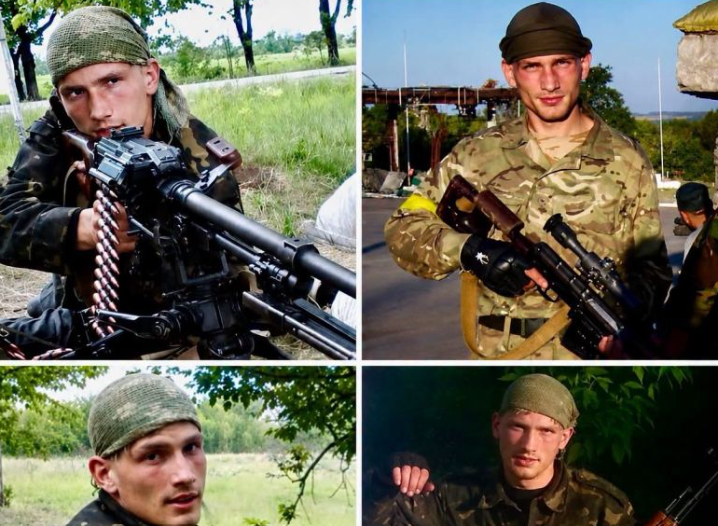
Wars are often measured in territory gained, equipment destroyed, and statistics presented in daily reports.
But history is not remembered through maps.
It is remembered through people.
Through moments.
Through decisions made in seconds that reveal the true weight of courage.
One of those moments belongs to Viktor Yeromenko.
He was just 21 years old.
Young enough to be planning a future, building a career, starting a family. Young enough to believe that life was only beginning.
Instead, he found himself in the inferno of war.
And there, in the chaos and violence of battle, Viktor made a choice that would define his life forever.
And end it.
The situation was desperate. Russian forces were closing in. Time was running out. Escape was still possible, but not for everyone.
Someone had to stay.
Someone had to buy time.
Someone had to stand between death and the men trying to get away.
Viktor made the decision.
Not after a long discussion.
Not after a dramatic speech.
Simply and directly.
“Guys, get out of here. I’ll stay in this hellhole and cover you.”
Those words became a death sentence.
And a life sentence.
A death sentence for him.
A life sentence for seven others.
Seven soldiers escaped because one man refused to abandon his position.
Military history is filled with stories of heroism, but the essence of sacrifice remains brutally simple: one person voluntarily accepts the fate others fear so that they may continue living.
We often romanticize such moments.
We should not.
Because there is nothing romantic about knowing exactly what is coming.
There is only courage.
The real kind.
The kind that appears when there is no audience, no camera, no certainty that anyone will ever know what happened.
The battle eventually ended.
But Viktor's story did not.
Wounded and fighting for his life, he was taken to medics.
Those around him desperately tried to keep him conscious.
To keep him alive.
To somehow negotiate with fate.
A nurse held his hand tightly.
“Vitya, hang on. Don't close your eyes. What are we going to tell your mother?”
It was a question born from hope.
The answer became legend.
Through pain and fading strength, Viktor answered quietly.
“I am from the boarding school. My mother is Ukraine. Tell her that I loved her very much.”
There are statements that transcend politics.
That transcend war itself.
This was one of them.
No slogans.
No declarations.
No hatred.
Just love.
Love for a country worth defending.
Love for people worth saving.
Love strong enough to overcome the most powerful human instinct of all: survival.
Moments later, Viktor Yeromenko died.
He was twenty-one.
Forever twenty-one.
The tragedy of war is that such stories often disappear beneath the noise of geopolitics. Headlines focus on missiles, negotiations, sanctions, and strategy.
Necessary discussions.
Important discussions.
But every war ultimately comes down to individuals.
Young men and women making impossible choices.
Young lives interrupted.
Young futures erased.
For every military operation there are names.
For every battlefield there are families.
For every victory there is a cost carried by someone who never came home.
That is why remembrance matters.
Not because memory changes the past.
But because forgetting dishonors it.
A nation survives not only through military strength or political institutions.
It survives through the stories it chooses to keep alive.
Names become symbols.
Symbols become values.
Values become identity.
People like Viktor Yeromenko remind us that freedom is never an abstract concept. It arrives through sacrifice. Through responsibility. Through individuals willing to place the lives of others before their own.
Seven men lived because one stayed.
Seven families were spared because one family suffered unimaginable loss.
Twenty-one years.
A single decision.
A lifetime of meaning.
History will remember battles.
But it is people like Viktor Yeromenko who explain why those battles were fought in the first place.
And perhaps his final message remains the most powerful of all:
Tell Ukraine that I loved her.
Some words outlive the people who speak them.