From Precision Warfare to Adaptation Speed: Rethinking Western Military Advantage / by Diego Bavio

For decades, Western military power rested on a powerful assumption: superior technology would create superior outcomes.
The Gulf War reinforced that belief. Precision weapons, advanced sensors, air superiority and sophisticated communications appeared to prove that a technologically dominant military could dismantle a conventional opponent quickly while limiting its own exposure.
That model never became useless.
But modern war is exposing its limits.
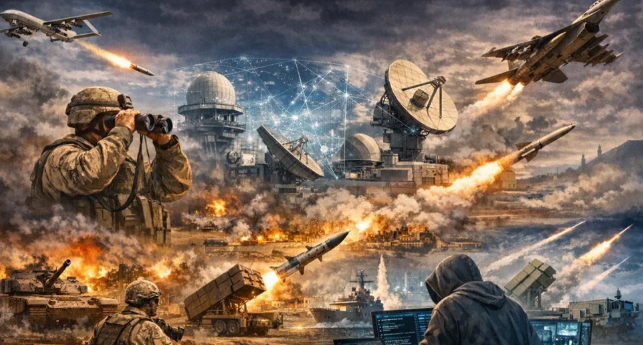
Ukraine has shown how quickly cheap drones, electronic warfare, software updates and improvised systems can change battlefield conditions. A system that works today may become less effective weeks later once the enemy studies it, adapts and develops a countermeasure.
That creates a different kind of military competition.
The central question is no longer simply who owns the best platform.
It is who can learn, modify, manufacture and return an improved capability to the battlefield faster.
This is where the traditional Western model becomes vulnerable.
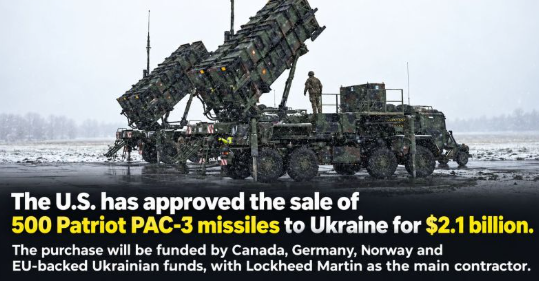
A highly sophisticated interceptor may destroy its target perfectly, but if it costs vastly more than the threat it destroys and takes much longer to replace, tactical success can still create an unfavorable strategic equation.
A cheap drone does not need to outperform an advanced air-defense system technologically.
It only needs to force that system to spend expensive ammunition, reveal its position, consume operator attention or operate continuously until its resources become strained.
The same logic applies across modern warfare.
High-end systems such as the MQ-9 Reaper offer persistence, sophisticated sensors and reusable capability. One-way attack drones follow almost the opposite philosophy. They can be cheaper, expendable and easier to manufacture in quantity.
Neither approach replaces the other.
The problem appears when a military structure concentrates so heavily on maximizing the performance of every individual platform that it loses the ability to absorb losses or create alternatives quickly.
Ukraine provides one of the clearest examples.
Its battlefield innovation cycle increasingly connects soldiers, engineers, manufacturers and software developers. Problems observed at the front can lead to modifications, new prototypes and updated systems in relatively short periods.
Russia has demonstrated another side of the same process. It has repeatedly modified existing systems, incorporated battlefield lessons and expanded production.
The important point is not that every Russian or Ukrainian innovation succeeds.
It is that both sides operate inside a permanent cycle:
Learn. Modify. Produce. Deploy. Learn again.
That cycle may become one of the defining measures of military power.
A military can identify the correct solution and still fail if industry cannot manufacture it. Industry can manufacture thousands of systems and still fail if those systems cannot change when the enemy adapts.
Learning therefore has strategic value only when it becomes reproducible capability.
This has major implications for European rearmament.
Europe clearly needs more ammunition, larger stockpiles and additional production capacity. But simply rebuilding inventory will not be enough if the resulting systems are difficult to modify.
A multinational weapons program can create scale, but contracts, certification rules, software restrictions and proprietary architectures can make battlefield adaptation painfully slow.
A system may be technically interoperable while still being operationally rigid.
That is why technological sovereignty should not mean manufacturing every component domestically.
It should mean retaining the freedom to change what matters.
Open interfaces, alternative suppliers, modification rights and direct feedback between military users and developers can become strategic assets in their own right.
The industrial structure matters too.
Large defense companies remain essential because they provide manufacturing scale, certification, maintenance and sustainment.
But the next important battlefield solution may come from a small company, a university lab or a team that does not yet exist.
The challenge is building a defense ecosystem capable of recognizing that solution and moving it into operational use before the opportunity disappears.
That may be the real lesson of modern war.
Precision still matters.
Technology still matters.
Mass production still matters.
But none of them guarantee military advantage on their own.
The next arms race may not be about who builds the most advanced weapon.
It may be about who completes the learning cycle first.
The West spent decades optimizing individual platforms.
Now it may need to optimize something much harder:
the speed at which an entire military system can change.