Free Wasn’t Cheap Enough. Skydio Lost Minneapolis Because Its Customer List Became the Product

Skydio did not lose Minneapolis to DJI.
It lost the city to its own reputation.
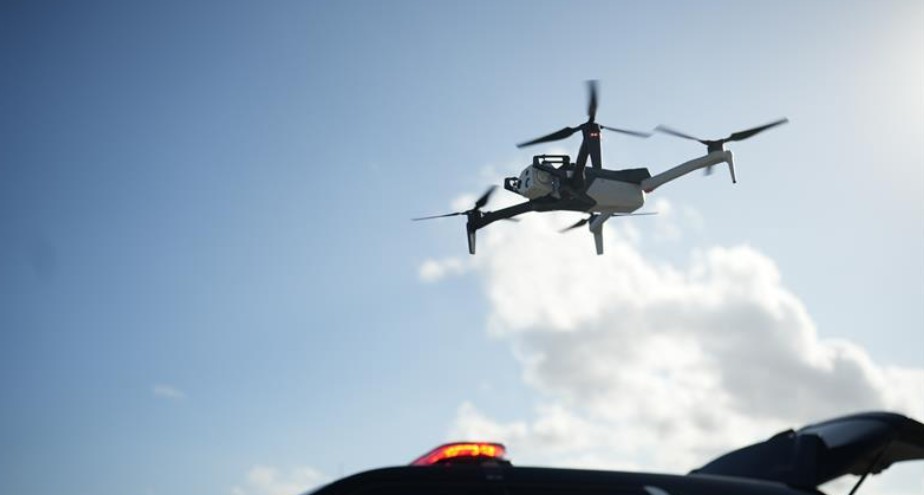
The Minneapolis City Council has rejected a proposed 75-day trial of Skydio’s drone-as-first-responder technology, despite the programme being offered at no cost. The plan involved installing two automated drone docks on the roof of a fire station in north Minneapolis.
The proposal ended in a 6–6 vote.
On paper, the case for a trial appeared strong.
The Minneapolis Police Department is dealing with staffing pressure and long response times. A drone-as-first-responder system could potentially arrive at an incident before officers, provide live video, improve situational awareness, and help dispatchers decide what resources are actually needed.
The city would have received the trial for free.
But price was not the decisive issue.
Several council members focused instead on Skydio’s other customers. They cited a reported $25,000 sale of an AI-enabled drone to U.S. Immigration and Customs Enforcement and the company’s business with the Israel Defense Forces.
That transformed a technical procurement debate into a political and ethical one.
The most important detail is that Council Member Jamal Osman, who co-authored the measure, ultimately voted against it. He reportedly supported the idea of using drones for public safety but wanted officials to return with a different supplier.
That distinction matters.
Minneapolis did not necessarily reject drone-as-first-responder technology. It rejected Skydio as the company providing it.
For years, American drone policy has increasingly pushed agencies toward domestic manufacturers. Chinese-made systems, especially DJI platforms, have faced growing scrutiny over cybersecurity, data security, supply chains, and geopolitical dependence.
The sales argument for U.S. vendors was straightforward: buy American and avoid the political controversy.
Minneapolis has now exposed the weakness in that assumption.
A domestic headquarters does not make a company politically neutral. A vendor’s military, intelligence, border-security, and law-enforcement contracts can become part of every future procurement decision.
This creates a new commercial reality for drone companies.
Public-sector buyers are no longer evaluating only flight time, camera quality, autonomy, cybersecurity, and price. They are also evaluating whom the manufacturer sells to, what missions its technology supports, and whether that business aligns with local political values.
Procurement is becoming a referendum on corporate identity.
That shift is especially important for companies operating across both defence and civil markets.
The same capabilities that make a drone attractive to the military—autonomous navigation, AI-supported tracking, persistent surveillance, and rapid deployment—can make local communities more cautious when the system is proposed for policing.
A company may see a common technology platform.
The public may see military surveillance entering civilian space.
That perception can become even more powerful when the vendor has contracts with organisations associated with immigration enforcement or controversial armed conflicts.
For Skydio, the Minneapolis vote is not simply a lost trial. It is a warning that its customer portfolio may limit its access to certain cities, regardless of whether the technology is effective or offered free of charge.
The case also presents a difficult problem for city officials.
If they want the benefits of drone-as-first-responder systems but reject major domestic suppliers because of their other customers, the pool of acceptable vendors may become extremely narrow.
Many advanced drone companies serve police, defence, border security, critical infrastructure, or intelligence customers. Those markets often provide the funding needed to develop the technology in the first place.
Cities may therefore need clearer procurement frameworks.
Instead of making decisions through an improvised debate about individual vendors, local governments could define standards covering surveillance, data retention, facial recognition, automated tracking, mission limits, transparency, and third-party access.
That would allow them to judge how the system will be used locally rather than relying entirely on the manufacturer’s global client list.
Still, vendors cannot ignore the message from Minneapolis.
Brand risk now follows every contract.
A defence sale may strengthen credibility with one customer and close the door with another. A border-security contract may generate revenue today but become the central argument against a public-safety programme years later.
Skydio offered Minneapolis hardware, autonomy, and a free trial.
The city evaluated something much larger: what the company represents.
The future of public-safety drone procurement will not be decided only by which aircraft flies best.
It may be decided by who else is already flying it.
.jpg)
.jpg)