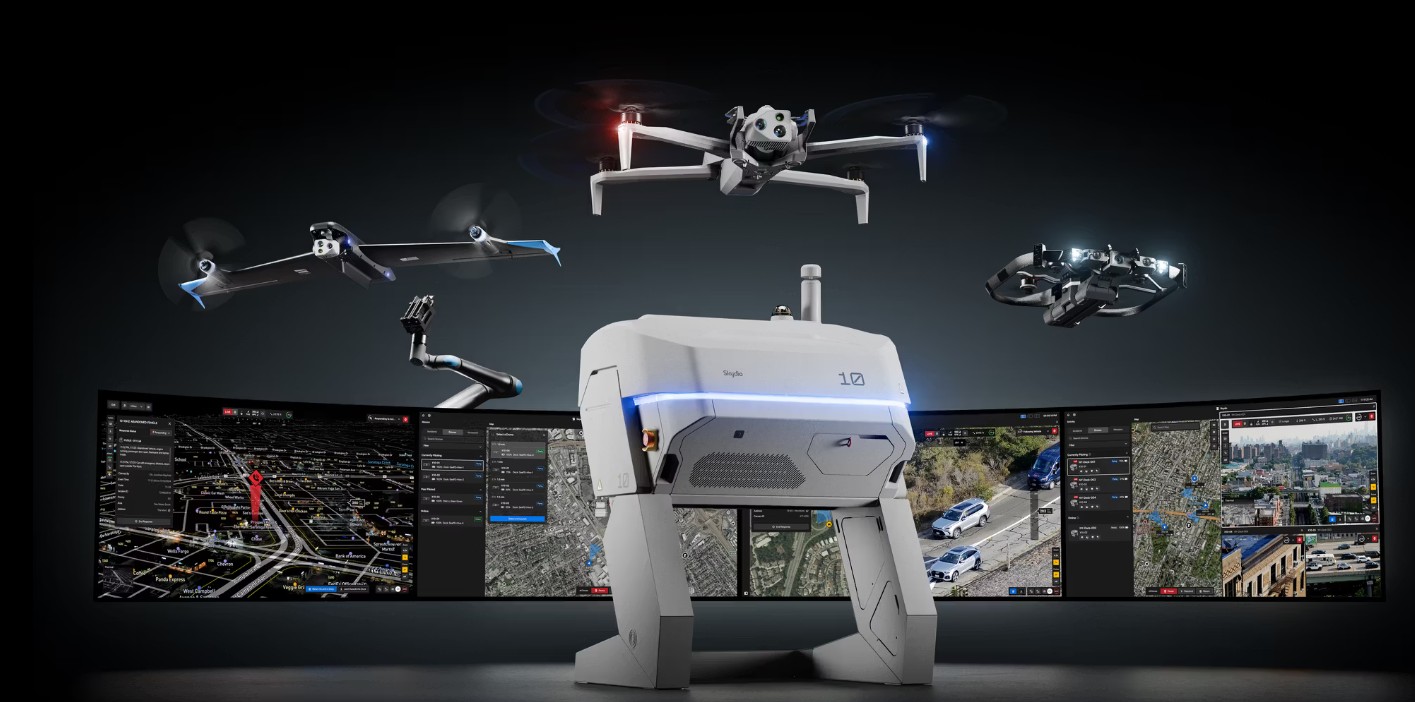
Skydio opens research office for autonomous drones in Zurich
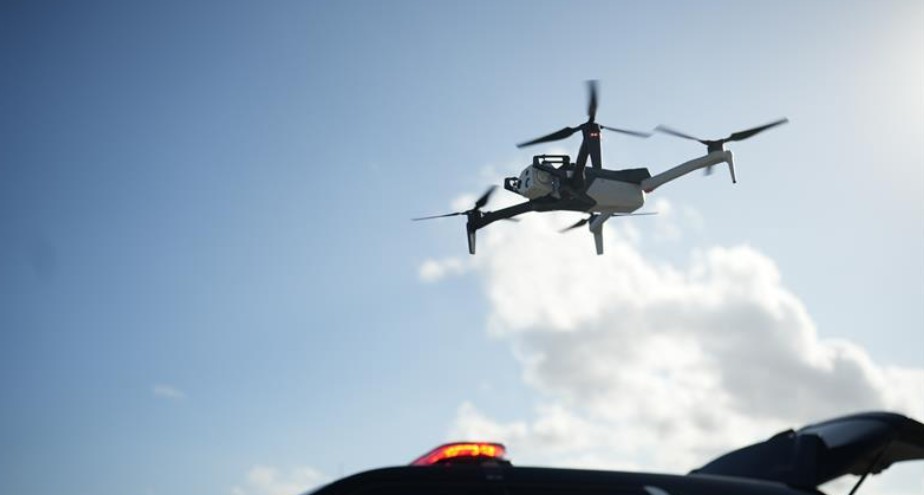
Autonomy in drones is entering a new phase—and it’s happening in Zurich.
With the opening of a new research and development office, Skydio is making a strategic move into one of the world’s most advanced robotics ecosystems. But this is more than geographic expansion. It’s a signal: the next frontier of drone technology will be defined by intelligence, not control.
At the center of this shift stands the Skydio X10—a system that represents the evolution of autonomous flight, where drones no longer depend on external guidance, but interpret, adapt, and act in real time.
Why Zurich Matters
Zurich is not a random choice.
The proximity to ETH Zurich and University of Zurich places Skydio directly inside a dense network of world-leading robotics research. This is where breakthroughs in perception, navigation, and AI are not theoretical—they are actively deployed.
The influence of researchers like Davide Scaramuzza has already shaped the field of autonomous flight, particularly in vision-based navigation and high-speed drone autonomy.
By anchoring itself here, Skydio is tapping into a pipeline of talent and ideas that continuously redefine what machines can perceive and how they move.
The Real Challenge: Independence
Today’s drones are powerful—but dependent.
GPS, remote control, predefined paths. Remove these, and most systems struggle.
The Zurich team, led by Davide Falanga, is tackling exactly this limitation. Their focus areas reveal the real ambition behind the expansion:
- Navigation without GPS
- Multi-vehicle coordination
- Real-time onboard decision-making
These are not incremental improvements. They are foundational challenges.
The Skydio X10 embodies this ambition: a drone capable of operating in environments where signals are jammed, maps are outdated, and decisions must be made instantly—without human intervention.
From Automation to Autonomy
There is a critical difference between automation and autonomy.
Automation follows rules.
Autonomy creates them.
Most current systems still rely on predefined logic. But real-world environments are unpredictable. Obstacles move. Signals disappear. Situations evolve.
The Skydio X10 shifts the paradigm: it interprets surroundings, predicts outcomes, and adjusts behavior dynamically.
This requires a fusion of technologies:
- Computer vision
- Sensor fusion
- Edge AI processing
- Adaptive control systems
And most importantly: decision-making at the edge—inside the drone itself.
Multi-Agent Intelligence
One of the most complex challenges being addressed is coordination between multiple drones.
Not just flying together—but acting as a system.
Imagine a fleet that distributes tasks dynamically:
- One drone maps the environment
- Another tracks movement
- A third optimizes communication
No central controller. No fixed roles.
This is where autonomy becomes exponential.
The Skydio X10 points toward a future where drones are not individual tools, but collaborative agents—capable of forming adaptive networks in real time.
Dual-Use Reality
Skydio’s focus areas—military, law enforcement, and industrial sectors—highlight a broader trend: autonomy is inherently dual-use.
The same system that inspects infrastructure can navigate contested environments. The same AI that avoids obstacles can interpret threats.
This raises both opportunity and responsibility.
Zurich’s research environment, with its strong academic grounding, plays a key role in ensuring that innovation remains not only advanced—but thoughtful.
The Bigger Picture
Skydio’s move is not isolated. It reflects a global shift.
Autonomous systems are becoming:
- More independent
- More intelligent
- More integrated into critical operations
The Zurich lab is a node in this transformation.
And the Skydio X10 captures its essence:
A system that does not wait for instructions.
A system that understands.
A system that acts.
Conclusion
The future of drones is not about flying better.
It’s about thinking faster.
With its Zurich expansion, Skydio is positioning itself at the center of that transition—where autonomy is no longer a feature, but the foundation.
.jpg)
.jpg)