From the Army of Drones to the Army of Robots: Ukraine's Next Military Revolution Has Already Started
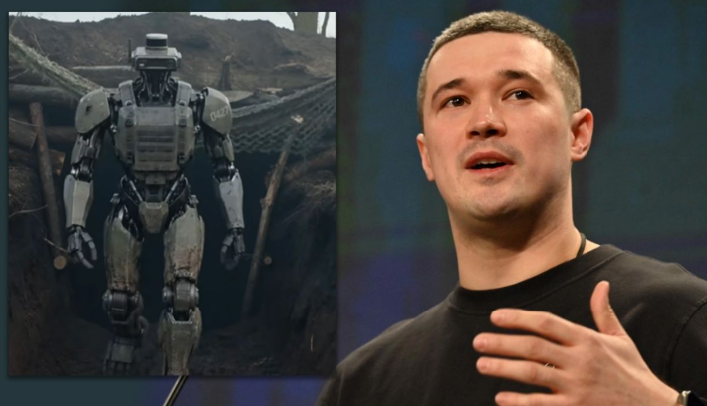
In 2022, Ukraine launched the Army of Drones.
Many observers viewed it as an emergency wartime initiative designed to compensate for shortages in conventional military capabilities.
They were wrong.
What emerged was one of the most successful defense innovation ecosystems of the modern era.
More than a procurement program, it became a model for rapidly connecting government, private industry, investors, engineers, military units, and battlefield operators. The result was an explosion of drone production, experimentation, and deployment that fundamentally changed the character of the war.
Now Ukraine is preparing something even more ambitious.
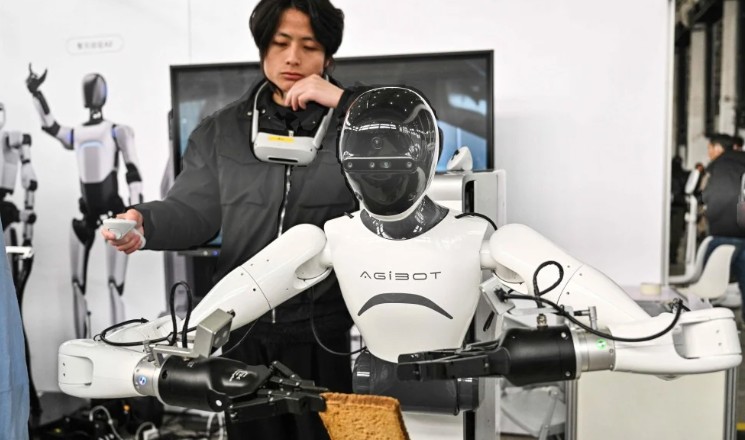
The Army of Robots.
At first glance, the concept sounds futuristic. It evokes visions of science-fiction battlefields populated by autonomous machines operating independently from human control.
That is not what is happening.
The real story is far more important.
Ukraine isn't trying to replace soldiers.
It is trying to replace danger.
For nearly three years, the battlefield has demonstrated a brutal reality: the most lethal weapon in modern warfare is often not a missile, tank, or artillery system.
It is exposure.
The soldier who carries ammunition under drone surveillance.
The medic evacuating wounded personnel through artillery fire.
The engineer clearing mines.
The reconnaissance team entering unknown terrain.
The infantryman crossing open ground.
Modern warfare punishes human exposure with unprecedented efficiency.
And that is precisely the problem robots are designed to solve.
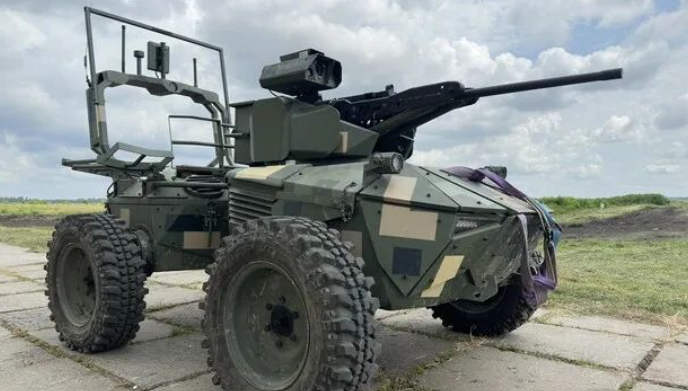
According to Ukraine's vision, robotic systems will evacuate casualties, transport supplies, lay mines, clear mines, conduct reconnaissance, defend positions, support offensive operations, and enter dangerous zones before human soldiers do.
The objective is simple:
Send the machine first.
This represents a profound shift in military thinking.
Historically, technology existed to support soldiers.
Increasingly, soldiers are operating within technological ecosystems designed to minimize their presence in the most dangerous parts of the battlefield.
Robotics transforms warfare from a question of manpower into a question of risk management.
The significance of the Army of Robots extends beyond individual platforms.
Ukraine is not merely developing robots.
It is building an ecosystem.
That distinction matters.
The Army of Drones succeeded because it created a continuous cycle of innovation and battlefield feedback. Engineers received lessons directly from operators. New systems were tested rapidly. Successful technologies scaled quickly. Failed solutions disappeared equally fast.
The Army of Robots appears designed around the same principle.
Investment.
Research.
Experimentation.
Operational feedback.
Rapid scaling.
Repeat.
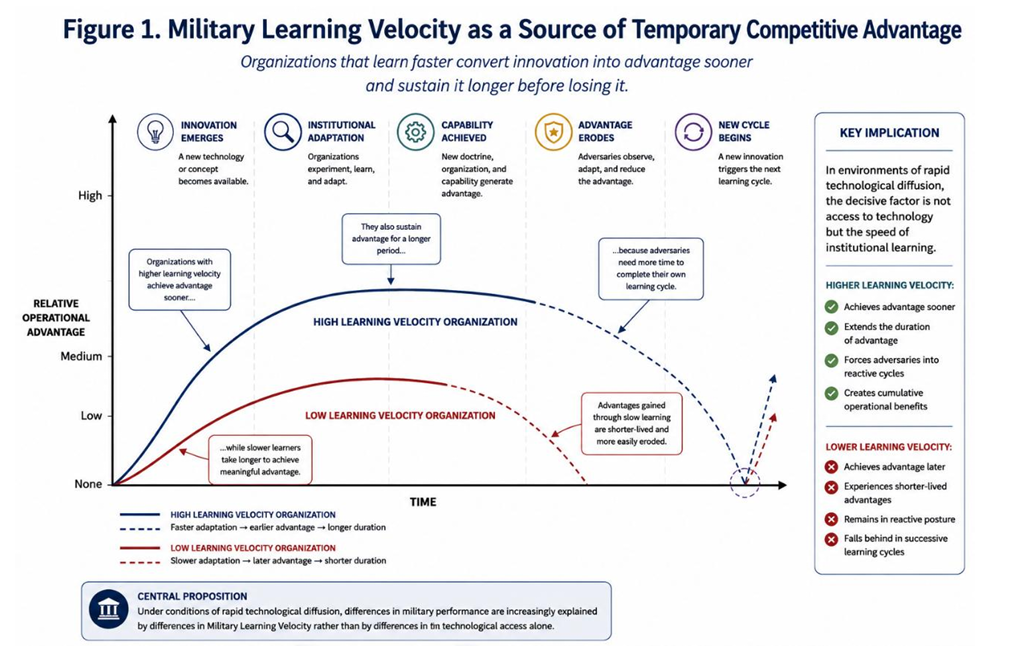
This model reflects a broader reality of twenty-first-century warfare.
Military advantage increasingly depends less on possessing technology and more on building systems capable of continuously improving it.
In other words, the decisive factor is becoming organizational learning rather than technological ownership.
Ukraine's defense innovation ecosystem, including initiatives such as Brave1, demonstrates how governments can leverage entrepreneurial cultures to accelerate military adaptation.
The country's technology sector has become a strategic asset.
Software developers, robotics engineers, artificial intelligence specialists, startup founders, military operators, and venture investors are now contributing directly to national defense.
The boundaries between military and civilian innovation are becoming increasingly blurred.
That convergence may become one of Ukraine's most important competitive advantages.
It also highlights a larger trend reshaping global security.
For decades, military modernization was largely driven by major defense contractors developing expensive platforms over long procurement cycles.
Today's battlefield operates differently.
Innovation occurs continuously.
Products evolve during deployment.
Software updates become operational upgrades.
Combat itself becomes part of the development process.
The Army of Robots represents the logical next stage of that evolution.
Drones changed how targets are identified and attacked.
Robots may change who enters danger in the first place.
And perhaps that is the most important point.
The future battlefield is unlikely to consist of autonomous machines replacing human decision-makers.
Instead, it will consist of increasingly sophisticated combinations of human judgment and robotic execution.
Humans will command.
Machines will absorb risk.
Humans will decide.
Machines will act.
The battlefield of tomorrow may therefore not be defined by artificial intelligence alone.
It may be defined by how effectively military organizations integrate humans, drones, robots, software, and networks into a coherent system.
Ukraine is betting that this future can be built faster than its adversaries can respond.
The Army of Drones proved that such a transformation was possible.
The Army of Robots aims to prove it can be scaled.
If successful, historians may view this not as another military program but as the moment when warfare entered the age of robotic mass.
And once that transition begins, every military in the world will be forced to adapt.