Factories Under Fire. Frontline Drone Production Is Rewriting the Rules of War

War has always been a contest of production as much as destruction. But on the battlefields of Ukraine, this equation is being violently rewritten. Drones—once precision assets deployed sparingly—have become expendable. They are not just tools of war anymore; they are consumables. And when consumption spikes, production must adapt.
Enter the frontline factory.
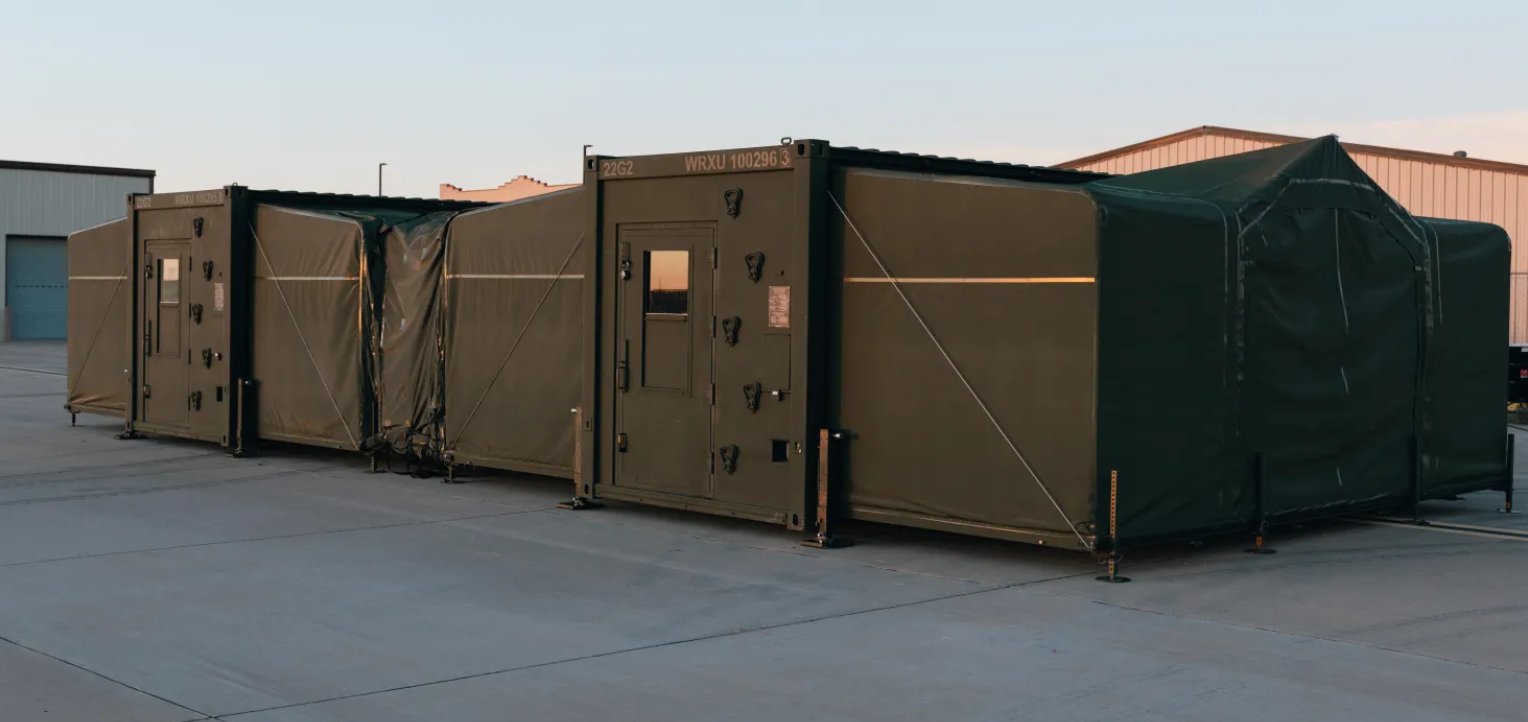
What was once unthinkable—manufacturing military hardware within range of enemy artillery—is rapidly becoming not only viable, but essential. Companies like NORDYN Robotics are pushing a radical concept: decentralized, mobile micro-factories that move with the troops, repairing and assembling drones directly at the edge of combat. The logic is brutally simple. If drones are lost daily in large numbers, waiting for replacements from distant supply chains is no longer an option.
This is not just a technological shift. It is a logistical revolution.
Traditional military supply chains depend on secure transport routes and protected infrastructure. But modern warfare—characterized by real-time surveillance and precision strikes—has turned these into liabilities. Large depots, centralized factories, and long convoys are easy targets in what is often described as the “transparent battlefield.” Mobility, dispersion, and redundancy are now more valuable than scale.
Frontline drone production embodies exactly that. Instead of one massive factory producing thousands of drones, imagine dozens of small, semi-autonomous units producing hundreds. Lose one, and the system survives. Lose a central hub, and the entire pipeline collapses. This shift from concentration to distribution is not just tactical—it is existential.
And yet, the idea goes beyond mere survival. It introduces a new speed of innovation.
When engineers and operators work side by side in combat conditions, feedback loops compress dramatically. A design flaw discovered in the morning can be fixed by afternoon. A new tactical requirement can translate into a hardware adjustment within hours. The battlefield itself becomes a live laboratory, where iteration is constant and failure is not just tolerated, but expected.
This proximity to the end user—arguably the soldier—marks a profound cultural shift. It challenges the traditional separation between industrial design and operational deployment. In the old model, engineers worked far from the front, optimizing for performance under controlled assumptions. In the new model, they are forced into confrontation with reality—mud, rain, stress, and urgency.
But this evolution comes at a cost.
One of the most critical bottlenecks is no longer technology—it is talent. The future of these micro-factories depends on individuals who can bridge two worlds: engineering precision and battlefield adaptability. People who can recalibrate a flight controller in the rain, repair a CNC machine at night, and operate under the constant pressure of threat. These hybrids are rare—and increasingly indispensable.
There are also deeper strategic implications. The ability to produce and repair systems at the front reduces dependence on traditional industrial backbones—but does not eliminate it. Critical components—semiconductors, sensors, batteries—still need to flow from the rear. The frontline factory is not a replacement for industry; it is an extension of it, a final mile that has moved dangerously close to the fight.
And perhaps that is the most unsettling takeaway.
War is becoming not only faster and more automated, but also more distributed. Production itself is no longer a safe, rear-echelon activity. It is exposed, mobile, and embedded within combat operations. The factory is no longer behind the lines—it is the line.
If this trend continues, future conflicts may not be decided by who builds the most weapons, but by who can build, rebuild, and adapt them fastest under fire. In that world, innovation is not defined by perfection, but by resilience.
And the winners will not be those who protect their factories—but those who can afford to lose them.