Europe’s New Iron Frontier: Why ARX Robotics Is Betting Big on Poland’s Defense Boom
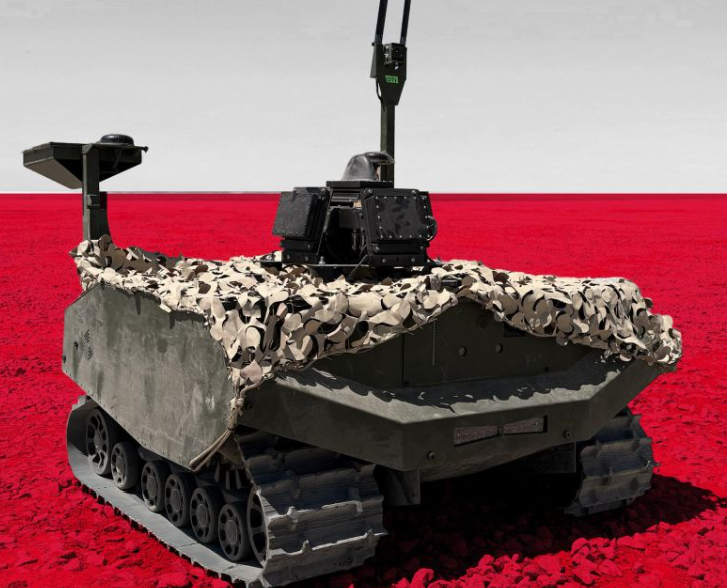
Europe's defense industry is entering a new era, and the map of military innovation is being redrawn. At the center of that transformation stands Poland, a nation that has evolved from NATO's eastern shield into one of the alliance's most critical military powerhouses.
This week at the International Defence Industry Exhibition (MSPO), ARX Robotics announced its expansion into Poland, marking the company's fourth market and signaling far more than a routine business move. The decision represents a strategic bet on the future of European security, autonomous warfare, and industrial resilience.
The timing is no coincidence.
From the Baltic Sea to the Black Sea, security assumptions that guided European defense planning for decades have collapsed. The continent's leaders have watched conflicts unfold at unprecedented speed, exposing shortages in industrial capacity, procurement agility, and technological adaptability. The lesson has been brutal but clear: future military power will belong to nations and companies capable of innovating at battlefield speed.
ARX Robotics believes Poland is where that future is being built.
The company plans to invest tens of millions of euros into the country, creating highly skilled engineering and technology jobs while establishing a permanent operational presence. But this is not simply another international office opening. It is part of a broader transformation in how Europe develops, deploys, and sustains military capability.
For decades, defense technology followed a predictable model. Equipment was designed in headquarters, tested over years, manufactured centrally, and delivered through lengthy procurement cycles. Today's battlefield no longer waits for that process.
The war in Ukraine shattered traditional assumptions about defense innovation. Technologies evolve in months instead of years. Software updates can change operational capabilities overnight. Autonomous systems are continuously adapted in response to battlefield conditions.
The winners are no longer necessarily those with the largest inventories. Increasingly, they are those who can adapt the fastest.
This reality sits at the core of ARX Robotics' expansion strategy.
The company has repeatedly emphasized lessons learned from Ukraine, where rapid iteration and operational feedback have fundamentally changed how military technology is developed. Rather than designing systems in isolation and hoping they perform under combat conditions, modern defense innovators are embracing a cycle of constant adaptation.
Poland offers an ideal environment for that vision.
Already one of NATO's highest defense spenders relative to GDP, Poland has become a hub for military modernization. Massive investments in armored systems, air defense, advanced artillery, and digital battlefield capabilities have transformed the country's armed forces into one of Europe's most dynamic military organizations.
Yet Poland's ambitions extend beyond purchasing equipment. The country wants to become a producer, developer, and exporter of next-generation defense technologies.
That aspiration aligns perfectly with ARX Robotics' approach.
The recently announced Polish-German defense agreement has created additional momentum. The agreement reflects a growing recognition that Europe cannot rely solely on imported capabilities or fragmented national strategies. Stronger industrial cooperation between European allies is increasingly viewed as essential for long-term security.
ARX Robotics sees the opportunity to serve as a bridge between German technological expertise and Poland's growing defense ecosystem.
The broader significance should not be underestimated.
Europe is witnessing the rise of a new defense-industrial geography. For decades, military innovation was concentrated in a handful of Western European and North American centers. Today, the eastern flank is emerging as one of the most strategically important regions for defense investment.
Poland sits at the heart of that shift.
As autonomous systems, artificial intelligence, robotic platforms, and digital command networks reshape military operations, proximity to frontline requirements becomes a competitive advantage. Companies operating closer to military users can iterate faster, deliver improvements sooner, and respond to operational realities more effectively.
That is precisely what ARX Robotics aims to achieve.
Its expansion is not merely about entering another market. It is about positioning itself where the future requirements of European defense are likely to be defined.
The message from MSPO is therefore unmistakable: defense innovation is moving eastward. The companies that recognize this shift early may shape the next generation of European security architecture.
For ARX Robotics, Poland is not simply an expansion.
It is a declaration that the future of autonomous defense in Europe will be built closer to the frontier.