Europe Arms Its Innovators. The Day Brussels Entered the Defence Startup Race

For decades, Europe built its identity around regulation, diplomacy, and economic integration. Defence innovation was largely left to national governments, military procurement agencies, and a fragmented ecosystem of industrial champions.
That era is over.
In a move that would have been politically unthinkable just a few years ago, the European Innovation Council (EIC) has officially opened its doors to defence and dual-use technologies. More importantly, Brussels is doing something even more radical: it is writing checks.
Real checks.
For the first time in EU history, European institutions will invest direct equity into defence companies, marking one of the most significant strategic shifts in the bloc's innovation policy since the launch of Horizon Europe.
This is not merely another funding announcement. It is a declaration that Europe has finally accepted a hard geopolitical truth: technological leadership without security is an illusion.
A Geopolitical Wake-Up Call
The catalyst is obvious.
Russia's invasion of Ukraine shattered long-held assumptions about European security. The war exposed weaknesses in Europe’s industrial capacity, ammunition production, drone manufacturing, cybersecurity readiness, and dependence on foreign technologies.
Suddenly, concepts once confined to think tanks—strategic autonomy, resilience, sovereignty—became urgent political priorities.
The European Commission is now responding by redirecting innovation capital toward technologies that can protect the continent as well as power its economy.
Artificial intelligence. Quantum systems. Advanced materials. Robotics.
And increasingly, drones.
The message from Brussels is unmistakable: Europe can no longer afford to separate economic competitiveness from security.
The End of a Political Taboo
Perhaps the most remarkable aspect of the new programme is not the money itself.
It is the symbolism.
For years, defence startups existed in an awkward grey zone within European innovation circles. Venture investors often avoided military applications. Public funding programmes frequently excluded defence-related activities altogether.
That barrier has now been dismantled.
Under the revised 2026 work programme, dual-use companies—businesses whose technologies have both civilian and defence applications—can access grants of up to €2.5 million and equity investments reaching €30 million through the EIC Accelerator and STEP Scaleup initiatives.
At the same time, the newly launched €100 million EIC STEP Defence Scale Up call will provide direct equity financing to accelerate the growth of critical defence technologies.
This is more than funding.
It is institutional recognition that Europe’s next generation of defence capabilities may emerge not from giant defence contractors, but from agile startups and technology disruptors.
The Drone Economy Is About to Accelerate
Few sectors stand to benefit more than unmanned systems.
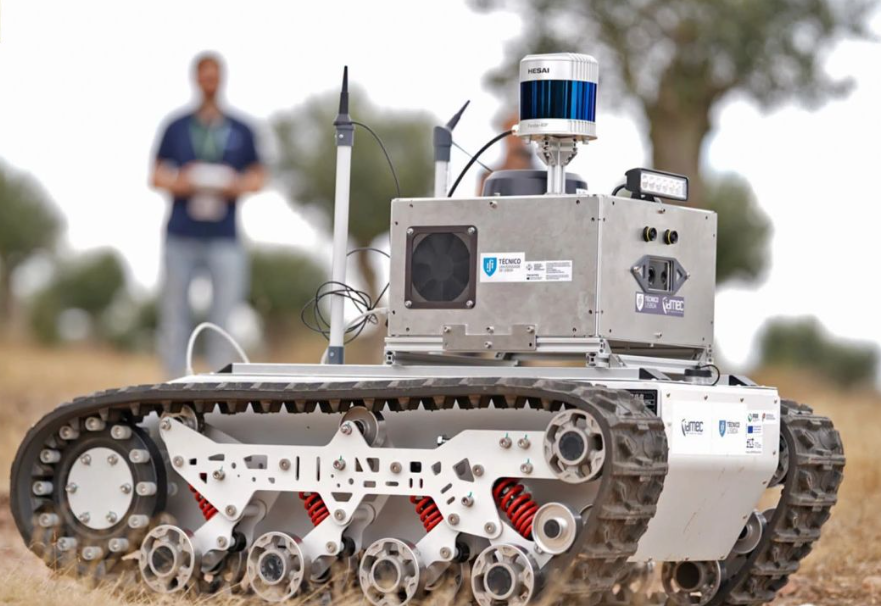
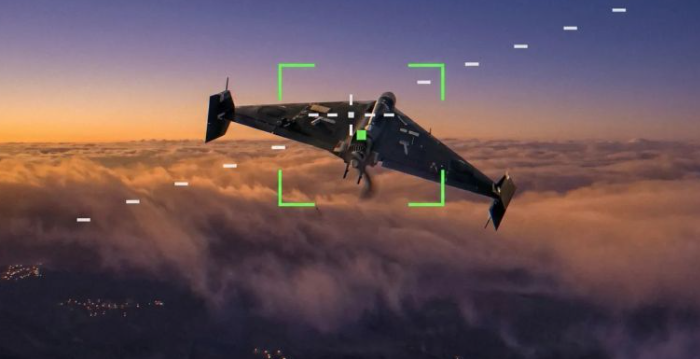
The conflict in Ukraine has transformed drones from useful battlefield tools into indispensable military assets. Cheap reconnaissance drones, AI-enabled targeting systems, autonomous platforms, and counter-drone technologies are redefining warfare in real time.
European policymakers have been watching closely.
As a result, drones and counter-drone solutions are among the priority sectors explicitly highlighted for support.
For entrepreneurs and investors alike, the signal is powerful.
A market once constrained by regulatory caution is becoming one of the most aggressively supported technology sectors in Europe.
The implications extend far beyond defence.
The same drone platforms that protect borders can inspect energy infrastructure. The same AI systems that detect military threats can monitor industrial facilities. The same sensors used for surveillance can support agriculture, logistics, and environmental protection.
This is precisely why dual-use technologies are attracting growing attention: innovation increasingly operates across civilian and security domains simultaneously.
A New European Mindset
Perhaps the biggest story is not financial.
It is cultural.
For years, Europe's innovation debate revolved around sustainability, consumer technology, and digital transformation. Security considerations often occupied a secondary role.
That balance is changing.
The Commission's decision reflects a broader realization that technological sovereignty depends on the ability to develop, manufacture, and scale critical technologies within Europe itself.
The continent is no longer asking whether it should support defence innovation.
It is asking whether it can afford not to.
The Race Has Begun
The European Innovation Council was created to take risks on breakthrough technologies.
Now it is taking a risk on something even bigger: reshaping Europe's strategic future.
Whether the initiative succeeds will depend on execution, investment appetite, and the ability of European startups to scale globally.
But one thing is already clear.
Europe has crossed a line it is unlikely to reverse.
For defence innovators, drone manufacturers, AI pioneers, and deep-tech entrepreneurs, a new era has begun.
And for the first time, Brussels is not standing on the sidelines of the defence technology revolution.
It is funding it.