Drone Hunters Hunted? Satellite Images Suggest Russian Attack Helicopters Hit in Sochi Strike
Sochi, Russia, September 2026 – Modern warfare is increasingly becoming a contest between drones and the systems designed to stop them. A recent Ukrainian strike on Russia's Black Sea city of Sochi may have produced one of the most striking examples of that dynamic yet.
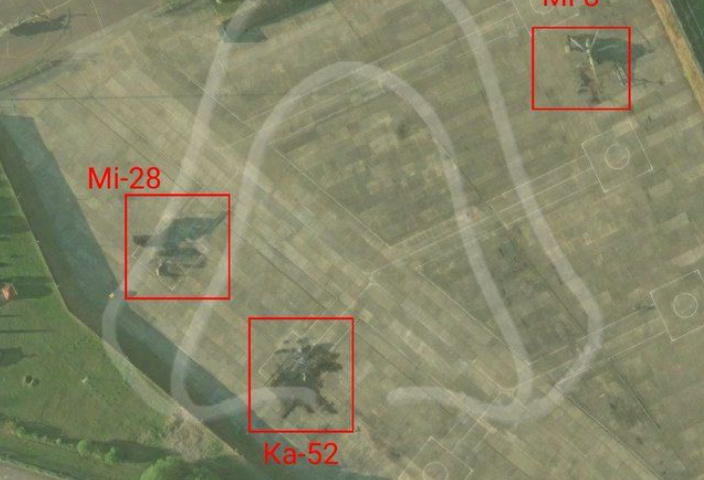
According to satellite imagery published and analyzed by open-source intelligence (OSINT) researchers, a Ukrainian drone attack on September 4 appears to have caused significant damage within the military helicopter parking area of Sochi International Airport. Analysts examining before-and-after imagery assessed that one Ka-52 attack helicopter and one Mi-28 attack helicopter were destroyed, while a Mi-8 helicopter sustained damage. Importantly, these assessments remain based on publicly available imagery and have not been independently confirmed by Russian authorities.
The images show fresh burn marks and damage signatures in locations where military helicopters had previously been parked. While the exact identification of the aircraft and the extent of the damage remain subject to verification, multiple OSINT communities reviewing the imagery reached broadly similar conclusions.
If confirmed, the incident would carry considerable operational significance.
Both the Ka-52 "Alligator" and Mi-28 attack helicopters have played important roles in Russian military operations. Originally designed as attack and battlefield support platforms, these helicopters have increasingly been reported as participating in efforts to intercept Ukrainian long-range drones. Analysts have noted instances where Russian helicopters employed onboard cannons and air-to-air weapons against incoming unmanned aircraft.
That context creates an unusual irony. Aircraft associated with countering drone threats may themselves have become casualties of a drone strike while stationary on the ground.
The September 4 attack appears to have targeted more than helicopters alone. Reports based on satellite imagery and local observations indicate that fuel infrastructure near the airport was also affected. Fire detections recorded by satellite monitoring systems corresponded to locations near both fuel-storage facilities and military areas of the airport complex.
Additional reporting suggests that airport operations were disrupted for several hours following the attack, leading to flight delays, diversions, and temporary operational restrictions. Russian regional authorities acknowledged the occurrence of fires following the incident, although they did not publicly confirm military losses.
The strike reflects a broader trend visible throughout the conflict: the increasing reach of long-range unmanned systems. Targets once considered relatively secure due to distance from active front lines are now being challenged by increasingly capable drone technologies.
Military planners around the world are watching these developments closely. Traditional air defenses remain critical, but the growing ability of relatively low-cost unmanned platforms to threaten expensive military assets is prompting a reevaluation of defense concepts and force protection strategies.
A helicopter parked on the ground represents a valuable asset. Beyond the aircraft itself, support equipment, trained crews, maintenance personnel, logistics infrastructure, and operational readiness all form part of a wider military ecosystem. Damage to any component can have consequences beyond the immediate loss visible in satellite imagery.
The Sochi incident also highlights the growing influence of open-source intelligence. In previous eras, battlefield assessments often depended on official government statements. Today, commercial satellite imagery, social media evidence, and independent analytical communities frequently provide early indicators of military developments. While such assessments require careful verification, they have become an increasingly important part of modern conflict reporting.
For now, the precise scale of the damage remains uncertain. Satellite imagery appears to show substantial impacts within the helicopter parking area, but independent confirmation of aircraft identities and operational status is still pending.
What is clearer is the broader lesson emerging from conflicts around the world: in an age defined by unmanned systems, even the hunters are no longer guaranteed to be safe from becoming targets themselves.