Canada Joins the EU’s €150bn SAFE Program to Support Europe and Ukraine
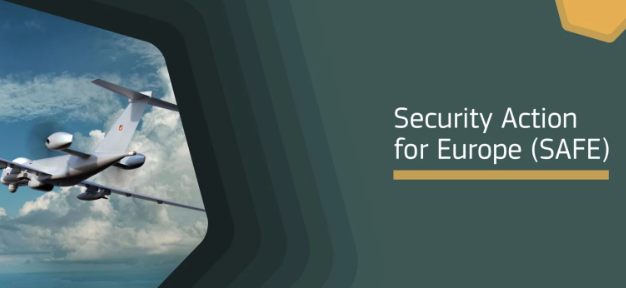
The European Union has just done something unprecedented—and deeply strategic. It opened the gates of its €150 billion defense machine to an outsider. Not to the United States. Not to NATO allies broadly. But to Canada.
This is not just another cooperation agreement. It is a structural shift in how Europe builds, finances, and controls military power.
With its entry into the EU’s Security Action for Europe (SAFE) program, Canada becomes the first non-European country embedded directly in the bloc’s massive defense procurement engine. SAFE is no ordinary fund. It is a €150 billion loan-backed mechanism designed to turbocharge Europe’s defense industry, accelerate weapons production, and close capability gaps exposed by recent geopolitical crises.
And SAFE is only the beginning. It sits at the heart of a broader €800 billion rearmament strategy aimed at transforming Europe into a more autonomous military power by 2030.
But Canada’s entry is not just symbolic. It is transactional and disruptive.
Buying a Seat at Europe’s Defense Table
Under standard SAFE rules, non-EU suppliers are heavily restricted: only about 35% of a project’s value can originate outside Europe.
Canada shattered that rule.
Through a special bilateral agreement, Canadian companies can now supply up to 80% of a SAFE-funded project’s value, a dramatic expansion of access compared to other third countries.
In practical terms, this means Canadian defense firms are no longer outsiders bidding from the margins—they are inside the system, competing on equal footing with European manufacturers in joint procurement programs.
And that is the real story: SAFE is not only about funding weapons—it is about controlling who gets to build them.
From NATO Dependence to Industrial Sovereignty
Europe’s motivation is clear. The SAFE program is designed to reduce fragmented procurement and strengthen the continent’s defense-industrial base through joint projects and large-scale funding.
For decades, Europe relied heavily on U.S. military capabilities. But shifting geopolitics—and uncertainty in transatlantic relations—have forced a recalibration. SAFE is Europe’s answer: a coordinated, industrial-scale push toward self-reliance.
Canada’s inclusion fits neatly into that vision.
Ottawa has already signaled a strategic pivot—seeking to diversify away from overwhelming dependence on U.S. defense supply chains. SAFE provides exactly that: access to European demand, capital, and partnerships at scale.
In return, Canada pays for entry—not just financially, but politically.
Participation requires financial contributions tied to the value Canadian firms extract from the program, ensuring that access comes at a price aligned with benefits.
This is not alliance-building as usual. This is market access engineered through geopolitics.
Winners, Losers—and the New Iron Club
The implications ripple far beyond Canada.
The United Kingdom tried—and failed—to secure similar access after negotiations broke down over financial terms and conditions.
Switzerland is watching closely but faces skepticism due to political tensions around arms re-exports and neutrality policies. (No verified SAFE agreement outcome for Switzerland was found in sources.)
In contrast, Canada has secured what many in Europe are already calling a privileged position.
That raises an uncomfortable question: Is SAFE creating a new “insider club” of defense economies—where access is selective, conditional, and monetized?
Because once participation becomes a matter of negotiated privilege, not collective security, the line between alliance and marketplace blurs.
The Emergence of a Defense Marketplace
SAFE represents more than funding. It is the emergence of a European defense marketplace, backed by EU credit, structured by political rules, and increasingly open—selectively—to external players.
Contracts funded by SAFE are not just purchases. They are industrial bets, shaping supply chains, technology flows, and strategic dependencies for decades.
Canada’s early entry positions it exceptionally well.
It gains access to:
- Joint EU procurement pipelines
- Long-term, low-interest financing ecosystems
- Integrated European defense supply chains
All while maintaining its own national industrial base.
A New Geopolitical Equation
What we are witnessing is not just cooperation. It is integration, which is controlled, conditional, and highly strategic.
SAFE transforms the EU from a coordinator into a central financial actor in the global defense economy, directing capital and shaping production at scale.
Canada’s inclusion sends a clear signal: the future of defense is no longer purely national or even alliance-based—it is ecosystem-driven.
And entry into that ecosystem is not guaranteed.
It is negotiated.
It is priced.
And, as Canada just proved, it can redefine the balance of power across continents.