Dufour Aerospace and Volatus Aerospace develop unique drone logistic capabilities in Canada
Air logistics has always depended on one simple requirement: a runway.
But that assumption may soon change.
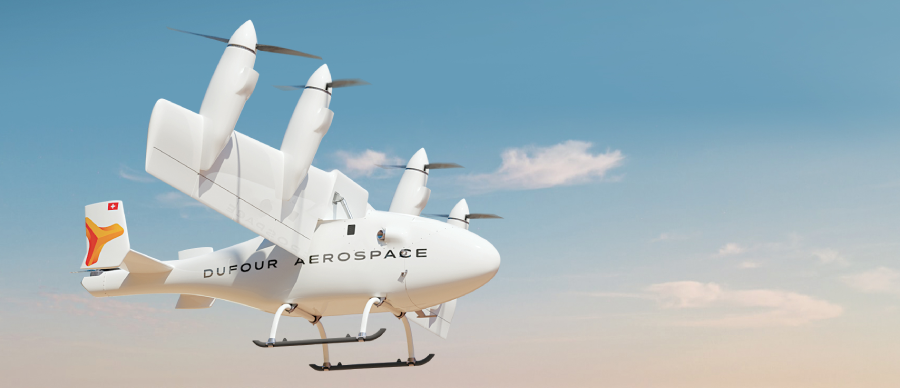
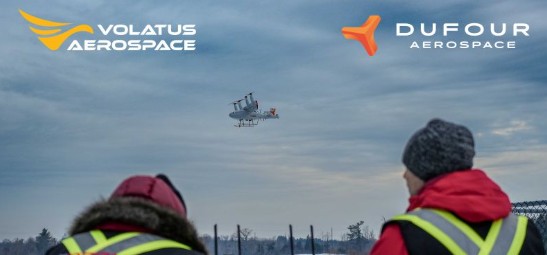
In early March 2026, Dufour Aerospace achieved a key milestone in the development of its Aero-30 hybrid eVTOL platform, completing the aircraft’s first flight tests in Canada. Conducted in partnership with Volatus Aerospace, the flights are part of a broader effort to develop runway-independent logistics systems capable of operating in some of the world’s most demanding environments.
The tests took place during Canada’s winter season—an intentional choice designed to expose the aircraft to low temperatures, harsh weather and real-world operational conditions.
For the companies involved, the goal is not simply to demonstrate a new aircraft.
It is to redefine how logistics missions can be conducted in remote and infrastructure-limited environments.

Logistics Without Runways
Traditional cargo aviation relies on airports and long runways, making it difficult to support operations in remote regions such as the Arctic, offshore infrastructure sites or isolated industrial facilities.
The Aero-30 hybrid eVTOL is designed specifically to overcome this limitation.
By combining vertical take-off and landing capabilities with hybrid-electric propulsion, the aircraft can transport medium payloads without requiring traditional airport infrastructure.
This makes it particularly useful for missions such as:
- resupply of remote communities
- delivery of equipment to isolated industrial sites
- public safety and emergency response missions
- defence logistics in austere environments
- infrastructure monitoring and maintenance
Instead of relying on airports, such aircraft can operate from small landing zones, temporary pads or unprepared terrain.
Testing in Real Operational Conditions
For advanced aviation systems, laboratory simulations are only part of the development process.
The true test comes in the field.
That is why the Canadian winter flight campaign is so significant.
Cold temperatures and challenging weather conditions allow engineers to collect data on how the aircraft behaves in environments where aerial logistics may be most critical.
The flights also served another important purpose: training operational crews.
As part of the program, Volatus Aerospace flight personnel were trained to operate the Aero-30 platform.
After completing their training, the crew conducted the aircraft flight themselves—an important step toward operational readiness.
By involving operators early in the development process, Dufour Aerospace ensures that aircraft design reflects real mission requirements rather than theoretical assumptions.

From Prototype to Deployable Capability
The partnership between Dufour Aerospace and Volatus Aerospace began in early 2025 with the goal of exploring how hybrid eVTOL platforms could support complex logistics missions.
Since then, the collaboration has evolved from conceptual discussions into practical capability development.
One of the key milestones in this process is the installation of a dedicated Aero-30 flight simulator at Volatus’ Toronto facility.
The simulator allows pilots to:
- rehearse missions
- test operational procedures
- evaluate logistics concepts
- train for challenging flight scenarios
This environment helps bridge the gap between aircraft development and real-world deployment.
It also enables teams to evaluate runway-independent logistics concepts for both commercial and government missions.
Supporting Remote Operations
The Aero-30 platform is being designed with several demanding operational scenarios in mind.
Among them:
Cold-weather operations in northern regions where infrastructure is limited and logistics support is essential.
Defence resupply missions, where aircraft must operate without established airfields.
Critical infrastructure support, including power grids, pipelines and remote industrial sites.
Emergency response, where rapid delivery of equipment or medical supplies may be required in areas inaccessible by road.
Across these missions, the focus remains on resilience and operational flexibility.
Instead of optimizing purely for speed or payload capacity, the aircraft is designed to function reliably in environments where aviation infrastructure is minimal.
The Future of Advanced Air Mobility Logistics
As advanced air mobility technology matures, the logistics sector is emerging as one of its most promising applications.
Hybrid eVTOL systems could fundamentally change how goods, equipment and supplies are transported in remote regions.
For companies like Dufour Aerospace, the challenge is not only building the aircraft itself.
It is also developing the operational frameworks, training systems and partnerships required to deploy these platforms effectively.
The Canadian winter flight campaign marks a significant step in that journey.
And if systems like the Aero-30 succeed, the future of logistics may no longer depend on runways at all.