Camcopter S-300 is Europe’s New Underwater Shield. How Drone-Powered ASW Is Redefining Naval Warfare?
The future of naval warfare is no longer defined by submarines alone.
It is increasingly shaped by what hunts them from above—and beyond visual range.
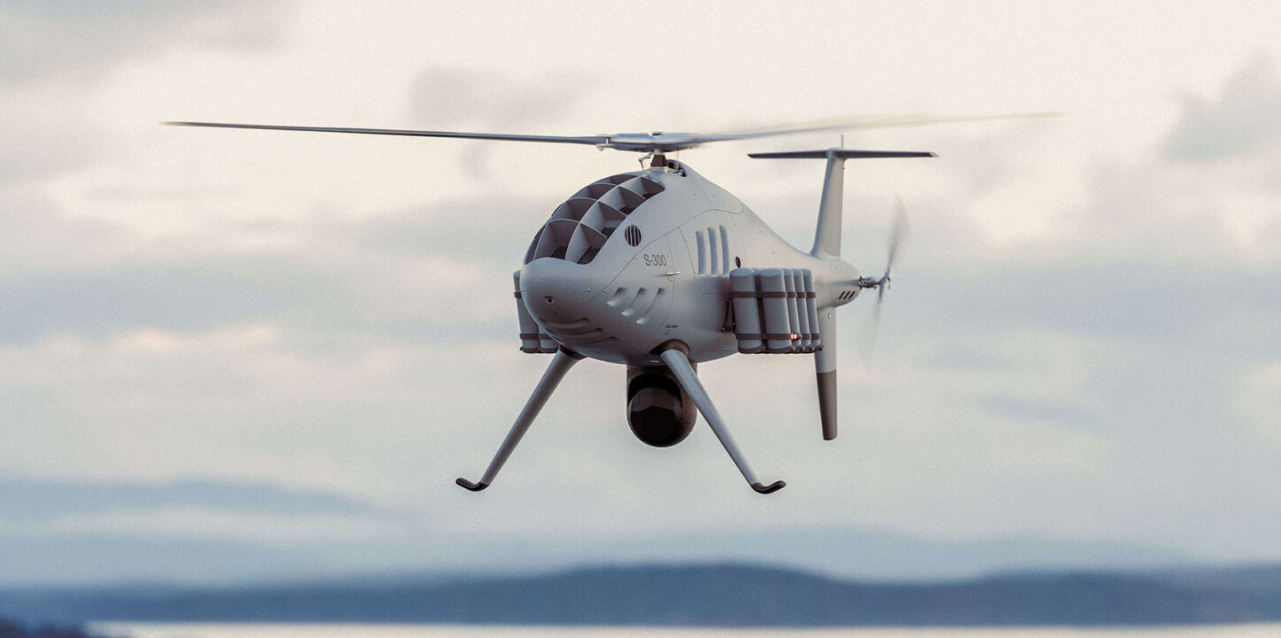
With the selection of Schiebel’s Camcopter S-300 as the aerial platform for the European SWORD (Stand-off Anti-Submarine Warfare Operations by Remote Deployment) project, Europe is signalling a decisive shift toward networked, drone-enabled anti-submarine warfare (ASW).
This is not just another defense program.
It is a blueprint for how modern naval combat will be fought: distributed, autonomous, and deeply interconnected.
From Platforms to Systems: The “Sensor-to-Shooter” Revolution
At the heart of the SWORD project lies an ambitious objective: the creation of a seamless “sensor-to-shooter” chain.
This means integrating multiple systems—manned and unmanned—into a unified architecture capable of:
- Detecting underwater threats
- Tracking and classifying targets
- Delivering actionable data
- Enabling precise engagement decisions
In essence, SWORD aims to collapse the distance between detection and response.
In traditional naval operations, these stages are often fragmented across different platforms, introducing delays and inefficiencies. But in modern warfare, time is the most critical variable—and SWORD is designed to minimize it.
Why Drones Now Dominate the Maritime Domain
The inclusion of the Camcopter S-300 as the core aerial component reflects a broader trend: uncrewed systems are becoming essential force multipliers in maritime operations.
Unlike traditional helicopters or patrol aircraft, UAVs offer:
- Lower operational costs
- Extended deployment capability
- Reduced risk to personnel
- Greater flexibility in mission profiles
But the S-300 is not just another drone.
It represents a new class of high-capacity, long-endurance VTOL platforms, purpose-built for demanding environments like open-sea operations.
The S-300 Advantage: Designing for Distance and Payload
The Camcopter S-300 has been developed with a clear mission in mind: operate far from the host platform while carrying advanced sensor payloads.
Its key characteristics include:
- Vertical Take-Off and Landing (VTOL) capability, enabling deployment from ships and constrained environments
- High payload capacity, allowing integration of advanced maritime sensors and mission systems
- Extended range, enabling operations at significant stand-off distances
These features make it particularly suitable for maritime missions where sensors must be deployed far beyond the reach of the launching vessel.
In practical terms, this means naval units can:
- Extend their surveillance perimeter
- Reduce exposure to threats
- Maintain operational dominance over larger areas
A Multi-Role Drone for a Multi-Domain Fight
While the SWORD project focuses on anti-submarine warfare, the S-300 platform itself is highly versatile.
It can perform:
- ISR (Intelligence, Surveillance, Reconnaissance) missions
- Target acquisition and tracking
- Support for complex payload-driven operations
Crucially, it is designed for both:
- Maritime deployment
- Land-based operations
This flexibility reflects a key principle of modern defense design: platforms must be adaptable across multiple mission types and environments.
European Defense Integration in Action
Perhaps the most important aspect of the SWORD program is not the drone itself—but the collaborative framework behind it.
Led by TKMS Atlas Elektronik and supported by the European Defence Fund, the project brings together multiple European defense and technology companies.
This collaborative model serves several strategic objectives:
- Strengthening Europe’s defense industrial base
- Promoting technological sovereignty
- Accelerating innovation through shared expertise
In an era of rising geopolitical tension, such cooperation is no longer optional—it is strategically essential.
The Bigger Shift: Stand-Off Warfare Becomes Standard
The concept of stand-off operations is central to SWORD.
Rather than placing high-value naval assets at risk, forces deploy remote systems to:
- Extend operational reach
- Gather intelligence
- Engage threats from a safe distance
The integration of UAVs into ASW operations is a natural evolution of this doctrine.
It allows navies to project power without exposing critical platforms—turning distance into a tactical advantage.
Conclusion: The Ocean Battlefield Is Being Rewritten
The selection of the Camcopter S-300 for the SWORD program is more than an equipment choice.
It is a signal.
A signal that naval warfare is moving toward:
- Autonomous systems
- Networked operations
- Distributed sensing and engagement
In this new paradigm, success will not depend on who has the most ships or submarines.
It will depend on who can connect systems, process data, and act faster than the adversary.
And increasingly, the first step in that chain will not come from beneath the waves—
but from drones flying far above them.
%20(1)%20(1).jpg)