Germany’s “Speartooth” - Underwater Warfare Goes Autonomous
While the world watches drones dominate the skies, a quieter revolution is unfolding far below the ocean’s surface.
Germany’s decision to test the Speartooth underwater drone is not just a technical trial—it’s a signal that the next phase of modern warfare is moving into a domain that is harder to see, harder to monitor, and potentially far more dangerous.
Because unlike aerial drones, underwater systems operate where transparency disappears—and strategic ambiguity thrives.
The Rise of the “Underwater Truck”
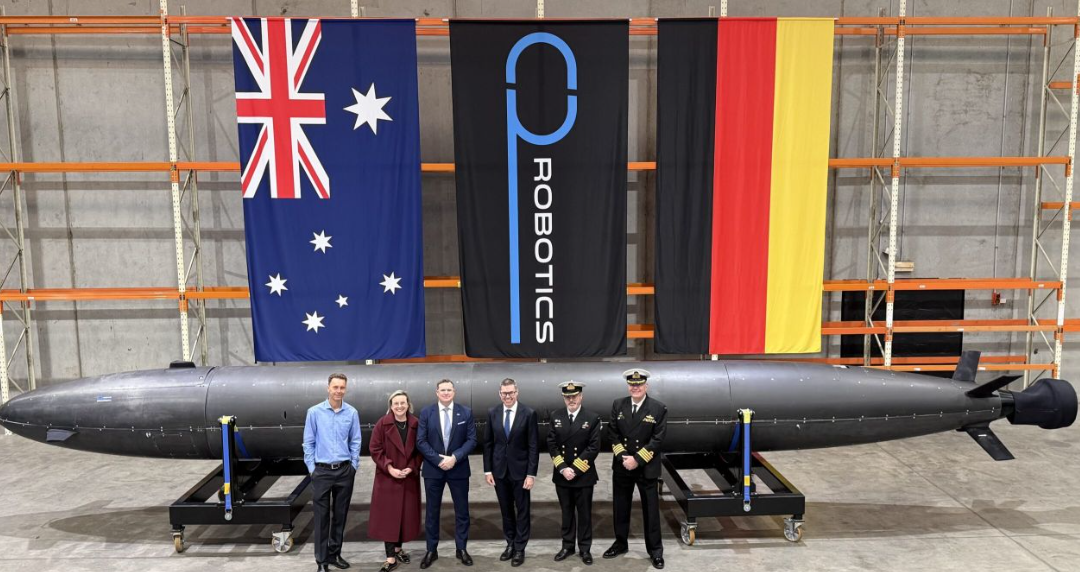
At first glance, the Speartooth doesn’t fit neatly into conventional military categories. It’s not a traditional submarine, nor a simple drone. It’s something else entirely: a large uncrewed underwater vehicle (LUUV) designed to act as a modular payload carrier.
Think of it less as a weapon—and more as infrastructure.
The system is built around flexibility. Two modular payload bays can carry up to one ton each, transforming the drone into whatever mission demands—surveillance platform, logistics carrier, or mine deployment system.
In military terms, that means one thing: adaptability at scale.
And adaptability wins wars.
Not Built for One Mission—Built for All
The Speartooth’s most provocative feature is not its capability—but its lack of specialization.
It wasn’t designed for a single purpose.
It can:
- Monitor strategic maritime zones
- Deploy mines to control access to key waterways
- Carry sensors for persistent surveillance
- Potentially support covert logistics missions
This “multi-role by design” philosophy reflects a deeper shift in defense thinking.
Modern systems are no longer optimized for a specific battlefield function. They are built to be reconfigured, reprogrammed, and redeployed—fast.
In a conflict where conditions change constantly, the winner isn’t the best weapon.
It’s the most flexible one.
The Invisible Domain of Modern Conflict
The Bundeswehr’s interest in Speartooth highlights something often underestimated:
The ocean is becoming one of the most contested strategic environments on the planet.
Why?
Because critical infrastructure—data cables, energy pipelines, shipping routes—runs through it.
And unlike land or airspace, monitoring underwater activity is extraordinarily difficult.
That makes it the perfect domain for:
- Covert operations
- Infrastructure sabotage
- Persistent surveillance
- Strategic positioning without escalation
An autonomous underwater vehicle like Speartooth can operate silently for extended distances—reportedly over hundreds of nautical miles—and adapt to different mission profiles.
That combination of reach and invisibility is exactly what modern militaries need—and fear.
NATO’s Quiet Capability Race
Germany is not alone in this shift.
The partnership behind Speartooth—linking Australian developer C2 Robotics with European partner EUROBOTICS—reflects a wider pattern: alliances are increasingly built around shared platforms, not just shared doctrines.
That matters.
Because modular systems allow:
- Shared payload development across countries
- Faster deployment through standardized interfaces
- Reduced costs through scalable production
In other words, this isn’t just a drone.
It’s part of an ecosystem.
And ecosystems scale faster than isolated systems.
The Shadow Side: Dual-Use Power
But here’s the uncomfortable reality.
The same features that make Speartooth attractive—modularity, autonomy, flexibility—also make it difficult to classify or control.
Is it a surveillance tool?
A logistics platform?
A mine layer?
The answer is all of the above.
This ambiguity is not a flaw. It is a feature.
And it creates a new kind of strategic uncertainty—where capabilities are hidden not just in deployment, but in design itself.
The Shift Beneath the Surface
The global focus on drone warfare has largely been aerial.
FPV drones. Kamikaze systems. High-speed interceptors.
But the next evolution may be quieter—and far harder to counter.
Underwater systems do not rely on GPS signals that can be jammed. They are harder to detect. Harder to intercept. And capable of operating in environments where traditional defenses struggle.
That makes them ideal for the next phase of military competition—where visibility is a liability.
Final Depth
Germany’s Speartooth trial is not about one drone.
It is about a new strategic layer.
A layer where:
- Autonomy replaces crew
- Modularity replaces specialization
- And invisibility becomes the ultimate advantage
While the world debates dominance in the air, the real contest may already be shifting—quietly, persistently—into the depths.
Because the future of warfare isn’t just about who controls the skies.
It’s about who controls what no one else can see.
%20(1)%20(1).jpg)