Bots Before Boots - Inside ONDAS & Sentrycs “Iron Wave,” the Robotic System Rewiring Modern War
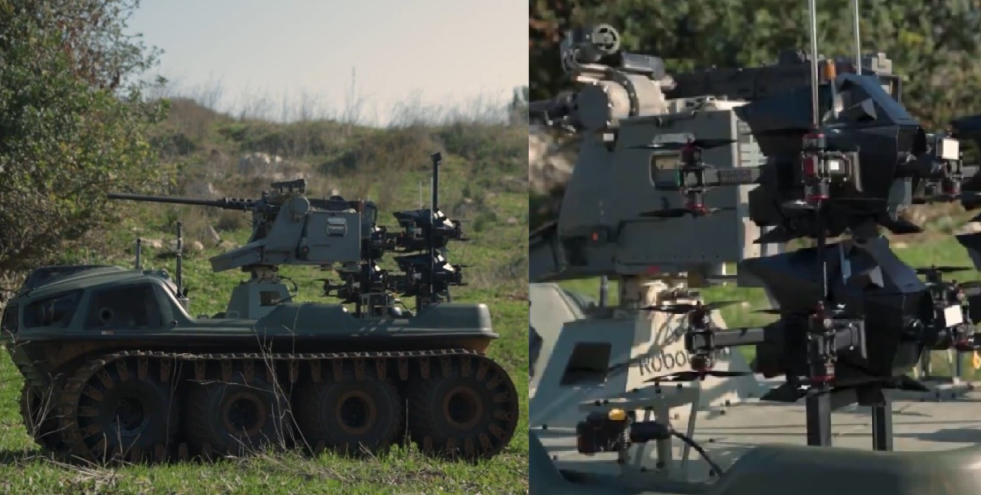
War has always been about presence—boots on the ground, soldiers in the line of fire. But “Iron Wave” is built on a radically different premise: remove the human from the front line, and let machines take the risk.
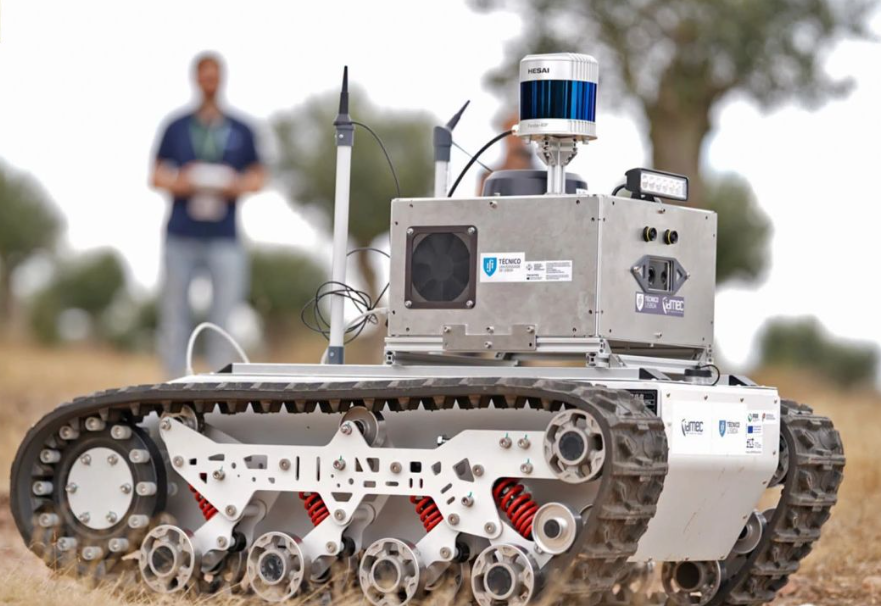
Unveiled by Ondas Holdings on May 16, 2026, Iron Wave is not just another piece of military hardware. It is an architecture—a system-of-systems that fuses unmanned ground vehicles, aerial drones, surveillance technologies and counter-drone defenses into a single synchronized network. If previous wars were fought by humans with machines, the next generation may be fought by machines directed by humans.
Or perhaps, increasingly, by machines themselves.
At the heart of Iron Wave lies a powerful idea: centralized control in a decentralized battlefield. Traditional unmanned ground vehicle operations suffer from a fundamental bottleneck—operator dependency. One human per robot. Scale becomes expensive, slow, and operationally fragile. Iron Wave disrupts that equation.
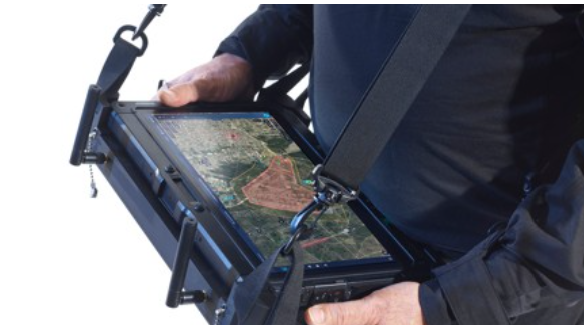
Through a centralized command hub, a reduced number of operators can oversee a swarm of platforms simultaneously, stretching coverage across larger areas while accelerating response times. It’s not just an efficiency gain—it’s a strategic shift. Control becomes lighter. Reach becomes longer. Exposure drops dramatically.
But efficiency is only part of the story.
Iron Wave is designed as a modular system, meaning it is never fixed, never static. Sensors, payloads, electronic warfare tools, and reconnaissance systems can be swapped depending on mission needs. Today, it might monitor perimeters. Tomorrow, it might detect threats. Next week, it could actively engage them. Flexibility is no longer a feature—it’s the foundation.
This adaptability is particularly critical in modern conflict zones where conditions evolve hourly. Static platforms struggle. Modular systems survive.
And then there is vision—the ability to see without being seen.
Iron Wave integrates advanced intelligence, surveillance and reconnaissance (ISR) capabilities, allowing operators to monitor terrain, identify targets, and track movements remotely. Autonomous drones and robotic vehicles extend situational awareness deep into contested zones, removing soldiers from the most dangerous exposures. The battlefield becomes visible—from a distance.
But in today’s conflicts, seeing is not enough. Surviving the airspace is just as critical.
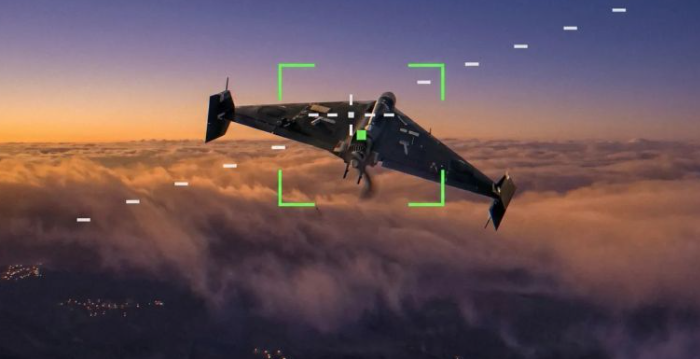
Drones have flooded modern warfare, from Ukraine to the Middle East, turning the sky into a battlefield of its own. Iron Wave answers this with integrated counter-unmanned aerial systems. Its “Iron Drone Raider” interceptor doesn’t jam signals or rely on GPS—it hunts. Using radar, computer vision and AI-assisted targeting, it physically intercepts hostile drones using a net-based mechanism.
It’s clean. It’s contained. And it avoids disrupting friendly systems—a subtle but critical advantage in tech-saturated environments.
What makes Iron Wave particularly compelling is how it collapses complexity. Instead of deploying separate systems for mobility, surveillance, and defense, it brings them together into a unified operational framework. Ground robots, aerial drones, ISR payloads, counter-drone interceptors—all speaking the same digital language.
That convergence reflects a broader reality: modern warfare is no longer linear. It’s multi-domain, fast-moving and data-driven. Systems that cannot adapt—or cannot integrate—simply fall behind.
Behind Iron Wave stands Ondas’ expanding ecosystem of autonomous technologies, including aerial platforms, propulsion systems and tactical robotics developed across multiple subsidiaries. This is not a standalone product launch; it is the visible tip of a rapidly scaling industrial strategy.
And it is built on real-world lessons. Conflicts in Ukraine, Africa and the Middle East have revealed a clear trend: drones are everywhere, risks are rising, and human exposure is increasingly unacceptable.
Iron Wave doesn’t just respond to those realities—it accelerates them.
Because the ultimate implication is unavoidable: when machines handle reconnaissance, coverage, interception and even engagement, what is left for the soldier?
Command. Decision. Oversight.
The rest is being automated.
“Bots before boots” is no longer a slogan. It’s becoming doctrine.
And once doctrine changes, everything else follows.