ONBERG Autonomous Systems - Heidelberger Druckmaschinen AG and Ondas New Drone Defense System in Brandenburg

For more than a century, Heidelberger Druckmaschinen was synonymous with printing presses. Today, the company is applying the same industrial logic to a very different product: autonomous drone defense systems.
The German engineering group has formed a joint venture with Ondas Autonomous Systems, an Israeli‑American specialist in counter‑drone technology, to manufacture and market drone defense solutions in Europe. The new entity, called ONBERG Autonomous Systems, will be based in Brandenburg an der Havel, where Heidelberg plans to gradually expand production and integration capabilities. Ondas holds 51% of the venture, while Heidelberg owns 49%.
The move marks Heidelberg’s most concrete step yet into the defense sector—one it has been signaling for months.
ONBERG will initially produce autonomous systems designed to detect, track, and neutralize hostile drones. The focus is on protecting critical infrastructure, including power plants, industrial facilities, and government institutions such as police and security authorities. According to Heidelberg, the joint venture is intended to become a European “one‑stop shop” for autonomous drone defense systems, combining battle‑proven technology with German industrial manufacturing scale.
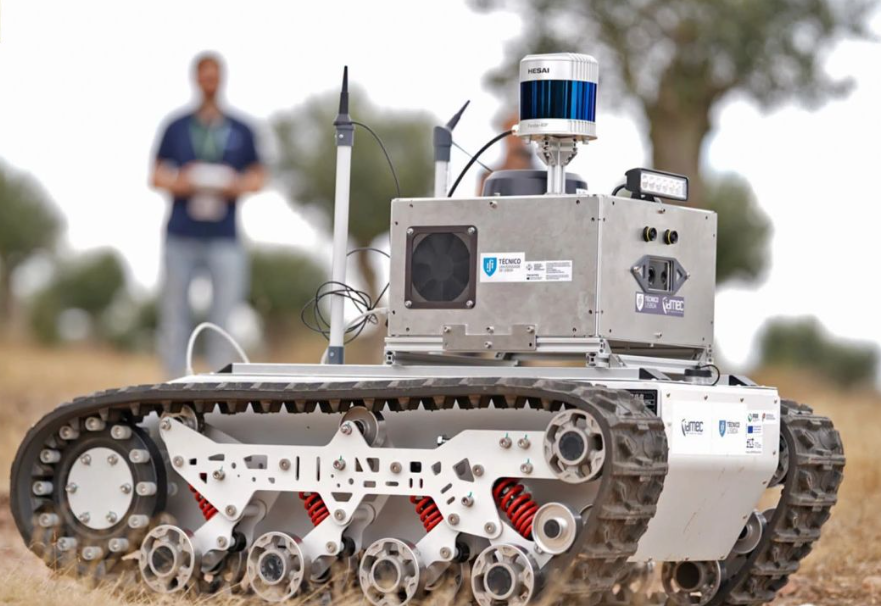
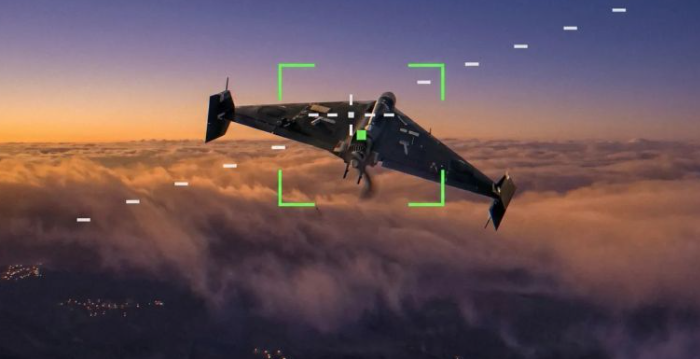
The system itself operates largely autonomously. Intelligent cameras supported by radar, infrared sensors, and electronic scanning detect unauthorized drones entering protected airspace. Electronic countermeasures can disrupt or manipulate GPS signals to force a drone to land. If that fails, an interceptor drone is deployed to bring the target down in a controlled manner. The technology can also help locate the drone operator on the ground, according to company statements.
For Ondas, producing in Germany is a strategic shift. Local manufacturing is expected to ease market access in Europe, particularly for security‑sensitive customers. Over time, the partners plan to replace non‑European components and build a largely European value chain, a move aimed at strengthening sovereignty and reducing dependency in a sector increasingly shaped by geopolitical tension.
“This joint venture is just the beginning,” Heidelberg CEO Jürgen Otto said, adding that further projects and partnerships in the defense and security domain are expected to follow. For Heidelberg, the venture fits into a broader strategy of expanding its dual‑use business, applying industrial automation, precision engineering, and scalable manufacturing to markets beyond traditional printing technology.
The choice of Brandenburg an der Havel is deliberate. Heidelberg already operates infrastructure there, allowing the company to scale production without starting from scratch. The site is planned to evolve into a center of excellence for autonomous security and drone defense systems, covering assembly, integration, and eventually more advanced manufacturing steps.
The timing is notable. Across Europe, drone incidents near military bases, industrial sites, and energy infrastructure have increased sharply. Governments are under pressure to close gaps in low‑altitude air defense, particularly against small, commercially available drones that are difficult to detect and cheap to deploy. Counter‑drone systems are no longer niche products—they are fast becoming standard security infrastructure.
Heidelberg’s pivot also reflects a broader industrial trend. Companies with deep manufacturing expertise but slowing legacy markets are increasingly looking to defense and security, where demand is rising and long‑term investment cycles are supported by public budgets. For Heidelberg, the shift is not about abandoning its heritage, but repurposing it.
The partnership with Ondas underscores this logic. Ondas brings operational experience and technology already deployed in real‑world environments. Heidelberg brings industrial scale, process discipline, and the ability to localize production to meet European regulatory and security requirements.
If successful, ONBERG could become a blueprint for how traditional industrial firms re‑enter the defense ecosystem—not as arms manufacturers in the classical sense, but as system integrators for a new generation of autonomous security technologies.
For a company that once shaped how the world printed newspapers, Heidelberg is now helping shape how Europe protects its skies.
.jpg)