Sentrycs Scout - he Rise of Silent, Mobile Counter-UAS Warfare
The battlefield is changing—and so are the threats. Drones, once niche surveillance tools, have become ubiquitous across conflict zones, borders, and critical infrastructure sites. They are cheap, adaptable, and increasingly difficult to detect. But perhaps the most pressing challenge is this: they don’t stay still.
Modern threats move with the mission. And now, defense technology is catching up.
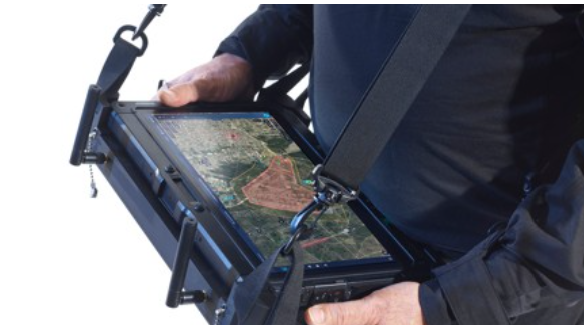
At SOF Week in Florida, Sentrycs unveiled its latest counter-UAS solution, Sentrycs Scout—a portable, man-carried system designed not just to detect and disrupt drones, but to do so quietly, precisely, and on the move. In doing so, Scout reflects a broader evolution in counter-drone strategy: from fixed, brute-force defenses to agile, software-driven control systems.
What makes Scout stand out is not just its portability, but its approach.
Traditional counter-UAS systems often rely on jamming signals or kinetic solutions to neutralize threats. These methods can be effective—but they come at a cost. Jamming risks disrupting friendly communications, while kinetic responses can create collateral damage, especially in urban or congested environments. In contrast, Sentrycs is betting on a different paradigm: Cyber over RF (CoRF).
Rather than overpowering a drone, CoRF technology interacts with its communication protocols. It allows operators to detect, track, identify, and ultimately take control of unauthorized drones—forcing them to land safely in designated areas. This is counter-drone warfare without explosions, without interference, and without drawing attention.
It is, in a word, controlled.
This capability is especially relevant in today’s operational environments, where complexity rules. From dense urban centers to dynamic combat zones, forces need solutions that can operate discreetly while maintaining full situational awareness. Scout’s passive detection system enables exactly that. By listening rather than broadcasting, it avoids revealing its own position—a critical advantage for tactical units.
The intelligence layer is equally important. The system doesn’t just detect drones—it provides actionable insights. Serial numbers, operator locations, flight characteristics—this is data that transforms a reactive response into a proactive strategy. Instead of simply neutralizing a drone, operators gain visibility into the wider network behind it.
That’s a game changer.
But what truly defines Scout is its mobility-first design philosophy. The system is compact, battery-powered, and ruggedized for field operations. It requires no fixed infrastructure, no setup time, and no dependence on external systems. Whether it’s deployed for convoy protection, border patrol, or infrastructure security, Scout moves with the mission—delivering real-time protection wherever it is needed.
This mobility reflects a deeper shift in defense strategy. As threats become more decentralized and fluid, static defenses become less effective. The future belongs to systems that are distributed, adaptable, and seamlessly integrated into operations on the ground.
Scout fits squarely into this vision.
At the same time, its development highlights the growing importance of software-defined defense capabilities. The ability to manipulate drone protocols, integrate intelligence, and execute precise mitigation actions is not about hardware alone—it is about software, data, and control. In many ways, counter-UAS systems are becoming less like traditional weapons and more like digital platforms.
This has broader implications.
As drones continue to proliferate—not just in military contexts, but across commercial and civilian spaces—the need for nuanced countermeasures will only grow. Airports, power plants, public events, and urban centers all face similar challenges. Solutions like Scout, which prioritize control over disruption, offer a path forward that balances security with operational continuity.
Of course, challenges remain. The rapid evolution of drone technology means that countermeasures must constantly adapt. New communication protocols, autonomous capabilities, and swarm tactics could test the limits of current systems. But if Scout represents the direction of travel, then the industry is clearly moving toward precision over power, and intelligence over brute force.
In the end, the message is clear: the next generation of counter-drone defense won’t be loud, visible, or destructive.
It will be silent, mobile—and in control.
%20(1).jpg)