
The Drone That Refuses to Lose - Why the GDU Tech P300 Makes Blind Flight Obsolete
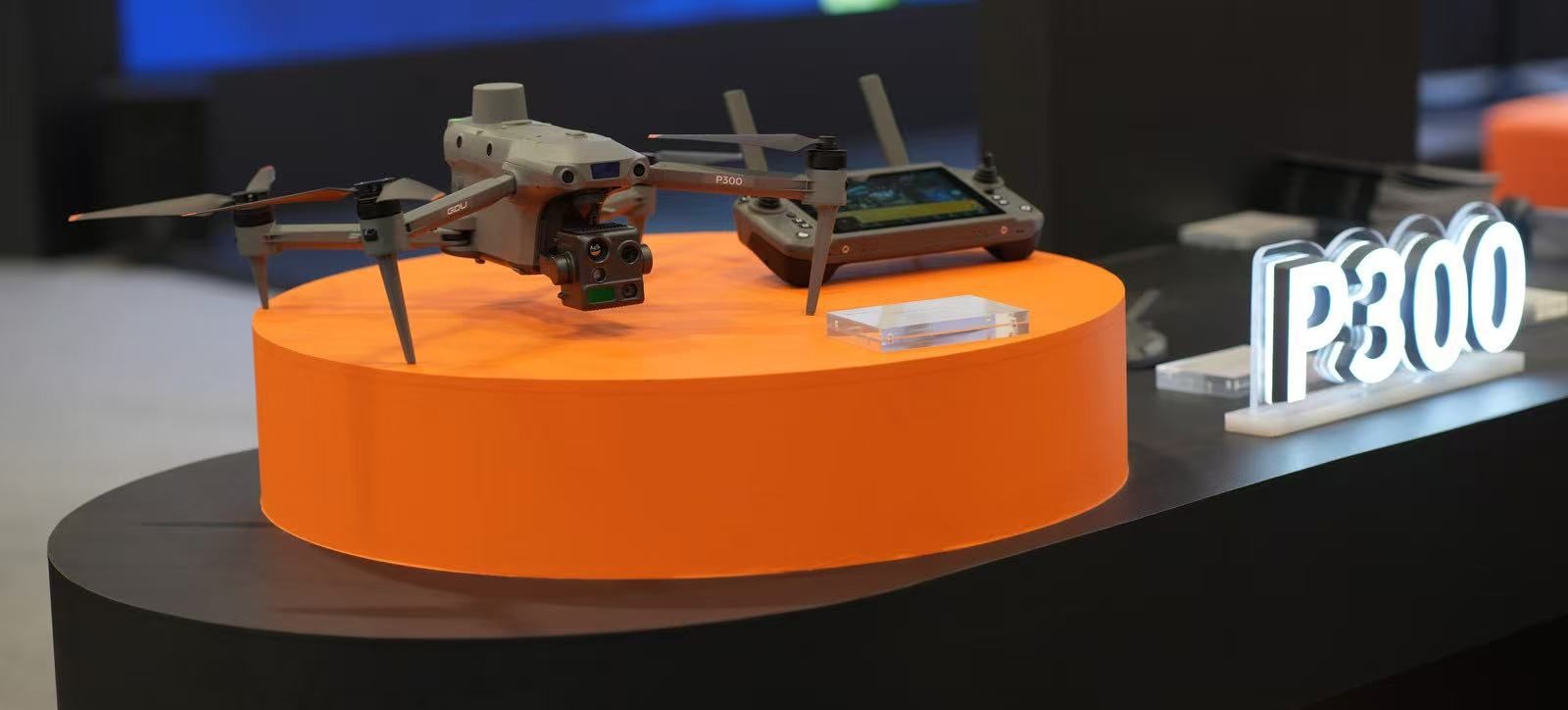
There’s a moment in every technological era when the machine stops asking for permission. It simply works - through darkness, interference, uncertainty. That moment is arriving in the skies, and its name is the P300.
Built by GDU Tech, the P300 isn’t just another enterprise drone flexing specs for a glossy brochure. It’s a quiet provocation to the old rules of aerial operations - the ones that assumed drones must see clearly, hear satellites, and hope the environment cooperates. The P300 assumes none of that. It flies anyway.
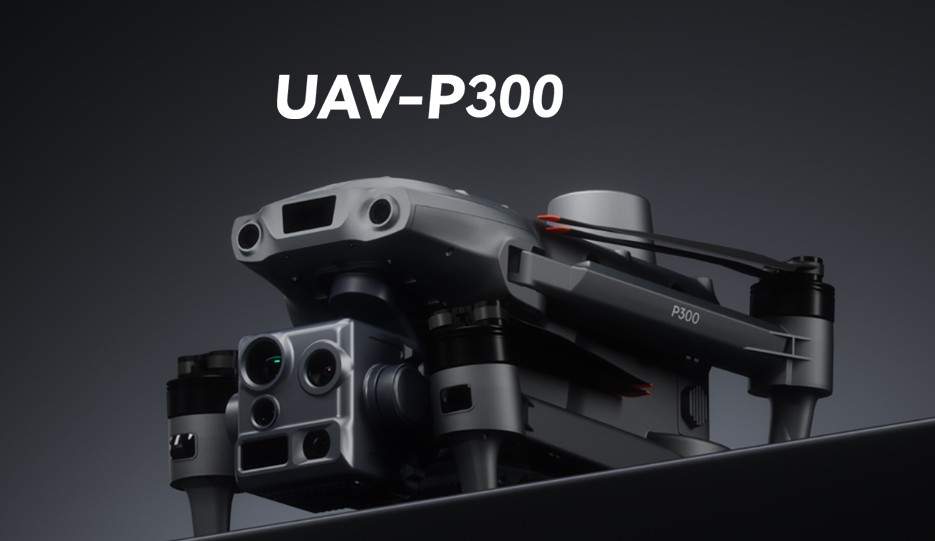
Start with vision. Real vision, not marketing vision. A massive 1/0.98-inch wide-angle sensor feeds 50 megapixels of data into an onboard brain capable of processing up to 21T of computing power. The result isn’t just sharp imagery - it’s situational awareness. Full-color 4K starlight night vision means darkness is no longer a constraint; fog, glare, and backlight are problems already solved. When others see noise, the P300 sees patterns.
Then there’s infrared. Not the blurry, low-contrast thermal imagery we’ve learned to tolerate, but a 640 thermal module with NETD ≤30 mK, enhanced by AI video UHR upscaling and up to 32x AI zoom. Targets don’t fade into the background. They declare themselves. Near or far, day or night, complexity becomes clarity.
But vision without judgment is just data. This is where the P300 becomes unsettling - in a good way. LiDAR-powered, AI-driven omnidirectional obstacle avoidance doesn’t just detect hazards; it anticipates them. Trees, wires, buildings, terrain shifts - the drone doesn’t panic, hesitate, or require constant human babysitting. It navigates like something that understands consequences.
And when the world goes quiet - no GNSS, no reliable data links - the P300 doesn’t fall out of the sky or drift into expensive uncertainty. Visual SLAM fusion navigation steps in, allowing the aircraft to localize, map, and move with confidence. Add image transmission anti-interference technology and a hardened return-to-home logic, and you get something rare in unmanned aviation: trust.
Precision is another quiet revolution here. With laser pinpointing up to 2,000 meters, operators can mark points, lines, and areas with speed and accuracy that feels almost unfair. Measurement becomes instant. Coordination becomes frictionless, especially when shared through Uver for real-time collaboration. This isn’t just flying - it’s decision-making at altitude.
Of course, no serious platform survives on sensors alone. The P300 is a modular workhorse, supporting an expanding ecosystem of payloads: mini night-vision penta, quad-sensor systems, speakers, spotlights, AI boxes, and more. One airframe, many missions. Smart cities, power grid inspection, ecological protection, emergency firefighting, large-scale event security - this is not specialization. This is adaptability weaponized for good.
The subtext of the P300 is simple and disruptive: the sky is no longer a fragile operating environment. With AI obstacle avoidance, interference-resistant navigation, and uncompromising imaging, flight becomes routine - even when conditions are not.
That’s the real provocation. The P300 doesn’t promise safer missions someday. It delivers worry-free flight now. And once operators experience a drone that refuses to be blinded, blocked, or confused, there’s no going back.
.png)
.jpg)


