Above the Clouds, Beyond the Limits. Inside the World's Highest Research Station
Most innovation centers are built where talent, infrastructure, and resources are easy to access.
India chose the opposite approach.
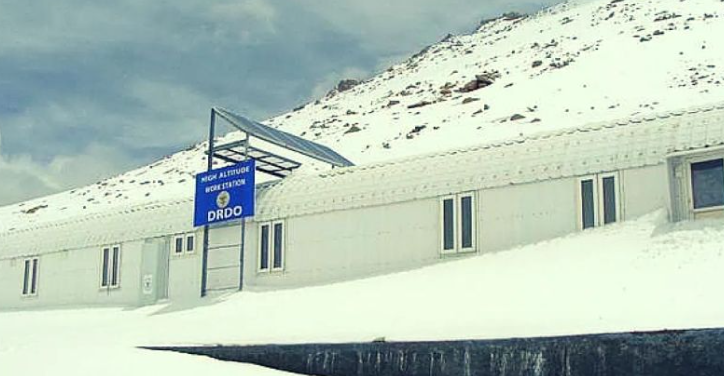
High in the barren mountains of Ladakh, at an altitude of 17,600 feet (5,364 meters) above sea level, stands one of the most remarkable scientific facilities on Earth: the Defence Institute of High Altitude Research (DIHAR), operated by India's Defence Research and Development Organisation (DRDO).
The location is so extreme that many people struggle simply to breathe.
Temperatures plunge below freezing. Oxygen levels can fall to nearly half of what people experience at sea level. The terrain is unforgiving, isolated, and hostile.
Yet this is precisely why the facility exists.
Because the future of defense, logistics, human performance, and climate-resilient technology may be shaped not in comfortable laboratories—but in places where nature pushes humans to their limits.
The Laboratory That Nature Built
Modern militaries spend billions creating simulated environments.
DIHAR has something better: reality.
Located at Chang La, one of the highest motorable passes in the world, the facility serves as a natural cold-desert test range where technologies face conditions impossible to replicate completely in conventional laboratories.
Here, scientists do not need artificial chambers to test equipment under extreme stress.
The mountain provides the perfect experiment.
Electronics face freezing temperatures.
Batteries encounter severe performance degradation.
Machinery operates in thin air.
Humans experience physiological stress every day.
Failure is immediate.
Success is meaningful.
The Hidden Battle Against Altitude
Military power is often associated with missiles, aircraft, and advanced weapon systems.
Yet one of the greatest challenges for soldiers deployed in high-altitude regions remains profoundly human: survival.
Troops operating in mountainous borders must contend with hypoxia, extreme weather, dehydration, fatigue, and long-term physiological stress.
A soldier weakened by altitude becomes less effective regardless of how advanced their equipment may be.
That is why DIHAR's research into human acclimatization is strategically important.
Scientists study how the body adapts to oxygen deprivation, prolonged exposure to harsh climates, and operational stress under extreme conditions.
The research may not produce dramatic headlines, but it directly influences military readiness where geography becomes an adversary.
Growing Food Where Nothing Should Grow
Perhaps the most fascinating work conducted at DIHAR involves agriculture.
Conventional wisdom suggests that cultivating fresh vegetables in cold desert environments is nearly impossible.
The institute is working to prove otherwise.
Using micro-climate farming technologies and controlled cultivation systems, researchers explore ways to grow fresh produce in some of the harshest environments on the planet.
The implications extend far beyond military bases.
Remote communities, isolated research stations, disaster zones, and regions impacted by climate change face similar challenges.
The ability to produce food under extreme conditions could become increasingly valuable as global environmental pressures intensify.
A Test Center for Tomorrow's Technologies
Extreme altitude creates a unique proving ground for engineering innovation.
Batteries lose efficiency.
Electronics malfunction.
Sensors behave differently.
Materials experience unusual stresses.
What survives at Chang La can often survive almost anywhere.
This makes DIHAR an invaluable environment for evaluating technologies intended for military, aerospace, and remote infrastructure applications.
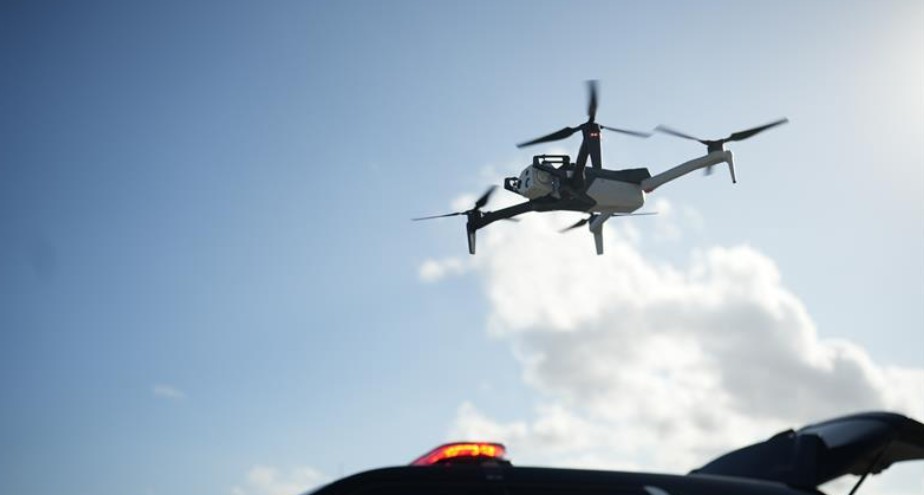
As autonomous systems, drones, communications networks, and energy storage solutions become increasingly critical, testing them in demanding conditions becomes a competitive advantage.
The future belongs not merely to technologies that work under ideal conditions.
It belongs to technologies that work when conditions become brutal.
The New Frontier Is Not Space
The most provocative lesson from DIHAR is that innovation does not always require leaving Earth.
Governments and companies spend enormous resources pursuing lunar exploration, Mars missions, and orbital infrastructure.
Those ambitions matter.
But some of the toughest environments known to humanity already exist on our own planet.
High-altitude deserts, polar regions, deep oceans, and remote mountain ranges continue to challenge scientists and engineers every day.
These environments provide insights into human endurance, resource sustainability, and technological resilience that may eventually support exploration beyond Earth itself.
A Glimpse Into the Future
The world often measures innovation through skyscrapers, technology campuses, and urban laboratories.
DIHAR offers a different vision.
It demonstrates that some of the most important breakthroughs emerge where challenges are greatest.
At 17,600 feet, every experiment becomes a confrontation with nature.
Every success represents proof that people, technology, and determination can overcome extraordinary constraints.
In a century increasingly defined by resilience, climate adaptation, resource security, and technological sovereignty, facilities like DIHAR are quietly redefining what innovation means.
Far above the clouds, in one of the harshest environments on Earth, the future is already being tested.
%20(1).jpg)