A Death in a Russian Plague Institute, a Soviet Shadow and One Crucial Missing Answer
A 28-year-old researcher dies from severe pneumonia after working at a Russian institute that handles dangerous pathogens. Authorities say they found no organism connected to her work. The cause remains unconfirmed.
Then a former senior United States arms-control official delivers an explosive warning: this could be “far worse” than plague.
The warning is provocative. The evidence behind it is not yet conclusive.
That tension now sits at the center of the case involving a researcher at the Irkutsk Research Anti-Plague Institute of Siberia and the Far East. Russian authorities described her illness as pneumonia of undetermined origin and said expanded testing found no microorganisms linked to her professional activity. They also reported no confirmed plague or other high-threat pathogen among her close contacts. The World Health Organization was still awaiting confirmation of what caused her fatal pneumonia when the available reporting was published.
Those official statements argue against an identified plague infection. They do not explain what killed her.
A warning rooted in the Soviet past
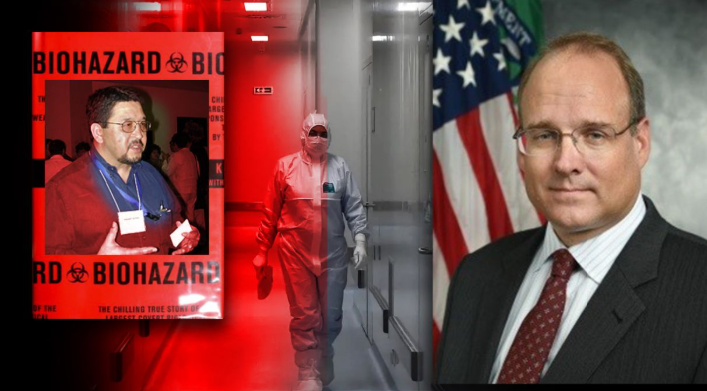
Marshall Billingslea, a former United States special presidential envoy for arms control, connected the incident to information he says he received from Ken Alibek, a senior figure in the former Soviet biological-weapons program who later defected to the United States.
According to Billingslea, Alibek told him that Soviet researchers had engineered antibiotic-resistant plague and worked on pathogen combinations, and that Irkutsk had been involved in the biological-weapons program.
But an important distinction is necessary: this is a historical allegation about Soviet research, not proof that the researcher died from such an organism. A subsequent account noted that Billingslea did not recall Alibek specifically saying the resistant strains were developed at the Irkutsk facility itself.
There is also no publicly confirmed evidence in the reviewed sources that the death resulted from plague, an engineered pathogen or a laboratory release.
That does not make the case unimportant. It makes accuracy more important.
“Not plague” is not a diagnosis
Kevin Esvelt, an MIT professor whose work includes biological security and catastrophic pandemic risk, focused on the unresolved gap in the official account. He wrote that, if the Russian authorities’ statements were accepted, the cause was not plague. But he questioned why modern, untargeted research-grade sequencing had apparently not produced a clear explanation for the fatal pneumonia.
His point was not that a secret weapon had been identified. It was that an unexplained death at a pathogen institute demands a transparent and technically credible explanation.
The historical background makes that demand harder to dismiss. The United States State Department’s 2025 arms-control compliance report assessed that Russia had absorbed rather than dismantled the Soviet offensive biological-weapons program, and that it had “continued and evolved.” Russia rejects Western accusations surrounding biological weapons, but the institute case arrives against this deep background of mistrust.
Alibek also publicly described the Soviet program in his 1999 book, Biohazard. However, a former insider’s account remains historical testimony. It cannot establish the cause of a specific death decades later without current laboratory evidence.
The responsible conclusion is uncomfortable
There are three separate facts that should not be collapsed into one sensational claim.
A young researcher died from pneumonia of undetermined origin. Russian authorities say they detected no work-related microorganism and no plague among the tested contacts. A former American official has raised a frightening possibility based on information about Soviet-era biological research.
What remains missing is the decisive element: verified evidence identifying the cause of death.
Until that exists, claiming an engineered-plague incident would go beyond the available facts. Dismissing the case merely because initial testing did not identify plague would also leave the central question unanswered.
The most alarming part of this story is not that the worst scenario has been proven.
It is that, amid Russia’s history of secrecy and biological-weapons allegations, the world is still being asked to trust an unexplained diagnosis with no publicly confirmed pathogen behind it.