25,000 Drone Interceptors: The Moment Air Defence Became Ammunition
A limited number of highly sophisticated systems protected critical assets against a limited number of highly sophisticated threats. Every missile was expensive. Every interceptor mattered. Every launch was a calculation.
The logic was clear because the economics were clear.
Then came the drone age.
And with it came a problem traditional air defence was never designed to solve.
What happens when the attacker can afford to lose hundreds of systems?
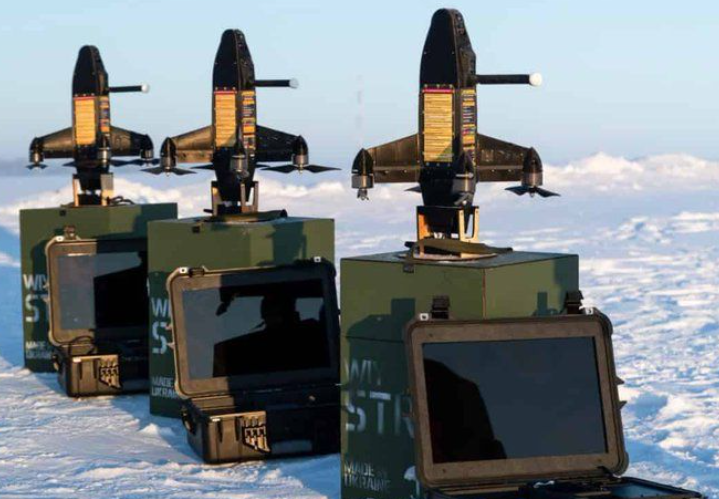
The reported expansion of Ukraine's STRILA procurement from 15,000 to 25,000 interceptor drones may prove to be one of the most important indicators of where modern warfare is heading. Not because of the drone itself. Not because of its specifications.
Because of the number.
Twenty-five thousand.
That figure tells us something profound about how air defence is beginning to evolve.
It is no longer being organized around platforms.
It is increasingly being organized around volume.
For generations, military procurement revolved around acquiring a relatively small number of extremely capable systems. Fighter aircraft, surface-to-air missiles, radars, tanks, warships. The assumption was that superior technology would compensate for limited quantity.
That assumption worked when targets were scarce.
It becomes much harder to sustain when threats arrive by the hundreds.
A Shahed drone does not need to survive. It only needs to make the defender spend resources.
This is the uncomfortable reality emerging from Ukraine.
The problem is not merely destroying a drone.
The problem is destroying it sustainably.
The mathematics of modern warfare are becoming as important as the physics.
An interceptor costing significantly less than the target it destroys is useful.
An interceptor that can be mass-produced, rapidly delivered, quickly replaced, and continuously upgraded is transformative.
That is why the reported STRILA expansion matters.
The real story is not that Ukraine wants more interceptors.
The real story is that Ukraine appears to want them in quantities traditionally associated with ammunition.
This represents a conceptual shift.
Historically, air defence assets were treated almost as strategic resources. Their production cycles were long, their numbers limited, and their replacement difficult.
Interceptor drones begin to blur the line between a weapon system and a consumable.
Lose one today.
Build another tomorrow.
Improve it next week.
Deploy the next batch next month.
The speed of iteration becomes almost as important as performance.
And this is where the strategic implications become fascinating.
For decades, military analysts often framed warfare as a competition between expensive platforms.
Which tank was superior?
Which fighter aircraft had the better sensor suite?
Which missile had the longest range?
The drone era is increasingly forcing a different question:
Which side can adapt faster?
The organization capable of identifying a weakness, modifying a design, scaling production, fielding improvements, and repeating the process may gain a decisive advantage even if its individual systems are technically inferior.
Industrial responsiveness becomes combat power.
Learning becomes combat power.
Production capacity becomes combat power.
The platform itself becomes only one component of a much larger system.
This is why the reported STRILA growth should be viewed as more than a procurement announcement.
It is a signal.
A signal that air defence may be entering the same transformation already visible in other domains of warfare.
Large numbers of relatively inexpensive systems are beginning to supplement, and in some cases challenge, traditional assumptions about force structure.
This does not mean expensive air-defence systems disappear.
Far from it.
Long-range air-defence missiles, sophisticated radars, and integrated command networks remain indispensable.
But they are increasingly being joined by a new layer of defence built around attritable systems.
The result is not the replacement of traditional air defence.
It is its evolution.
The most interesting question, therefore, is not whether STRILA can intercept drones.
The interesting question is what happens when multiple countries begin thinking in similar quantities.
When production is measured in tens of thousands.
When interceptor inventories resemble ammunition stockpiles.
When replacement cycles are measured in weeks rather than years.
At that point, the discussion stops being about drones.
It becomes a discussion about industrial capacity, organizational adaptability, and the ability to sustain combat over time.
And that may be the most important lesson emerging from Ukraine today.
The future of air defence may not belong to the side with the most sophisticated interceptor.
It may belong to the side capable of producing the next 10,000.