Winter Is Coming - Germany Is Opening Its Own Patriot Stockpiles for Ukraine
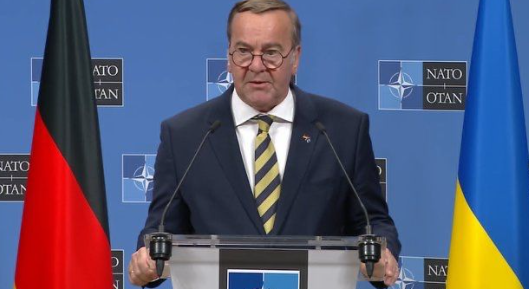
Germany is taking Patriot interceptor missiles out of its own military stockpiles and sending them to Ukraine.
That distinction matters.
German Defense Minister Boris Pistorius announced that Berlin will provide urgently needed PAC-2 interceptors from Bundeswehr inventories as Ukraine races to strengthen its air defenses before another winter of Russian missile and drone attacks.
“Preparing Ukraine for the winter is our highest priority,” Pistorius said, stressing the need for immediate action.
Germany is effectively making a calculation increasingly confronting every European government supporting Ukraine:
How much ammunition can you afford to keep in storage while another European country needs it today?
Ukraine Is Racing Against Winter
Russia has repeatedly targeted Ukraine's energy system and other critical infrastructure, making the approach of winter a strategic deadline rather than simply a change of season.
Patriot remains one of Ukraine's most important defenses against advanced aerial threats, particularly ballistic missiles.
The problem is ammunition.
Ukraine may possess Patriot batteries, but an air-defense launcher without sufficient interceptors rapidly loses its value.
And Patriot missiles are neither cheap nor easy to manufacture at enormous scale.
Germany's decision therefore addresses the immediate problem: Ukraine needs missiles that already exist.
Not missiles scheduled for a future production run.
Not missiles promised for delivery several years from now.
Missiles sitting in allied inventories today.
Germany Is Asking Others to Do the Same
Pistorius' announcement contained another important message.
Germany is urging other members of the Ukraine Defense Contact Group to examine their own inventories and consider additional transfers.
That could matter more than Germany's contribution alone.
Across NATO, individual countries maintain stocks of air-defense missiles for their own security. Each government must balance national readiness against Ukraine's immediate battlefield requirements.
But Ukraine is currently consuming air-defense ammunition in actual combat.
That creates an uncomfortable strategic question for Europe:
What exactly are those stockpiles being saved for?
Supporting Ukraine inevitably has limits; NATO members cannot simply empty their inventories. But Germany's decision suggests that Berlin believes the balance currently favors accepting additional risk at home to reinforce Ukraine before winter.
Patriot Isn't the Only Part of the Package
Germany's air-defense effort goes beyond PAC-2.
Berlin also plans to increase deliveries of AIM-9 air-to-air missiles from Bundeswehr stocks.
At the same time, Ukraine is expected to order several thousand additional IRIS-T guided missiles from Germany, financed through European funding.
That order could help justify another production line and expand manufacturing capacity.
The two approaches reveal the central challenge facing Western defense industry.
Ukraine needs two timelines simultaneously.
Today: transfer weapons that already exist.
Tomorrow: manufacture them in quantities large enough that emergency transfers are no longer necessary.
The first keeps Ukrainian air defenses operating through the coming months.
The second determines whether Europe can sustain a prolonged confrontation without continuously draining existing inventories.
From Aid Packages to Industrial Capacity
This is increasingly what the Ukraine war is forcing Europe to confront.
For decades, many European militaries optimized their forces around relatively small inventories of sophisticated weapons.
Ukraine has demonstrated what happens when those weapons enter a prolonged high-intensity conflict.
Interceptors are consumed.
Artillery shells disappear.
Drones are destroyed.
Production capacity becomes just as strategically important as the performance of the weapon itself.
Germany is now addressing both sides of that equation: releasing existing missiles while simultaneously supporting expanded European production.
The Missile Sitting in Storage vs. the Missile Needed Tonight
There is a deeper strategic argument behind Pistorius' decision.
A Patriot interceptor stored in Germany represents insurance against a potential future attack.
The same interceptor deployed in Ukraine could potentially stop a real attack on a European city tonight.
That does not make the decision to release national stockpiles easy.
It makes it consequential.
Germany has made its choice.
With winter approaching, some of the Bundeswehr's Patriot interceptors are leaving storage and heading toward the country where air-defense missiles are not theoretical deterrence.
They are fired for real.