€1 Billion for Trucks from Rheinmetall. Germany Is Rebuilding Its Army from the Ground Up
There are no headlines when ammunition arrives on time.
No viral videos when fuel reaches the front line.
No glory when supplies move exactly where they should.
And yet, that is exactly what wars are won on.
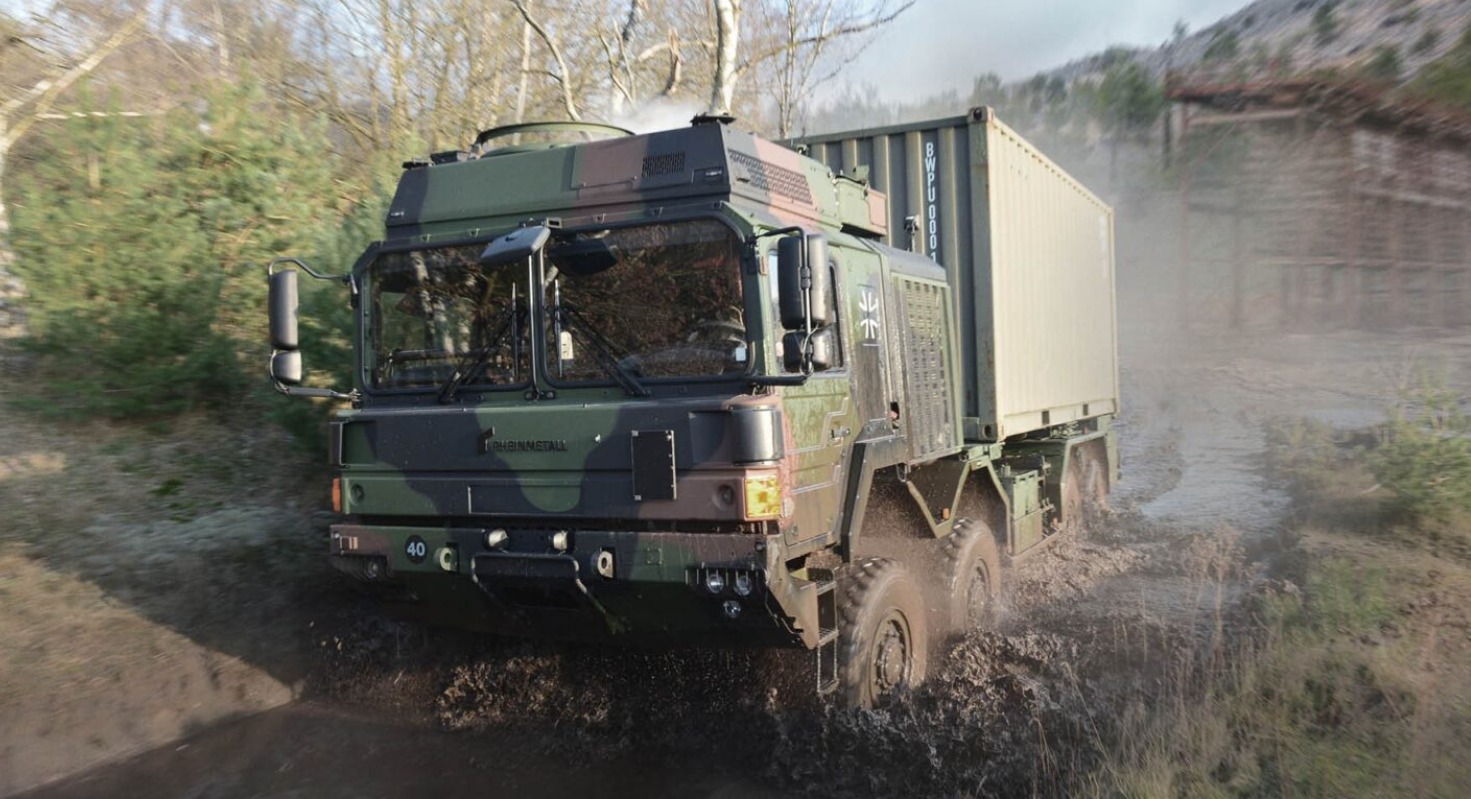
In May 2026, Germany made a move that might look unremarkable at first glance: the Bundeswehr ordered more than 2,000 military transport vehicles from Rheinmetall, in a deal worth over €1 billion.
But behind that number lies something far more consequential.
This is not a procurement story.
This is a signal of a fundamental shift in how Europe prepares for conflict.
The Return of Logistics as Strategy
For decades, military spending headlines focused on fighter jets, tanks, and missile systems.
The visible power.
But modern warfare—especially what we’ve seen in Ukraine—has exposed a harder truth:
👉 Logistics wins wars.
The Bundeswehr’s new fleet is made up of so-called Unprotected Transport Vehicles (UTF)—in 4×4, 6×6, and 8×8 configurations, capable of carrying between 3.5 and 15 tons.
These are not glamorous systems.
They don’t shoot. They don’t intercept. They don’t dominate headlines.
What they do is move everything that matters:
fuel, ammunition, spare parts, personnel.
And in modern conflict, that is everything.
2,000 Vehicles—and One Clear Message
The scale of the deal is hard to ignore.
- Over 2,000 vehicles ordered
- Around 1,000 heavy 8×8 trucks plus another ~1,000 lighter vehicles
- Deliveries starting in 2026, with most completed within the year
This is not incremental modernization.
This is rapid capability expansion.
The vehicles are part of a larger framework agreement signed in 2024 that could total up to 6,500 trucks, signaling sustained long-term investment.
And the implications go beyond Germany.
The HX Platform: Industrial Warfare at Scale
The trucks are based on Rheinmetall’s HX family, designed specifically for military operations and optimized for extreme conditions.
They are built on a concept known as “military off-the-shelf”:
- Use proven commercial technology
- Adapt it for military requirements
- Scale production quickly
The result is a system that is not revolutionary—but reliable, standardized, and deployable at scale.
And that’s the point.
Because in real-world operations, consistency beats complexity.
The Quiet Backbone of Force Readiness
According to Rheinmetall, the UTF vehicle family forms the “logistical backbone” of the Bundeswehr.
And that phrase matters.
Because Europe’s military problem has never been just capability—it has been readiness.
For years, critics have pointed out that many European armies had equipment on paper, but lacked the infrastructure and logistics to deploy and sustain operations at scale.
This order suggests a shift.
Not toward symbolic defense spending.
But toward operational reality.
Why This Matters Beyond Germany
This contract comes at a moment when Europe is reassessing its security posture.
- Supply chains are being stressed in real conflicts
- Large-scale mobilization is no longer theoretical
- NATO logistics are being tested and re-evaluated
In that context, investing in logistics vehicles is not just practical.
It is strategic.
Because an army that cannot move—
cannot fight.
And an alliance that cannot sustain—
cannot deter.
The Uncomfortable Truth
There is a reason trucks like these rarely make headlines.
They are not exciting.
They are not disruptive.
They are not “next-generation.”
But they are necessary.
And that raises an uncomfortable truth for modern defense debates:
👉 The future of warfare won’t just be decided by advanced weapons.
👉 It will be decided by whether armies can actually supply them.
Germany’s €1 billion truck order is a recognition of that reality.