Why a Swedish-French Alliance Signals the Next Phase of European Military Innovation
Europe's defence industry was associated with billion-euro programs, long procurement cycles, and platforms designed to serve for generations.
Fighter jets took decades to develop.
Warships required years to build.
Complex acquisition programs often stretched across political cycles, budgets, and administrations.
That model is now facing a new reality.
Battlefields are changing faster than procurement systems can adapt.
Technology cycles measured in months are colliding with defence programs measured in decades.
And increasingly, the companies attracting attention are not necessarily the largest ones.
They are the fastest.
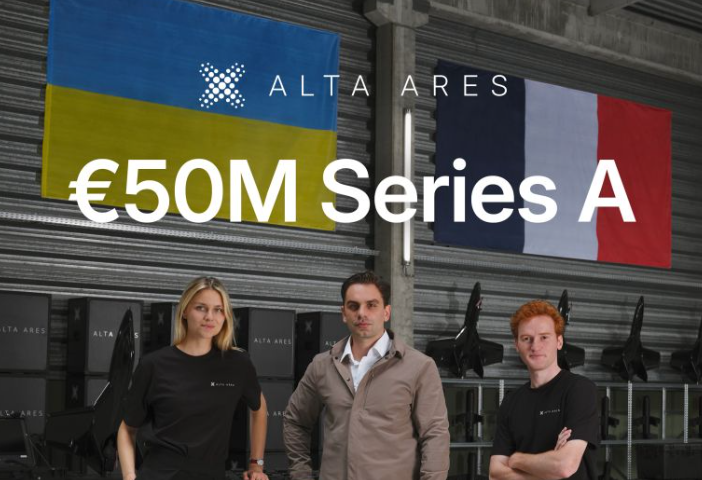
The latest cooperation agreement between Swedish company Frost Unmanned and French defence technology firm Alta Ares offers a glimpse into this transformation.
At first glance, it looks like another European defence partnership.
In reality, it may represent something much bigger.
It reflects how military innovation is increasingly moving toward agile, scalable, and rapidly adaptable unmanned systems capable of evolving at the speed of conflict.
A European Answer to a Changing Battlefield
The partnership centers around Frost Unmanned's jet-powered Tracer 160 UAV.
Under the new agreement, the platform will be integrated with advanced sensors, communications, and control systems for ISR and strike missions.
Ukraine has been identified as the initial market.
That decision alone says much about where military innovation is occurring today.
The war in Ukraine has become the world's most demanding testing ground for unmanned systems.
Success is no longer measured only by performance under laboratory conditions.
The real measure is whether a system can survive a contested electromagnetic environment, adapt to changing threats, scale quickly, and remain affordable enough to deploy in significant numbers.
The battlefield has become the ultimate validation process.
Every mission creates data.
Every failure generates lessons.
Every lesson influences the next iteration.
The result is an innovation cycle unlike anything traditional defence procurement was designed to handle.
The Rise of the Agile Defence Company
The significance of the Frost Unmanned and Alta Ares cooperation goes beyond the technology itself.
It highlights a larger shift taking place across Europe.
For many years, defence capability was often viewed through the lens of major industrial champions.
Today, smaller specialized companies are increasingly becoming essential contributors to military innovation.
Their advantage is not necessarily scale.
It is speed.
They can move faster.
Adapt faster.
Experiment faster.
And increasingly, modern conflict rewards exactly those characteristics.
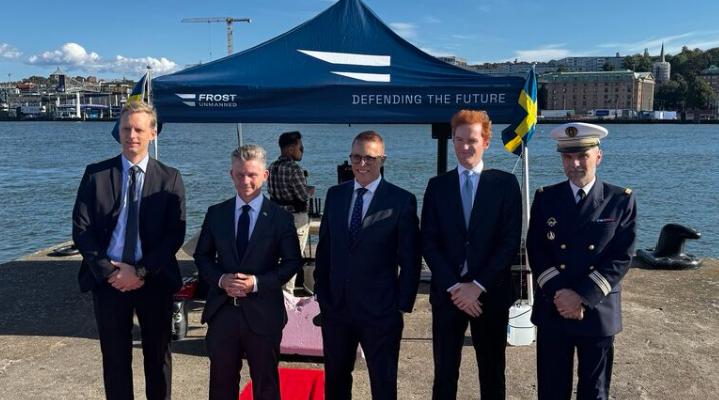
The signing ceremony in Gothenburg, attended by Swedish Minister for Defence Pål Jonson, reflected growing recognition that innovation is becoming a strategic asset in its own right.
When smaller companies from multiple countries combine their expertise, they create ecosystems capable of challenging traditional development models.
The objective is no longer merely acquiring equipment.
It is creating a continuous cycle of innovation and adaptation.
More Than a Drone
The Tracer 160 project is important.
But perhaps even more revealing was Frost Unmanned's simultaneous demonstration of the Arrow 600 unmanned maritime platform.
Together, they represent a broader trend shaping modern defence.
Unmanned systems are expanding across every operational domain.
Air.
Sea.
Land.
And increasingly, the information environment that connects them.
Future military capability will not depend solely on individual platforms.
It will depend on networks of platforms capable of sharing information, coordinating actions, and adapting collectively.
The distinction between UAVs, USVs, sensors, communications systems, and command platforms is becoming increasingly blurred.
What matters is how effectively the ecosystem functions as a whole.
Europe's Strategic Moment
Europe is currently undergoing one of the most significant defence transformations in decades.
Security assumptions that defined the post-Cold War era are being reconsidered.
Industrial capacity is expanding.
Procurement priorities are shifting.
And governments are increasingly looking for capabilities that can be fielded rapidly rather than waiting years for perfection.
This environment creates opportunities for companies able to translate innovation quickly into operational capability.
The Frost Unmanned and Alta Ares cooperation reflects precisely that mindset.
Build.
Test.
Learn.
Scale.
Repeat.
The formula may sound simple.
Its strategic implications are not.
Because modern military advantage increasingly belongs to organizations that can transform ideas into deployable capability faster than their competitors.
The Real Message Behind the Deal
The announcement from Gothenburg is not simply about a Swedish drone.
Or a French partnership.
Or even Ukraine.
It is about the direction of defence innovation itself.
The most important defence companies of the next decade may not be those building the largest platforms.
They may be those capable of updating their technology the fastest, integrating new capabilities the quickest, and responding to operational feedback in near real time.
In that world, agility becomes a strategic weapon.
And partnerships become force multipliers.
Europe's defence future is still being written.
But one thing is becoming increasingly clear:
The age of slow innovation is ending.
The age of adaptive defence has begun.