WaiV Robotics raises €6.4M to to develop autonomous UAV landing infrastructure
For all the talk about autonomous drones transforming offshore operations, the industry has been quietly ignoring an inconvenient truth: at sea, flying isn’t the hard part. Landing is.
WaiV Robotics, a British maritime autonomy startup emerging from stealth this week with €6.4 million ($7.5 million) in Seed funding, is betting that the bottleneck holding offshore drones back isn’t smarter aircraft, but the absence of reliable infrastructure below them.
“Everyone keeps improving the drone,” says founder and CEO Johnny Carni, “but without a dependable way to launch and recover at sea, large-scale deployment simply doesn’t work.”
That blunt assessment cuts to the heart of offshore UAV operations. While drones have become remarkably capable over land, the ocean remains unforgiving. Landing surfaces move unpredictably across six degrees of freedom. Decks are slick with salt spray. Smaller vessels pitch and roll violently in high sea states. Human pilots can compensate—until they can’t.
And that’s where WaiV claims traditional solutions break down.
Founded in 2023, the company is building fully autonomous launch and recovery infrastructure designed to turn almost any vessel into a viable UAV base. Its system allows drones to take off and land without human input, even when sea conditions would normally ground operations altogether.
The pitch is deceptively simple: stop asking drones to solve a problem that belongs to infrastructure.
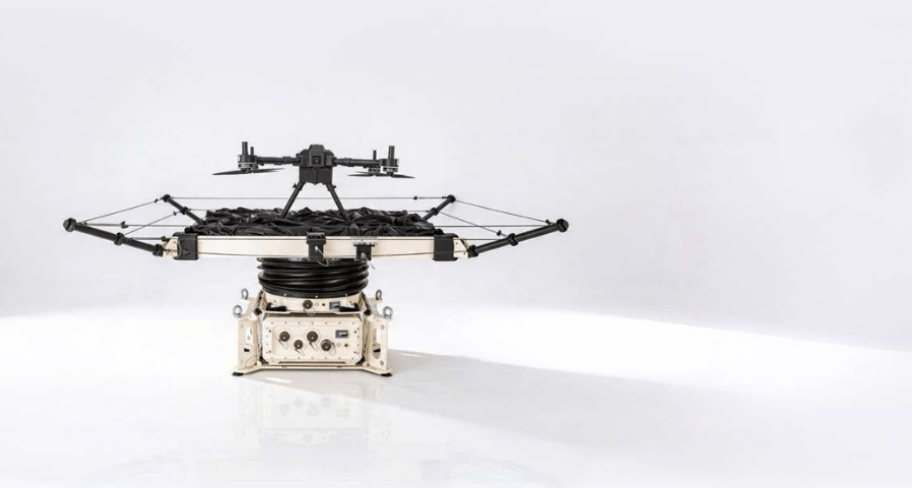
At the core of WaiV’s platform is a patent-pending catch–lock–release landing mechanism, paired with AI-driven predictive control. Instead of relying on a pilot to “stick” the landing, the system actively guides the UAV during final approach, absorbs impact on contact, and physically secures the aircraft to prevent bounce, slide, or roll-off.
In effect, the deck takes control.
Crucially, WaiV’s solution is UAV-agnostic. The platform works with multicopters, fixed-wing VTOLs, and helicopters from any manufacturer—no hardware or software modification required. It supports drones up to 15 kg today, with plans to scale both down to small 3 kg aircraft and up to heavy systems in the 100–300 kg range.
That flexibility matters in a maritime industry where fleets operate mixed UAV types and retrofitting aircraft is often impractical or cost-prohibitive.
The system is also designed to work on vessels as small as 10 meters, opening UAV operations to patrol boats, service vessels, and workboats that have traditionally been excluded from drone deployment due to space and stability constraints.
The timing is no accident. WaiV’s funding round lands amid continued—but uneven—investment in European autonomy and robotics. While roughly €201 million flowed into drone, robotics, and unmanned-systems companies in 2026, that figure is heavily skewed by Quantum Systems’ €150 million raise. Strip out that outlier, and real disclosed funding sits closer to €51 million.
Against that backdrop, WaiV’s €6.4 million Seed round stands out as a focused infrastructure play in a sector often obsessed with platforms and payloads.
Comparable maritime efforts, such as Italy’s Mirai Robotics (€3.6 million), underscore growing interest in autonomous systems at sea, while UK-based ventures like Mutable Tactics, Occam Industries, and Stanhope AI point to rising domestic momentum around physical AI and autonomy software.
Still, WaiV’s wager is bolder: that offshore drone adoption will stall unless infrastructure evolves to meet ocean reality.
“Our goal is to remove deployment constraints entirely,” Carni says. “To make drone operations viable from virtually any vessel.”
If WaiV is right, the future of maritime UAVs won’t be decided in the air—but on the deck.

.png)