Under the same skies. Military drones must find their place in civilian airspace
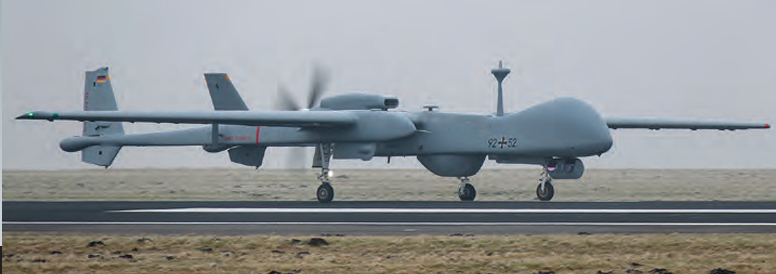
Europe’s airspace is starting to resemble its highways: busy, layered, and increasingly contested.
Holiday flights, long‑haul travel, cargo routes and business aviation already crowd the skies above the continent. Now military drones are joining the traffic. The question facing European defence planners is no longer if unmanned aircraft will share airspace with civilian aviation—but whether they can do so safely, routinely, and without disruption.
The European Defence Agency (EDA) believes the answer must be yes.
Military mobility is often imagined in terms of railways, convoys, and ports. But airspace is just as critical. Drones are rapidly becoming indispensable for surveillance, maritime security, and infrastructure protection. Yet their ability to operate across borders remains constrained by a simple problem: they must transit the same skies as commercial airliners to reach their missions.
So far, that transit has come at a cost.
“Each time we transit from the take‑off airport to the mission area an isolated airspace must be established,” explains Stephen O’Sullivan, EDA’s Project Officer for UAS Integration Research. “That potentially disrupts other flights.”
EDA’s solution is to prove—flight by flight—that disruption is not inevitable.
Over the past few years, the Agency has led a series of cross‑border test flights designed to demonstrate that large military drones can operate safely in mixed civilian‑military airspace. A first milestone was reached in 2021, when a remotely piloted aircraft flew between France and Spain. In February 2025, the challenge became more ambitious.
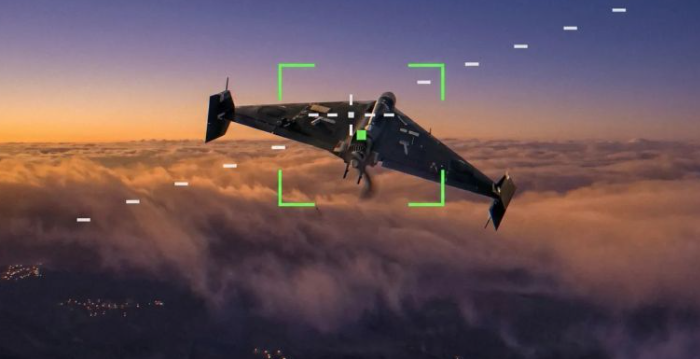
A German Heron TP drone completed a round trip between Schleswig in Germany and Leeuwarden in the Netherlands, flying not only through military‑controlled zones but also through civilian‑controlled and upper airspace normally reserved for commercial aircraft. The flight reached 8,500 metres—well above the threshold where passenger jets cruise—and marked the first such European operation in non‑segregated upper airspace. [unmannedai...space.info], [unmanned-network.com]
The objective was not spectacle, but validation.
The drone filed flight plans, transitioned between military and civilian air traffic controllers, and operated under Eurocontrol supervision. The goal was to show that remotely piloted aircraft systems (RPAS) can behave like any other aircraft—predictable, visible, and compliant—within Europe’s air traffic management system.
More complex demonstrations are planned for 2026, involving multiple drones and multiple countries, pushing the concept beyond proof‑of‑concept and toward operational reality.
At the other end of the spectrum lies U‑space—Europe’s low‑altitude, digitally managed airspace for small drones. Designed for deliveries, inspections and beyond‑visual‑line‑of‑sight operations, U‑space relies on automation with human oversight. It is already being rolled out across Europe.
For civilian drones, U‑space is a growth enabler. For the military, it presents a dilemma.
Central to U‑space is conspicuity: drones must broadcast their position, altitude, speed and direction to ensure safety. But for military and police operators, being easily trackable can be a liability. “Drones get jammed, spoofed, or shot down, and operators can be located by tracing their flight paths,” O’Sullivan notes.
Transparency keeps airspace safe—but it can also expose sensitive missions.
EDA has been involved in U‑space from the outset to ensure that military requirements are not an afterthought. Together with the European Union Aviation Safety Agency (EASA), it is helping shape dynamic airspace reconfiguration—a system that allows special operations to take place within U‑space while maintaining safety for all users.
For larger drones, EDA’s Concept of Operations for cross‑border RPAS flights will guide the next phase: defining air corridors, refining procedures, and enabling full integration with commercial aviation.
“The goal is simple,” says O’Sullivan. “We need to reach a point where sophisticated military drones operate like any other aircraft.”
File a flight plan. Take off. Fly the mission. Come home.
In Europe’s increasingly crowded skies, that simplicity may prove to be one of defence’s hardest—and most necessary—achievements.