HEDI Operational Experimentation Campaign 2026 OPEX261 PT - What to expect?
The future of defence logistics is not about drones.
It’s about systems.
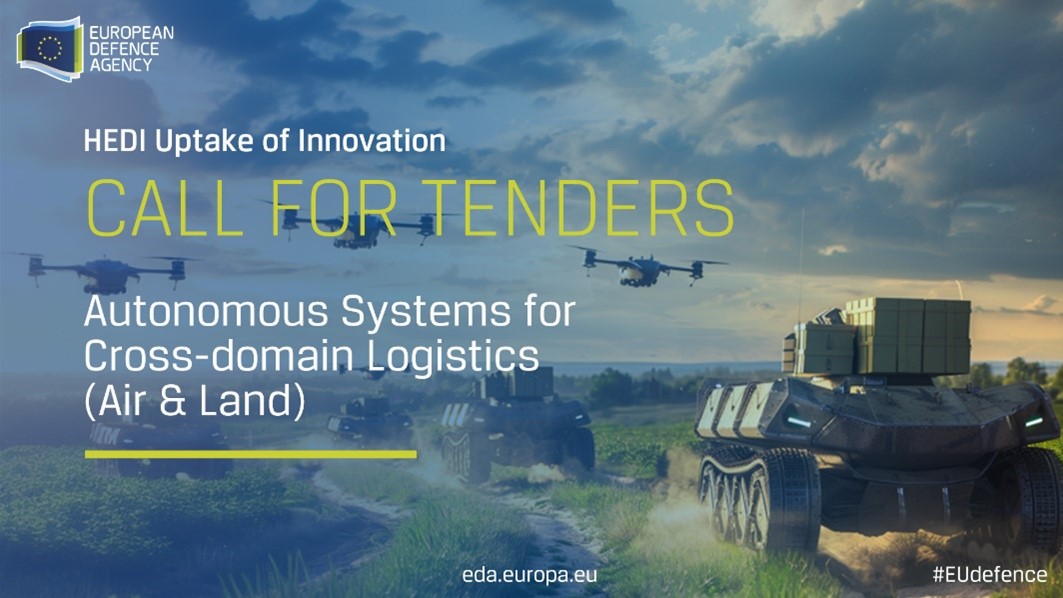
With the European Defence Agency (EDA) launching its Operational Experimentation Campaign 2026 (OPEX 261 PT) from Hub for European Defence Innovation (HEDI), a clear shift is emerging: autonomous platforms are no longer standalone tools — they are becoming part of something much bigger.
The End of Platform Thinking
For years, innovation in defence focused on individual technologies: better drones, stronger vehicles, smarter sensors.
But OPEX 2026 reveals a different direction.
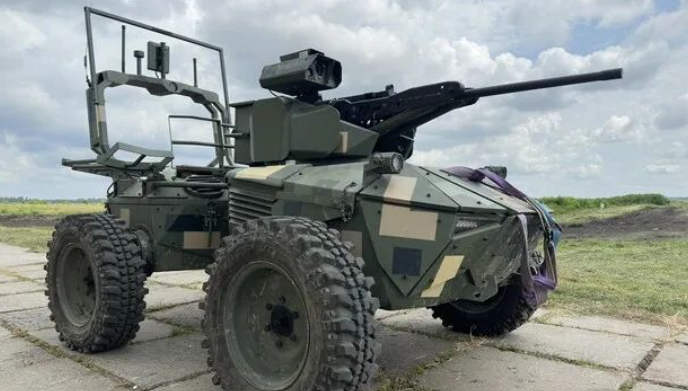
Unmanned Aerial Systems (UAS) and Unmanned Ground Systems (UGS) are now being tested not as isolated solutions, but as interconnected elements within a logistics ecosystem.
This includes:
- Air and ground autonomous platforms
- Payload systems
- Command, control, and communication architectures
- Operational integration within real military exercises
The key idea is simple — but powerful:
👉 A drone alone is useful.
👉 A system of drones, vehicles, and infrastructure is transformative.
Logistics Is Becoming Autonomous
One of the main focuses of the OPEX campaign is cross-domain logistics — especially “last mile” resupply and CASEVAC (Casualty Evacuation).
These are some of the most complex and dangerous tasks in military operations.
Autonomous systems offer a new approach:
- Deliver supplies without exposing personnel
- Operate in contested or hard-to-reach environments
- Maintain continuous logistical support under uncertainty
But autonomy alone is not enough.
The real challenge is coordination.
Multiple platforms must work together, share data, and adapt in real time. This requires not just technology, but integration — across domains, systems, and organizations.
From Centralized to Distributed Operations
Traditional logistics depends on centralized infrastructure:
- Supply bases
- Fuel lines
- Transport routes
These are efficient — but vulnerable.
What OPEX 2026 is testing is something fundamentally different:
👉 Distributed logistics networks
Instead of relying on a single supply chain, operations are supported by multiple decentralized nodes that can operate independently and adapt dynamically.
This approach increases:
- Resilience
- Flexibility
- Operational reach
It also reduces dependency on fixed infrastructure — a critical advantage in modern conflict scenarios.
Real Testing, Not Theory
What makes the OPEX campaign particularly important is its focus on real-world experimentation.
This is not a simulation.
Systems will be tested in operational conditions, including integration into military exercises like ARTEX 2026 in Portugal.
Participants are expected to meet strict:
- Technical requirements
- Safety standards
- Operational constraints
This means only technologies that are mature, reliable, and deployable will succeed.
In other words: this is where concepts meet reality.
The Rise of Dual-Use Innovation
Another key aspect of the campaign is the involvement of both defence and civilian (dual-use) technologies.
Some of the most promising innovations today are not developed specifically for the military.
They come from:
- Robotics
- Energy systems
- Smart infrastructure
- Industrial IoT
By bringing these technologies into operational experimentation, the EDA is accelerating a broader trend:
👉 The convergence of civilian and defence innovation.
This creates new opportunities — not just for traditional defence companies, but for startups, research teams, and industrial innovators.
The Bigger Picture
OPEX 2026 is not just about testing drones or vehicles.
It is about redefining how logistics works in modern operations.
The shift is clear:
- From platforms → to systems
- From centralized → to distributed
- From manual → to autonomous
And perhaps most importantly:
👉 From isolated innovation → to integrated capability
The organizations that understand this shift will not just build better products.
They will shape the future of operations.
Because in the end, the advantage will not belong to the fastest drone or the strongest vehicle.
It will belong to the system that connects them all.