Ukrainian Drones Turned St. Petersburg Attack and Putin’s Davos into a Battlefield Message

The message was not delivered through diplomacy. It was delivered through drones.
As Russia hosted its flagship St. Petersburg International Economic Forum—often dubbed “Putin’s Davos”—Ukraine sent a stark reminder that no stage is immune from war. Drone strikes targeted the region just hours after Russian President Vladimir Putin rejected a call for peace talks from Ukrainian President Volodymyr Zelenskyy.
The timing was not coincidence.
It was strategy.
For years, the St. Petersburg Economic Forum has been designed to project stability, resilience, and economic strength—a carefully curated narrative aimed at global investors and political observers. By striking in close proximity to this symbolic event, Ukraine disrupted that narrative in the most direct way possible.
War is no longer distant. It is visible.
And increasingly, it is unpredictable.
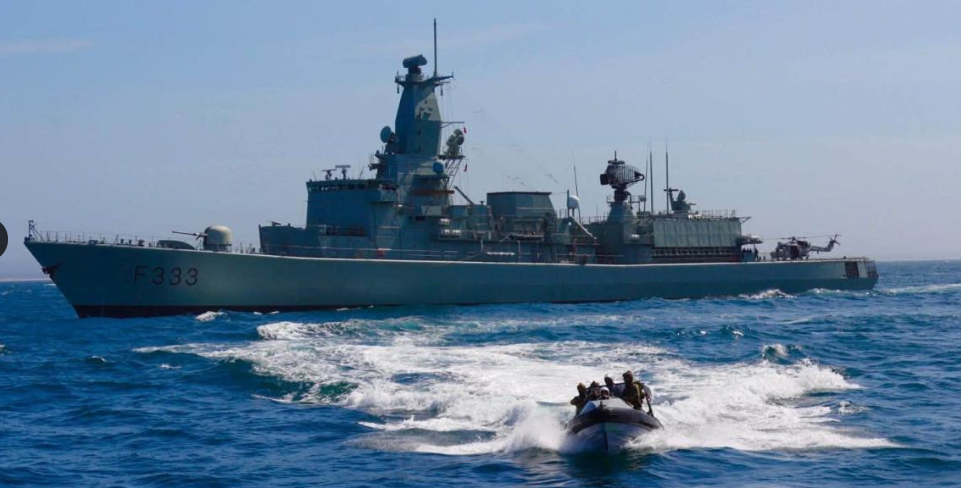
The attacks reportedly targeted military infrastructure, including naval assets in Kronstadt and an oil depot in southern Russia. Moscow claims hundreds of drones were intercepted. Kyiv claims success. The truth lies somewhere between—but the strategic impact is unmistakable.
Because this is no longer just a conflict at the front line.
It is a conflict of depth.
Ukraine has steadily expanded its ability to strike far beyond contested territories, bringing the war into the heart of Russian strategic, economic, and symbolic spaces. Each such operation carries a dual objective: degrade military capacity and reshape perception.
Perception, in modern warfare, is a battlefield of its own.
When drones reach the outskirts of a major city like St. Petersburg—Russia’s second-largest city and a key hub of political and economic identity—they challenge assumptions about security, control, and distance. The illusion of insulated power begins to crack.
And the implications extend beyond Russia.
For global observers, especially those attending or monitoring the economic forum, the signal is clear: geopolitical risk is no longer abstract. It is immediate, dynamic, and increasingly visible through asymmetric tools like drones.
This is the new warfare landscape—one defined by accessibility and scale.
Unlike traditional airpower, drones require fewer resources, less infrastructure, and can be deployed in large numbers. This changes the calculus of defense. Intercepting hundreds of drones is not only technically challenging—it is economically and logistically draining. Even partial success forces disproportionate defensive effort.
In that sense, drone warfare introduces a new form of pressure: persistent, distributed, and psychologically disruptive.
But the strikes also highlight a deeper political moment.
Zelenskyy’s public call for peace talks—paired with Putin’s rejection—creates a stark contrast. Diplomacy on one side, escalation on the other. The subsequent strikes reinforce Ukraine’s position: if negotiations stall, pressure will shift elsewhere.
Including areas previously considered off-limits.
This dynamic places increased urgency on international actors. With Zelenskyy expected to meet European leaders in London shortly after the incident, coordination around military support and diplomatic strategy is likely to intensify.
Because the war is evolving faster than traditional frameworks can handle.
The line between front and rear, military and economic, symbolic and strategic is dissolving. A forum meant to discuss investment becomes a backdrop for military signaling. A city of culture and commerce becomes a stage for conflict.
And drones—small, relatively inexpensive, and highly adaptable—are the instruments driving this shift.
They do not just strike targets.
They redefine what a target is.
What happens in St. Petersburg should not be seen as an isolated event, but as part of a broader transformation in warfare. One where geography matters less, timing matters more, and visibility becomes a weapon in itself.
The era of contained conflict is fading.
In its place emerges a more fluid, more unpredictable form of war—one that reaches into political gatherings, economic forums, and urban centers alike.
And in that world, the battlefield is no longer where armies meet.
It is wherever the message lands.