Ukraine’s War-Time Industrial Breakthrough - Meet Skif, the Tracked APC Built to Beat the M113
Since 2022, Ukraine has relied heavily on this Cold War–era platform supplied by Western allies. It carried troops through mud, snow, artillery fire, and minefields. It did its job.
Now Ukraine is saying: We can do better.
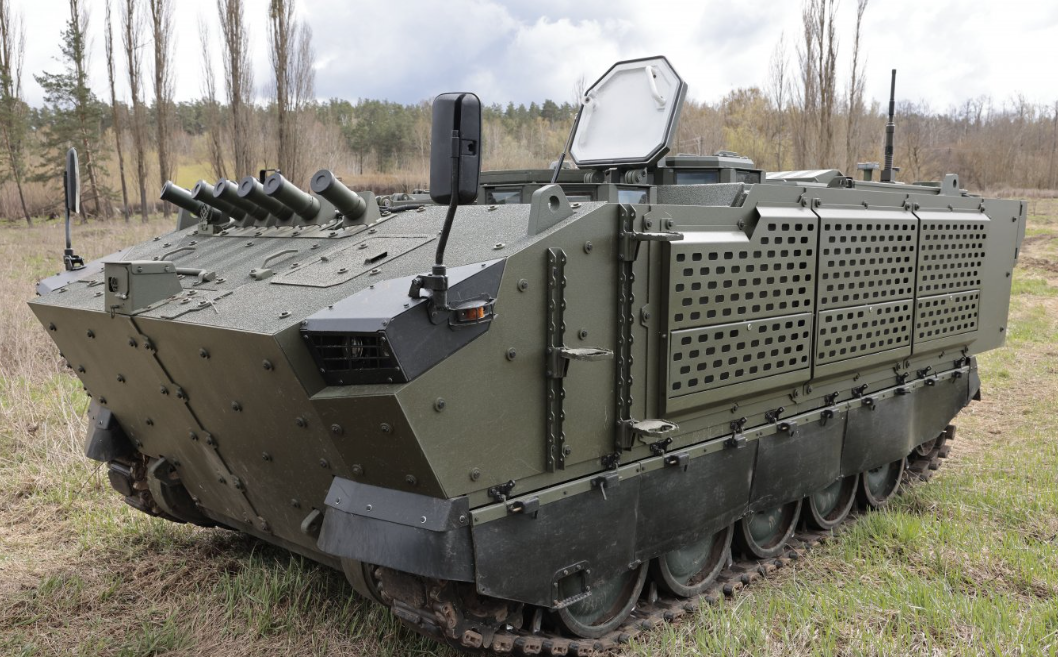
This week, Ukrainian defense manufacturer UkrArmoTech began factory testing of Skif, the country’s first domestically developed tracked armored personnel carrier since the full‑scale war began — and one explicitly designed to outperform the M113 in protection and firepower without sacrificing mobility.
That alone makes Skif significant. But the real story runs deeper than a single vehicle.
Built by War, Not Theory
Skif is not a modernization of an old Soviet chassis, nor a license‑built derivative of Western equipment. It is a ground‑up design, shaped by direct battlefield feedback from Ukrainian units operating against Russia.
The Ministry of Defense gave domestic industry a blunt requirement: match the M113’s cross‑country performance — then exceed it where it matters most. The result is a tracked APC with a crew of three and space for eight dismounts, rear ramp exit, and a modular chassis intended to support an entire family of vehicles, from command posts to specialized combat variants.
In its current prototype configuration, Skif weighs up to 15 tons and is powered by a 360‑horsepower diesel engine, giving it a power‑to‑weight ratio that keeps it competitive in rough terrain.
Protection is where Ukraine deliberately raised the bar.
The frontal arc meets STANAG 4569 Level 4, with sides and rear rated at Level 3 — a meaningful upgrade over legacy platforms. Mine protection is rated at Levels 3a and 3b, designed to withstand detonations equivalent to 6 kg of explosives under the track or hull. In a war defined by mines and artillery fragments, that’s not a spec-sheet detail — it’s a survival requirement.
An Industrial Leap, Not a Sidestep
Perhaps the most striking aspect of Skif isn’t tactical — it’s industrial.
UkrArmoTech built its reputation on wheeled armored vehicles like Giurza, Tysa, and Desna. Moving into tracked platforms represents a major leap in engineering complexity, supply chain demands, and capital intensity.
Even more notable, the prototype hull is made from armored aluminum — a first for Ukrainian domestic manufacturers. Aluminum allows lower weight and better mobility, though the company is openly evaluating a steel variant due to export restrictions and supply constraints on armored aluminum. The ongoing factory tests will determine which path production ultimately takes.
At launch, approximately 60% of components are imported, including engine, transmission, suspension elements, and tracks. But the long‑term plan is clear: progressive localization and the buildup of domestic tracked‑vehicle expertise.
CEO Hennadiy Khirhiy summarized the logic bluntly: wheels are faster, but tracks survive where Ukraine actually fights — mud, thaws, shell‑torn fields, and mine‑saturated ground.
Beyond the Battlefield
Skif is not being built only for Ukraine. UkrArmoTech confirms that export negotiations are already underway, including interest from Middle Eastern markets, where demand for combat‑proven, mid‑weight tracked platforms remains strong.
That matters. Weapons born in war tend to rewrite export markets.
Skif is not revolutionary in concept — it doesn’t have active protection systems, hybrid drives, or AI buzzwords. Instead, it reflects something more disruptive: combat‑filtered realism. Every design choice is a response to what failed, what survived, and what soldiers asked for.
War is a brutal accelerator of innovation. With Skif, Ukraine isn’t just adapting — it’s re‑entering the tracked armor arena on its own terms.
And that may be the most strategic breakthrough of all.
.png)