Ukraine’s ‘Equalizer’. The Cheap Smart Bomb That Could Rewrite Deep Strike Warfare
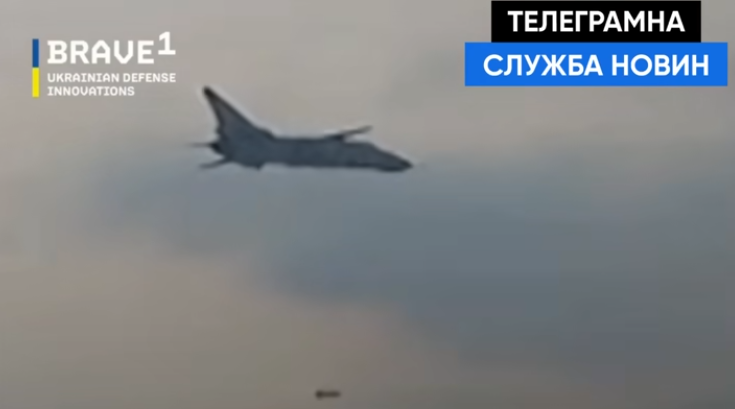
For much of the war, Ukraine's long-range strike campaign has depended on a combination of drones, Western-supplied precision weapons, and a constant race against shrinking stockpiles and production constraints.
Now, Kyiv may have introduced a new variable into that equation.
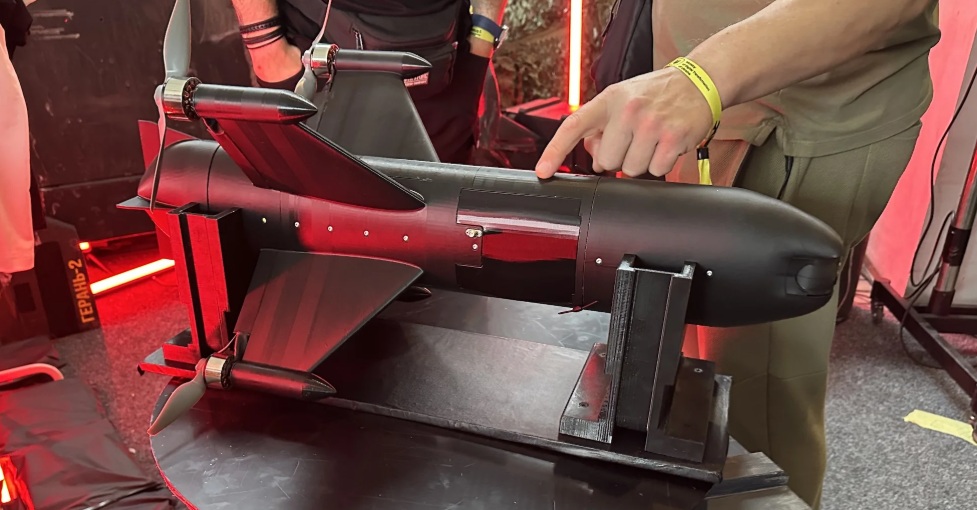
Ukraine has reportedly completed testing of its domestically developed guided aerial bomb known as "Equalizer", a weapon carrying a 250-kilogram warhead with a strike range of up to 130 kilometers. According to Ukrainian military officials, the system is already being procured for the Armed Forces of Ukraine.
If the reported characteristics are confirmed in operational use, Equalizer could represent something far more important than another precision munition. It could signal the emergence of a Ukrainian strike doctrine built around affordability, scalability, and industrial independence.
In modern warfare, the most valuable weapon is not necessarily the most sophisticated.
It is often the weapon that can be produced in sufficient numbers to make a strategic difference.
That lesson has been reinforced repeatedly throughout Russia's full-scale invasion. From FPV drones to naval drones, Ukraine has consistently demonstrated an ability to replace expensive military solutions with cheaper, adaptable alternatives capable of producing disproportionate effects.
Equalizer appears to belong to that same category.
The reported cost is particularly significant. According to available information, the bomb can be produced at nearly one-third the cost of the American JDAM family of precision-guided munitions.
That difference matters.
Wars are ultimately contests of industrial endurance. Every military planner faces the same question: how many precision strikes can be conducted before costs become unsustainable?
A weapon that delivers acceptable accuracy at dramatically lower cost changes the mathematics of war.
For Russia, that creates a new problem.
Throughout the conflict, Moscow has relied on geographic depth as a strategic advantage. Factories, logistics hubs, command centers, fuel depots, and military infrastructure located well behind the front line have often remained relatively secure from regular attack.
A 130-kilometer-range guided bomb begins to challenge that assumption.
Combined with modern aircraft, intelligence support, and real-time targeting networks, such a weapon could allow Ukraine to strike deeper into Russian military infrastructure while preserving expensive long-range missiles for higher-priority targets.
The psychological impact may be as important as the military one.
Military history demonstrates that rear areas are most effective when personnel believe they are safe. Once officers, logistics operators, and industrial managers begin to view every facility as a potential target, the costs multiply far beyond physical damage alone.
Production slows.
Resources are diverted.
Additional air-defense assets become necessary.
Planning becomes more complicated.
In many cases, uncertainty becomes a weapon in itself.
Equalizer also reflects a broader transformation underway inside Ukraine's defense industry.
Before 2022, many analysts viewed Ukraine primarily as a customer of Western defense systems. Today, it is increasingly becoming a producer of combat-proven military technologies shaped directly by battlefield feedback.
This model has compressed development timelines that traditionally took years into months.
Engineers receive operational data.
Frontline units identify weaknesses.
Designs evolve rapidly.
Systems return to combat faster than conventional procurement structures would normally allow.
The result is an innovation cycle few countries can currently match.
For Ukraine, this matters because long-term security requires more than foreign assistance.
It requires domestic production capable of sustaining military operations regardless of political changes abroad.
Every locally produced missile, drone, artillery system, or precision munition reduces external dependence and increases strategic resilience.
Equalizer fits squarely into that logic.
It is not designed to replace advanced Western weapons.
It is designed to complement them.
The future battlefield will likely belong to countries capable of combining high-end strategic systems with large volumes of low-cost precision weapons.
Ukraine appears determined to master both.
The deeper significance of Equalizer may therefore extend beyond its technical specifications.
It represents a maturing wartime defense industry learning how to innovate under pressure, manufacture under fire, and compete against a larger adversary through efficiency rather than scale.
For Russia, the message is uncomfortable.
Distance is becoming less of a guarantee.
And in modern warfare, every kilometer of lost sanctuary carries a strategic price.
Ukraine's newest bomb may not be the biggest weapon in the war.
But it could become one of the most consequential.