33,000 Drones in One Month - Why Ukraine’s Interceptor Revolution Should Alarm Europe
Thirty‑three thousand.
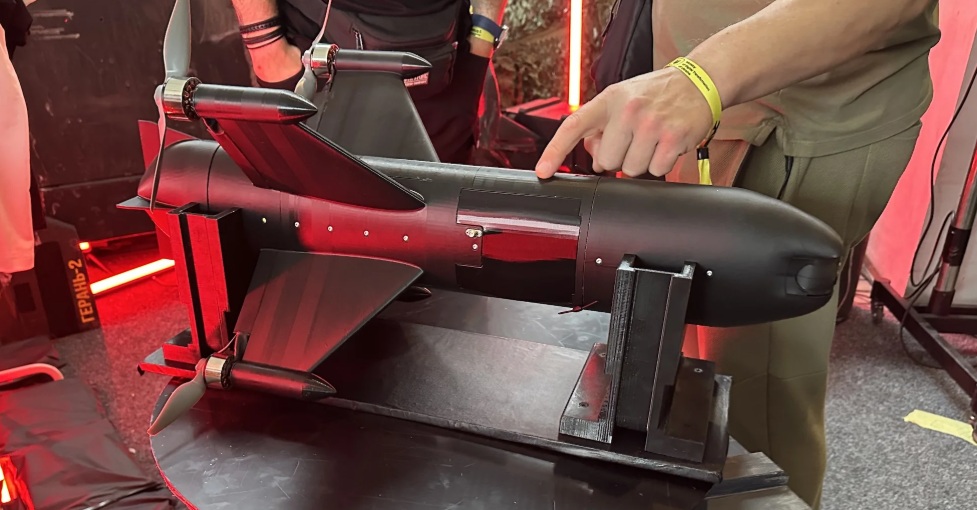
That number does not describe how many Russian drones entered Ukrainian airspace in March. It does not describe how many were intercepted by missiles or ground‑based air defence systems. It refers solely to Russian attack drones destroyed by Ukrainian interceptor drones—Shahed, Gerbera, Molniya, ZALA, Orlan and others—shot down by drones hunting drones.
In a single month.
For any military planner in Europe, that figure should trigger a fundamental rethink of air defence.
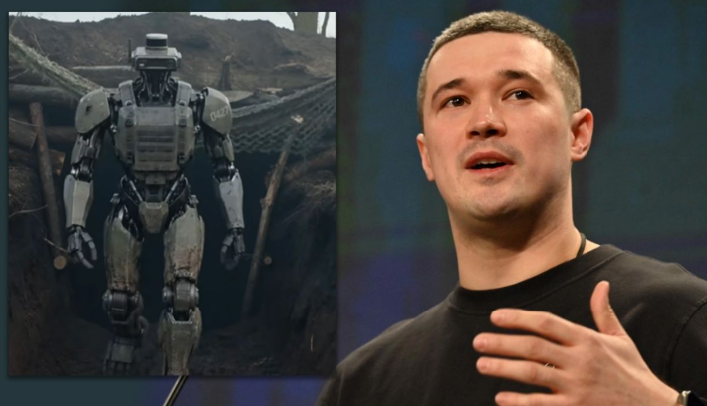
Following a meeting with Ukrainian industry, Ukraine’s Minister of Digital Transformation Mykhailo Fedorov confirmed that interceptor drones destroyed twice as many Russian UAVs in March as in February 2026. These systems are no longer experimental. They have become a core pillar of Ukraine’s air defence architecture.
“Interceptor drones are a Ukrainian innovation that has already proven itself as a key component of our air defense,” Fedorov said. The task now, he added, is not invention—but scaling what works.
Ukraine has done exactly that.
While Russia floods the sky with low‑cost attack drones, Ukraine has responded with an equally scalable counter: interceptor drones that are cheaper, faster to produce, and adaptable at battlefield speed. The result is a defensive system measured not in dozens of platforms, but in tens of thousands of engagements per month.
Now contrast that with Germany.
In September 2025, the Bundeswehr received its first A1‑Falke net‑based interceptor drones from ARGUS Interception. According to reporting at the time, Germany planned to procure 24 systems in 2025, with 136 more by 2027—a total of 160 interceptor drones.
One hundred and sixty.
Ukraine needed more than 33,000 in a single month.
Germany is not without alternatives. Tytan Technologies, which won a NATO‑Ukraine competition for interceptor drones, opened a production facility in Bavaria in January 2026 capable of manufacturing up to 3,000 interceptor drones per month. Diehl Defence is developing its CICADA interceptor, planned in both net‑based and kinetic variants.
The technology exists. The industry exists.
What does not exist—at least not in sufficient form—are approval pathways, testing environments, and scalable procurement mechanisms.
German companies are often forced to test systems abroad. Kinetic interceptor drones—those equipped with warheads or flight‑kill mechanisms—face particularly high regulatory barriers. As a result, innovation slows long before it reaches soldiers.
Ukraine solved this problem differently.
Since 2024, the Ukrainian innovation cluster Brave1 has operated a unique incentive system that rewards manufacturers for successfully intercepting Russian drones. More than 40 grants have already been awarded, and around 100 interceptor‑drone manufacturers are now listed within the ecosystem.
This year, Ukraine launched the Brave1 Dataroom, a platform for training and validating AI models used in target detection and interception. According to Ukraine’s Ministry of Defence, over 30 companies are currently training more than 50 AI models, tested across different weather conditions and times of day.
The results are measurable—and immediate.
Yet the challenge continues to evolve. According to Fedorov, the two most urgent needs today are:
- Jet‑powered interceptor drones capable of engaging jet‑powered Shahed variants.
- Alternative terminal guidance systems that remain effective in poor weather and degraded environments.
To address this, Brave1—together with the EU—has launched the EU4UA Defence Tech programme, supporting 12 technologies with grants of up to €150,000 each. The focus: interceptor drones exceeding 450 km/h and advanced guidance systems.
Ukraine’s model is simple but brutal in its clarity:
Transparent markets, rapid procurement, constant testing, and ruthless scaling.
Europe, by contrast, still treats interceptor drones as niche systems rather than the primary air‑defence workhorses they have become in real war.
The lesson from March 2026 is unavoidable. Air defence in modern conflict is no longer defined by missiles alone. It is defined by mass, speed, adaptability—and numbers.
Thirty‑three thousand of them.