Ukraine Is Turning Soviet Relics Into Battlefield Robots. And That May Be Smarter Than Building From Scratch
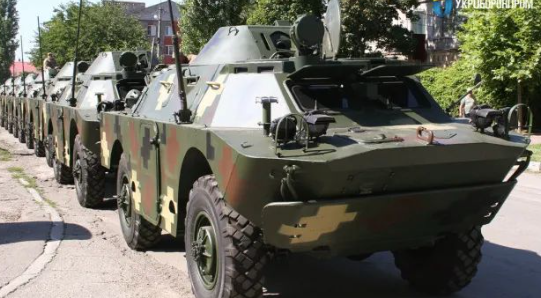
What do you do with thousands of armored vehicles designed for a war that belonged to another century?
Ukraine’s answer is surprisingly modern: remove the crew and turn them into robots.
Ukraine is developing a conversion of Soviet-era BRDM-2 armored reconnaissance vehicles into remotely controlled ground platforms. Instead of treating decades-old machines as obsolete scrap, the project aims to reuse their existing chassis while fundamentally changing how—and where—they can fight.
It is a fascinating example of a broader engineering principle emerging from the war: sometimes innovation does not mean inventing an entirely new machine. Sometimes it means looking at an old one and asking a completely different question.
The BRDM-2 was designed in the Soviet Union as a crewed armored reconnaissance vehicle. Ukraine’s proposed version moves in another direction entirely.
The modernized platform is intended to operate remotely and carry a remotely controlled combat module with automatic weapons of at least 12.7 mm caliber. Day-and-night cameras would provide situational awareness, while navigation, orientation and remote-control systems would allow operators to control its main functions without sitting inside the vehicle. Protected data channels are planned for the combat module.
The central objective is simple: keep soldiers away from the most dangerous tasks.
But the modernization goes much deeper than adding cameras and a remote-control box.
Ukraine is developing control capability at distances of up to 1,000 kilometers. The project also considers replacing the BRDM-2’s Soviet GAZ gasoline engine with a foreign diesel, with General Motors and Mercedes engines mentioned as possibilities, together with an automatic transmission.
Protection is also being reconsidered. According to the source, plans include additional anti-mine protection beneath the hull, anti-fragmentation protection, tubeless high-mobility tires and a backup remote-control system inside the vehicle.
Put all of those changes together and something interesting happens.
This stops looking like a conventional restoration project.
The chassis may be Soviet, but the concept increasingly belongs to the age of autonomous and uncrewed warfare.
And economically, the logic is compelling.
Developing a completely new robotic armored vehicle requires engineering, prototypes, manufacturing capacity, supply chains and time. Ukraine already possesses significant numbers of BRDM-2s in storage. Converting available platforms potentially transforms an existing liability—aging military inventory—into a useful technological base.
That does not make old hardware magically equivalent to a purpose-built modern robotic vehicle. Legacy platforms inevitably bring compromises.
But war rarely rewards theoretical perfection.
It rewards systems that can be produced, adapted and deployed quickly enough to matter.
That may be the bigger story behind this unusual machine.
Ukraine’s wartime defence innovation repeatedly challenges the assumption that technological progress must begin with a blank sheet of paper. Existing civilian components, old military platforms and new digital systems can be combined into capabilities their original designers never imagined.
A BRDM-2 built around the logic of Cold War reconnaissance can potentially become an unmanned carrier for the very battlefield tasks that are increasingly too dangerous to assign to humans.
The project is still being prepared for testing and eventual use on the line of contact, and no completion date has been publicly specified. Ukrainian Colonel Vladyslav Voloshyn nevertheless said the work had been accelerated following a battlefield episode and suggested the modernized vehicle could potentially become a breakthrough at the front.
Whether it actually becomes one remains to be seen.
But the idea itself is already revealing.
The future of warfare may not always arrive as a brand-new machine.
Sometimes it may arrive inside a 60-year-old chassis—with cameras, remote controls, modern electronics and perhaps a Mercedes diesel.