They Made It Rain. The Alaska Experiment That Could Rewrite Humanity’s Relationship with Weather
For centuries, rain was the ultimate symbol of forces beyond human control.
Civilizations prayed for it. Farmers gambled on it. Governments feared its absence.
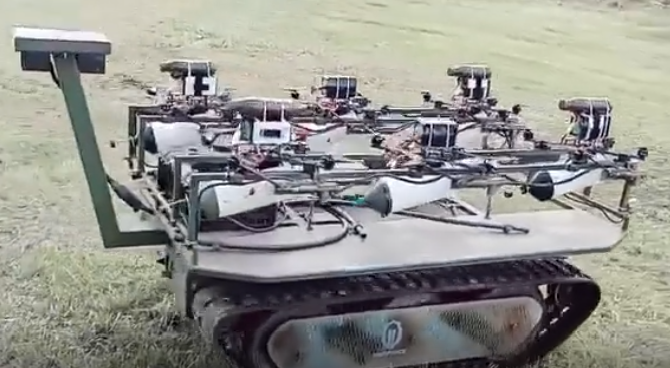
Now, a small fleet of drones flying above Alaska may have demonstrated that rainfall can be engineered with unprecedented precision.
The implications are enormous.
In a validation report released this week, weather technology company Rainmaker announced what it describes as a successful demonstration of drone-based cloud seeding over Alaska's Kenai Peninsula. During seven coordinated missions on August 22-23, drones dispersed silver iodide particles into suitable cloud systems, generating radar-observable precipitation signatures and an estimated 45-65 acre-feet of additional precipitation.
If confirmed through continued testing and independent review, the experiment could mark a significant milestone in humanity's long pursuit of weather modification.
This is not science fiction.
Cloud seeding has existed for decades. Governments from the United States and China to the United Arab Emirates have experimented with methods designed to enhance precipitation. Yet one challenge has stubbornly persisted: proving that the rain or snow actually resulted from seeding rather than natural weather variability.
Rainmaker claims it has solved part of that puzzle.
Using drone telemetry, atmospheric soundings, satellite observations, radar analysis, and precipitation modeling, researchers tracked seven distinct precipitation signatures that appeared after seeding operations. These signatures developed within physically plausible downwind corridors, evolved consistently with atmospheric flow, and repeatedly appeared following flare releases.
In short, the atmosphere appeared to respond.
That's what makes this story remarkable.
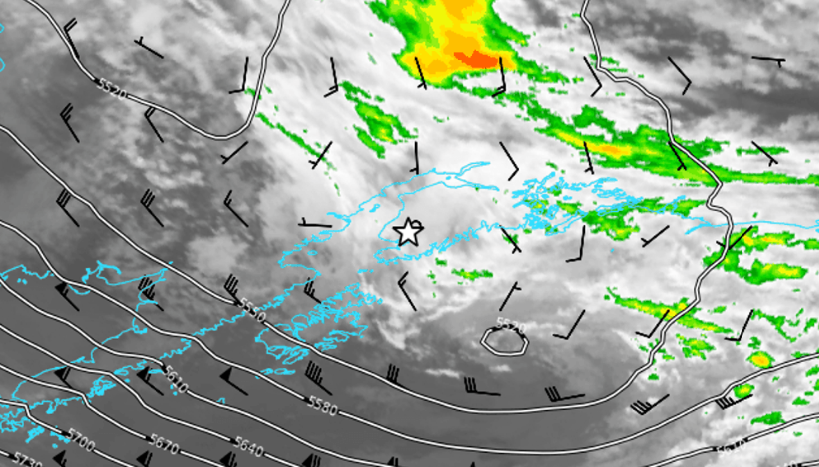
The experiments were conducted under carefully monitored conditions. A low-pressure system over the Gulf of Alaska created clouds containing both ice crystals and supercooled liquid water, an ideal environment for glaciogenic cloud seeding. Drones released 19 flares carrying silver iodide into temperatures between approximately -7°C and -13°C, conditions known to favor ice formation.
Minutes later, radar began detecting new precipitation structures.
Some persisted for more than 90 minutes.
Some expanded across more than 40 square kilometers.
Together they produced what Rainmaker estimates to be more than 71,000 cubic meters of additional precipitation.
That may sound modest.
But the significance isn't the volume.
It's the control.
For the first time, cloud seeding is no longer dependent on expensive aircraft missions and limited access windows. Drones offer precision deployment, lower costs, improved safety, and the ability to respond rapidly to changing atmospheric conditions.
The economics could be transformative.
Across the American West, water scarcity has evolved from a seasonal challenge into a structural threat. Reservoirs are under pressure. Agricultural regions face mounting uncertainty. Hydropower generation is increasingly vulnerable to prolonged drought.
Around the world, the same pressures are intensifying.
Climate change is disrupting long-established precipitation patterns. Regions once considered water-secure are now confronting shortages. Governments are searching for technologies capable of improving resilience without requiring decades of infrastructure construction.
Artificial intelligence gets headlines.
Weather modification may quietly become the more consequential technology.
The geopolitical implications are equally profound.
Imagine nations capable of increasing snowfall in critical watersheds. Imagine mining operations securing additional water supplies. Imagine drought-stressed agricultural regions supplementing seasonal precipitation through targeted atmospheric engineering.
Now imagine those capabilities becoming strategic assets.
Weather has always shaped national power.
The difference is that we may be entering an era where nations can actively influence it.
Critics will rightly urge caution.
Cloud systems remain extraordinarily complex. Attribution remains difficult. Long-term environmental and ecological impacts must continue to be studied rigorously. The Alaska results represent a single operational case and not yet a definitive proof that weather can be controlled on demand.
But history rarely advances through certainty.
It advances through demonstrations.
And the Kenai Peninsula experiment offers a glimpse of something that was once considered impossible: operational, repeatable, drone-delivered weather enhancement.
The most important question is no longer whether cloud seeding works.
The question is who will master it first.
As competition for water, food security, and climate resilience intensifies, the ability to influence precipitation may become one of the defining technologies of the century.
For generations, humanity watched the skies and hoped.
Now it is beginning to shape them.