Anduril Flytrap 5.0 - Software Not Missiles Is Becoming the Real Weapon
The future of air defense is no longer built on missiles.
It’s built on software.
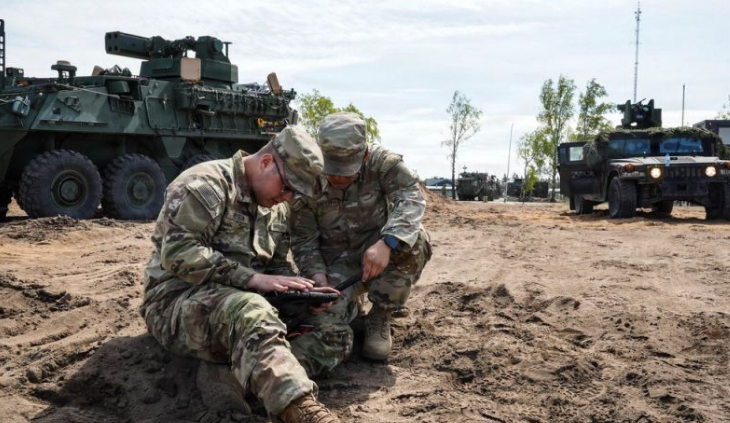
At the U.S. Army’s Flytrap 5.0 exercise, the most important weapon on display wasn’t a radar, a launcher, or even a drone interceptor. It was something far less visible—and far more decisive: the ability to connect everything into one system that thinks, reacts, and fights as a single network.
That is the real revolution.
The End of Isolated Systems
For decades, air defense followed a predictable logic: deploy radars, connect them to command posts, and assign missiles to threats. Each system operated within its own silo, coordinated—but rarely truly integrated.
That model is now collapsing.
Modern battlefields are flooded with threats:
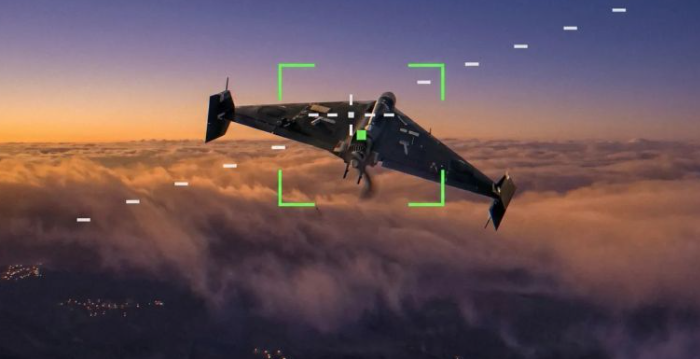
- Swarms of low-cost drones
- One-way attack munitions
- Autonomous weapons operating at scale
These threats don’t arrive in sequence. They arrive simultaneously.
And in that environment, disconnected systems fail.
The Kill Chain Problem
In counter-UAS (CUAS) warfare, everything comes down to one brutal constraint: time.
Detection. Tracking. Identification. Engagement.
Each step in the kill chain must happen within seconds. Fail at any stage, and the target reaches its objective.
This is why Flytrap 5.0 matters.
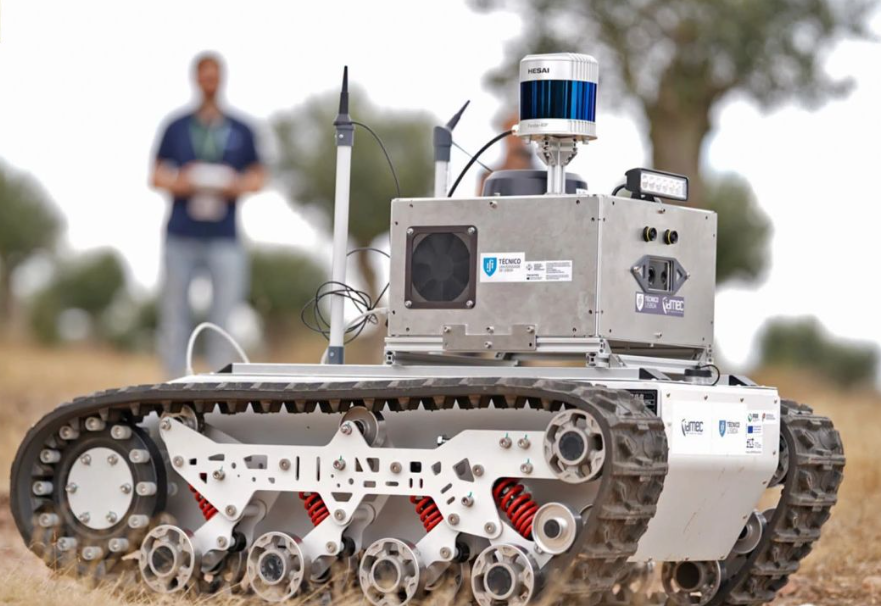
During the exercise, Anduril’s Lattice software platform, integrated into the U.S. Army’s IBCS-M (Integrated Battle Command System for Maneuver), connected more than 30 different systems and sensors into a unified operational network.
Not sequential. Not manually.
In real time.
Software as the Battlefield
Here’s the provocative truth: missiles don’t win wars anymore—integration does.
Lattice didn’t replace sensors or weapons. It made them work together.
By fusing inputs from multiple radars, electromagnetic sensors, and tracking systems, Lattice created a single, unified threat picture. Operators could see the battlefield not as fragmented data streams, but as one continuous system.
That changes everything.
Because once you unify data:
- Decisions become faster
- Errors become fewer
- Engagement becomes coordinated
And, critically, you eliminate the lag between seeing a threat and stopping it.
Plug-and-Fight Warfare
One of the most disruptive aspects of Flytrap 5.0 was not just integration—it was speed of integration.
Traditionally, connecting new defense systems takes months or even years. Different vendors, incompatible software, proprietary interfaces.
At Flytrap 5.0, systems with no prior exposure to Lattice were connected on-site, in real time through its open architecture and software development kit (SDK).
This is a fundamental shift toward what can only be described as plug-and-fight warfare.
Bring your sensor.
Bring your effector.
Plug it into the network.
Start fighting.
That level of flexibility is not just operational advantage—it is strategic dominance.
From Hardware to Networks
Air defense used to be about owning the best hardware.
Today, it’s about owning the best network.
A radar without integration is blind.
A missile without coordination is slow.
A drone without data is lost.
But connect them—and they become something else entirely: a system that learns, adapts, and reacts as a unit.
Flytrap 5.0 exposed a harsh reality for modern militaries:
It’s no longer enough to have advanced systems.
They must be interoperable, scalable, and instantly connected.
The New Arms Race
This creates a new kind of arms race.
Not just for more weapons—but for better software ecosystems.
Who can:
- Integrate faster?
- Fuse data more effectively?
- Reduce decision time to seconds or milliseconds?
Because in a drone-saturated environment, the side that reacts first doesn’t just gain an advantage.
It survives.
The Silent Shift
What makes this shift dangerous—and fascinating—is how invisible it is.
Missiles launch. Radars spin. Explosions are visible.
Software is not.
But software is now deciding:
- What gets detected
- What gets prioritized
- What gets destroyed
And it does so faster than any human can process.
Final Signal
Flytrap 5.0 wasn’t just an exercise.
It was a demonstration of the future.
A future where air defense is not defined by individual systems, but by how seamlessly they connect.
A future where the real weapon is not the interceptor—but the network that tells it where, when, and how to strike.
Because in modern warfare, the most powerful system isn’t the one that shoots first.
It’s the one that sees everything—and connects it all.

.jpg)