“The Time for Big Papers Is Over”: Switzerland Is Sending Ground Robots Straight to the Troops
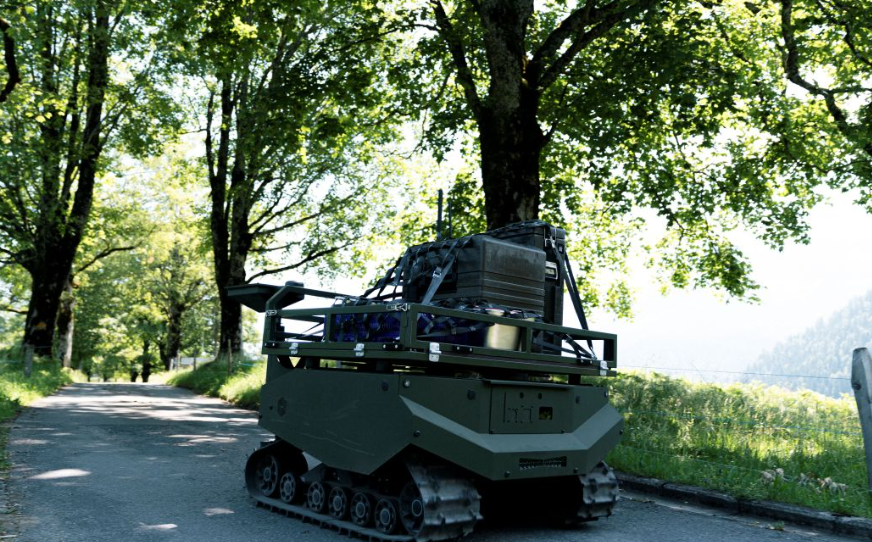
Switzerland wants military robots.
But first, it wants soldiers to find out whether they are actually useful.
In 2027, the Swiss Armed Forces plan to put unmanned ground vehicles, or UGVs, directly into exercises with militia and training formations, gathering operational experience that will help shape robotics requirements for the 2028 armaments programme.
That might sound like another European military technology trial.
It isn't.
The potentially disruptive part is the philosophy behind it: experiment before freezing the requirements.
Switzerland's Federal Council has called for a more adaptive approach to defence modernisation as technology cycles accelerate. At an innovation board in August, the Chief of the Armed Forces summarised the urgency rather more bluntly:
“The time for big papers is over. Now it is about actually doing things.”
That statement, reported by the Army's logistics organisation, sounds almost rebellious in the procurement culture of European defence.
And it is difficult to miss the lesson from Ukraine.
Drones, ground robots, electronic warfare and software-defined systems can evolve in months, sometimes weeks. Conventional military acquisition systems, meanwhile, may take years to define requirements, conduct competitions, certify equipment and field it at scale.
Switzerland is trying to close that gap.
Logistics Brigade 1, under Brigadier Dan Aeschbach, launched an innovation project with a broad kick-off in Bern on 21 October 2026. The objective is practical: put UGVs in the hands of real formations, discover how soldiers actually use them and feed those lessons into future doctrine, training and procurement.
The expanded 2027 troop trials are intended to answer four fundamental questions: What is the operational concept? How should troops employ the machines? How should personnel be trained? And how should the systems be managed throughout their service life?
Those questions matter more than choosing the coolest robot.
Because buying a UGV is easy.
Integrating one into an army is hard.
A robot that looks spectacular at a defence exhibition may become useless if soldiers cannot transport it, maintain it, communicate with it, train on it or fit it naturally into existing tactics.
The Swiss approach therefore brings together the organisations that will ultimately have to make the capability work, including the ZEUS unmanned-systems centre under Project EIGER, the drone and robotics competence community, armasuisse and professional and militia formations. ZEUS is intended to orchestrate the effort while military users provide operational experience and resources.
It fits into a much broader robotics push.
Under Project EIGER, Switzerland is developing a civil-military centre for drones and robotics. A dedicated drone recruit school is planned for 2027, followed by a drone battalion from 2028. The broader model is based on smaller quantities, shorter acquisition cycles and rapid feedback from troop use.
That could prove more consequential than any individual platform.
Switzerland's militia system also creates an unusual opportunity. Part-time military personnel bring expertise from civilian industries, universities and technology companies back into the armed forces, something Swiss defence planners explicitly see as valuable for building unmanned capabilities.
And there is another striking phrase in the UGV initiative:
“No Helvetisation.”
The intention is to avoid creating unnecessarily bespoke Swiss systems and instead define requirements for robust, simple solutions.
That may be the most radical idea of all.
Europe does not necessarily need another perfect military robot designed through years of paperwork.
It may need 80-percent solutions that reach soldiers while the technology is still relevant.
Switzerland's experiment will show whether a famously deliberate country can make defence procurement move at software speed.
The robots are being tested.
But the real experiment may be the procurement system itself.