The Simulation War. European Defence Agency’s Digital Twins Promise Power, But Can They Be Trusted in Combat?
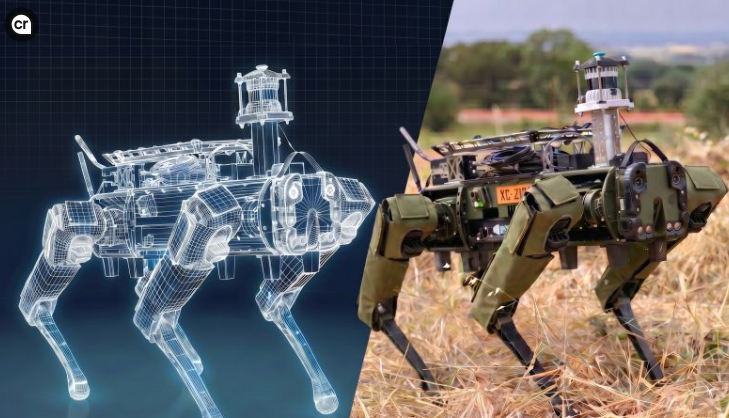
The battlefield is no longer just physical. It is simulated, modeled, predicted—before a single shot is fired. At the center of this transformation stands one of the most hyped and misunderstood technologies in modern defence: the digital twin.
In theory, a digital twin is simple. It is a virtual replica of a real-world system—an aircraft, a battlefield, an entire logistics chain—that mirrors reality and predicts future behavior in real time. But in practice, digital twins are not just models; they are decision-making engines. They promise commanders something militaries have chased for centuries: foresight.
And that’s where the problem starts.
Because in defence, prediction is not enough. It must be trusted.
Across Europe, a growing ecosystem—led by initiatives such as the European Defence Agency’s CapTech Simulation Technologies and the Explore Defence Digital Twins (EDDI) study—is racing to integrate digital twins into every domain of operations: air, land, sea, space, and cyber. These systems can simulate missions, optimize logistics, and support AI-driven decision-making with unprecedented speed and scale.
But here is the uncomfortable truth: building digital twins is no longer the hardest part.
Believing them is.
The defence community is grappling with a fundamental paradox. Digital twins are designed to reduce uncertainty—but they introduce a new kind of uncertainty altogether. What happens when a model is wrong? When a simulation drifts? When data is outdated, corrupted, or intentionally manipulated?
In civilian industries, these risks translate into financial loss. In defence, they translate into mission failure—or worse.
Take validation. A digital twin must replicate reality within a defined margin of accuracy; otherwise, it becomes a sophisticated guess. Yet military environments are dynamic, unpredictable, and often classified. The data feeding these systems is incomplete, fragmented, and sometimes unreliable. Verification frameworks are still evolving, and many defence programs lack standardized processes to test whether digital twins can be trusted in operational scenarios.
Certification is even more complex. Unlike physical equipment, which can be tested and certified through established procedures, a digital twin is a living system. It evolves with data, integrates artificial intelligence, and interacts with other systems in real time. Traditional certification models struggle to keep up.
And then there is the issue of standardisation—or the lack of it.
European defence stakeholders widely acknowledge that digital twins must be interoperable across systems, countries, and domains. Without standards, each twin becomes an isolated universe—powerful, but disconnected. The consequence is fragmentation: dozens of high-fidelity models that cannot communicate, share insights, or operate together in coalition environments.
The risk? A digital battlefield where everyone sees something different.
This is why current initiatives place enormous emphasis not just on technology, but on governance. Standards-based approaches are seen as essential to ensure interoperability, security, and lifecycle integration across defence systems. The challenge is not theoretical—it’s structural. Without agreed frameworks, digital twins will remain experimental rather than operational.
Yet the pressure to adopt them is intensifying.
Digital twins are not a luxury—they are becoming a necessity. They enable faster decision-making, realistic training, predictive maintenance, and real-time operational insights. They can simulate “what-if” scenarios without risking lives or equipment. They compress time, turning weeks of planning into minutes of computation.
In a world of rapidly evolving threats, that advantage is hard to ignore.
But speed without trust is dangerous.
The future of defence will not be decided by who builds the most advanced simulations, but by who can certify, validate, and standardise them. The winners will not just deploy digital twins—they will convince commanders, policymakers, and soldiers that these digital reflections are reliable enough to act upon.
Because ultimately, a simulation is only as strong as the confidence placed in it.
And in warfare, confidence is everything.