The Real Weapon Isn’t Propaganda. It’s Legitimacy.
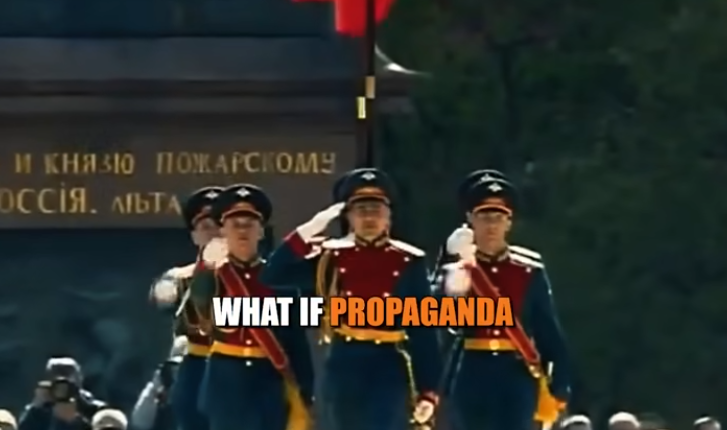
When we talk about propaganda, we tend to imagine lies.
Fabricated stories. Distorted facts. Manufactured outrage. The assumption is simple: propaganda works by making people believe things that aren't true.
But a new peer-reviewed study published in Military Psychology suggests something far more important may be happening.
The most significant effect of propaganda may not be convincing people to hate an enemy.
It may be convincing them that a war is morally justified.
Researchers surveyed 1,060 Russian prisoners of war captured during Russia's invasion of Ukraine. The results were striking.
Nearly 77% endorsed at least one Kremlin propaganda narrative to some degree. More than 68% viewed Russia's war against Ukraine as legitimate, necessary, or justified. Almost 43% dehumanized Ukrainians on a psychological measurement scale.
At first glance, those numbers seem to tell a familiar story: propaganda creates hatred, hatred fuels violence.
But the deeper analysis revealed something unexpected.
The researchers examined three potential psychological mechanisms linking propaganda exposure to wartime behavior:
- Identification with the concept of the "Russian World"
- Dehumanization of Ukrainians
- Belief that the war itself was legitimate
Their goal was to understand which factor most influenced two critical outcomes: voluntary surrender and willingness to return to combat.
The answer was not what many would expect.
After controlling for variables including age, education, ethnicity, religion, and volunteer status, only one factor remained statistically significant.
Not identity.
Not dehumanization.
Legitimacy.
The belief that the war was justified.
The finding challenges a popular assumption about modern information warfare. We often focus on inflammatory rhetoric, hostile stereotypes, and disinformation campaigns aimed at demonizing opponents. These undoubtedly matter.
But this research suggests hatred alone may not be what keeps people fighting.
People can despise an enemy and still question a war.
What appears far more powerful is the conviction that continuing the conflict is morally right.
That distinction matters because wars are rarely sustained by emotion alone. Anger may mobilize. Fear may motivate. But legitimacy provides endurance.
A soldier who believes a war is justified can tolerate hardship, sacrifice, uncertainty, and even catastrophic losses. The conflict becomes integrated into a broader moral narrative. It ceases to be merely an event and becomes a cause.
This has implications far beyond the battlefield.
Governments, political movements, and military organizations have long understood that maintaining public support is not only about shaping perceptions of the enemy. It is equally about shaping perceptions of the mission.
History repeatedly demonstrates this principle. Conflicts become difficult to sustain not necessarily when casualties rise, but when the justification for those casualties erodes. Once people stop believing in the cause, the machinery of war begins to lose momentum.
The study comes with important limitations.
The respondents were prisoners of war, not a representative sample of all Russian servicemen. Participation was voluntary. Captivity introduces obvious psychological and social pressures. Moreover, the research is cross-sectional, meaning it identifies correlations rather than proving causation.
The authors themselves acknowledge these constraints.
Yet the broader insight remains compelling.
If legitimacy is the key psychological bridge between propaganda and military behavior, then efforts to counter propaganda may need to be rethought.
Fact-checking is valuable.
Exposing falsehoods is essential.
But neither necessarily challenges the underlying story that makes a conflict appear justified in the first place.
Winning individual arguments is not always the same as undermining the narrative framework that sustains them.
The effectiveness of propaganda may therefore depend less on persuading people that every claim is true and more on persuading them that the larger mission is righteous.
That is a much deeper form of influence.
And perhaps the most uncomfortable lesson from this study is that wars are not sustained primarily by lies.
They are sustained by belief.
Not belief in every detail.
Belief in the story.
And once a war is perceived as legitimate, facts alone can struggle to compete with faith.