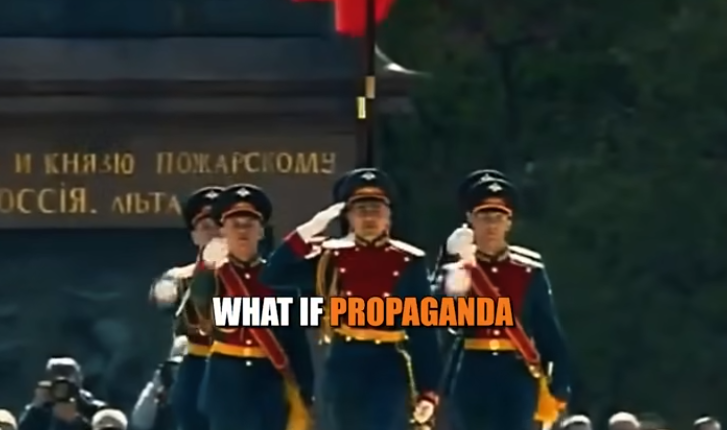
Label the Lie? Europe’s Next Information War May Be Fought With Warning Labels

Not long ago, information warfare sounded like something reserved for spy novels and Cold War thrillers.
Today, it is a mainstream security concern.
Elections, social media platforms, online communities, and public debates have become contested terrain where influence operations compete for attention, shape narratives, and attempt to amplify division. Across Europe and North America, governments, intelligence agencies, researchers, and technology companies have spent years investigating how coordinated online networks can spread disinformation, manipulate public discourse, and exploit political polarization.
Now a provocative idea is gaining traction:
What if suspicious content carried a warning label, much like tobacco products, financial advertisements, or manipulated media?
The proposal is simple in theory but explosive in practice.
When investigators identify content originating from, coordinated by, or artificially amplified through foreign influence networks, platforms could automatically attach transparency labels informing users about its source or distribution patterns.
Supporters argue that such a system would not censor speech.
Instead, it would provide context.
A post would remain visible. Users could still engage with it. But audiences would gain additional information about how the content reached them and whether coordinated influence operations may have boosted its visibility.
In an age when algorithms increasingly determine what billions of people see, transparency itself becomes a form of defense.
The New Battlefield Is Your News Feed
Military strategists often discuss air superiority, naval dominance, and cyber capabilities.
Yet one of the most consequential battlegrounds of the twenty-first century may be the information space.
Narratives move faster than armies.
Viral content can influence public opinion across entire countries within hours.
False claims can reach millions before fact-checkers respond.
Foreign influence operations exploit these realities.
Their objective is not necessarily to convince everyone of a particular narrative. More often, it is to create confusion, increase distrust, deepen social divisions, and undermine confidence in democratic institutions.
The most effective campaigns rarely push obvious propaganda.
They amplify existing grievances.
They exploit polarization that already exists.
They make societies fight themselves.
Transparency, Not Censorship
The central challenge is balancing security and democracy.
Any system that labels content inevitably raises concerns about political bias, overreach, and freedom of expression.
Who decides what qualifies as coordinated manipulation?
What evidence threshold is required?
How are mistakes corrected?
These questions are critical.
A transparency framework would need independent oversight, clear standards, public accountability, appeal mechanisms, and robust evidence requirements.
Without those safeguards, a tool intended to protect democracy could itself become controversial.
Supporters argue that labels should focus on behavior rather than viewpoints.
The issue is not whether content is conservative, liberal, nationalist, progressive, or anti-establishment.
The issue is whether distribution patterns show evidence of coordinated inauthentic amplification, bot activity, or state-directed influence operations.
That distinction matters.
Democratic debate depends on protecting legitimate political disagreement.
It also depends on exposing manipulation.
The Coming Transparency Arms Race
Technology rarely stands still.
As platforms develop better methods for detecting coordinated influence campaigns, those conducting such campaigns will adapt.
The result may be a new transparency arms race.
Artificial intelligence can generate persuasive content at unprecedented scale.
Automated networks can amplify narratives almost instantly.
Deepfakes are becoming increasingly realistic.
Authentication and attribution technologies are therefore becoming just as important as content moderation.
The future may not belong to the platforms that remove the most content.
It may belong to those that provide the most credible context.
A Debate That Cannot Be Ignored
Perhaps the most important aspect of this discussion is not the label itself.
It is the recognition that information integrity has become a national security issue.
Societies depend on trusted information.
Markets depend on trusted information.
Democracies depend on trusted information.
When citizens lose confidence in what they read, watch, or share, the foundation of public discourse begins to weaken.
Whether content-warning systems become the answer remains uncertain.
But one reality is increasingly difficult to ignore:
The fight for public trust is no longer happening only in parliaments, courts, or newsrooms.
It is happening every time someone opens a social media app.
And that may be the most important frontline of all.