The Question Facing Russia’s Opposition: Can You Challenge the Kremlin Without Supporting Ukraine?
Russia's opposition movements have presented themselves as the primary alternative to the Kremlin's political system. Yet the full-scale war against Ukraine has transformed the debate about what opposition actually means and how it should be measured.
The question is becoming increasingly difficult to avoid.
Is opposing Vladimir Putin enough, or must opposition to the Kremlin also include opposition to the broader political and historical structures that made his rule possible?
The issue has divided analysts, policymakers, activists, and opposition figures alike.
Before the invasion of Ukraine, many Russian opposition groups focused on elections, anti-corruption campaigns, civil society initiatives, and criticism of government policies. Their primary objective was political reform inside Russia. The assumption was that democratic institutions, if restored, would eventually limit authoritarian tendencies and bring Russia closer to European political norms.
The war fundamentally changed that calculation.
The conflict forced a reassessment not only of Russia's government but also of the country's political trajectory over decades and, in some interpretations, centuries.
Critics argue that too much attention remains focused on Vladimir Putin as an individual rather than on the wider system that enabled him. They point to long-standing traditions of centralized authority, imperial ambition, and weak democratic institutions that predate the current leadership.
From this perspective, replacing one political leader without addressing deeper structural issues risks producing only temporary change.
Others reject that interpretation.
They argue that political systems evolve through gradual reform rather than historical reckoning. According to this view, democratic opposition movements should be judged by their ability to build institutions, promote political freedoms, and create alternatives to authoritarian governance rather than by their position on broader historical narratives.
The disagreement has become particularly visible in discussions surrounding Ukraine.
The war has introduced a new benchmark by which some observers evaluate Russian opposition groups. Critics increasingly ask whether opposition movements can claim credibility while remaining distant from the country that is actively resisting Russian military aggression.
Supporters of this argument contend that Ukraine has become the central battlefield in the struggle against authoritarianism in the region. They see support for Ukraine as evidence of genuine opposition to the Kremlin's policies and objectives.
Others caution against reducing political legitimacy to a single test.
They argue that opposition movements often operate under severe restrictions, exile conditions, limited resources, and significant security risks. Their role, they suggest, is not necessarily military or operational but political and civic.
Still, the war has blurred traditional boundaries.
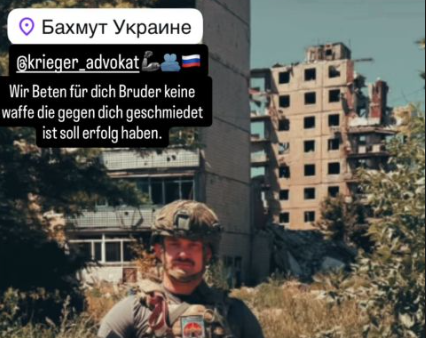
Some Russian citizens have chosen a more direct form of resistance, publicly supporting Ukraine or joining military formations fighting against Russian forces. Their actions have attracted significant attention because they represent a highly visible rejection of the Russian state and its policies.
Supporters describe these individuals as symbols of active resistance.
Critics respond that armed participation should not become the sole measure of political commitment or moral legitimacy.
The broader reality is that the war has changed expectations.
Governments, media organizations, and international audiences increasingly look beyond statements and declarations when evaluating political actors. They seek evidence of impact, influence, and practical contribution.
This applies not only to opposition movements but to institutions across society.
As a result, Russia's opposition faces a challenge that extends far beyond electoral politics.
It must convince observers that it offers more than a critique of the current leadership. It must articulate a convincing vision of Russia's future, explain how that future differs from the present, and demonstrate how lasting political change could be achieved.
Whether that involves supporting Ukraine, building alternative institutions, mobilizing civil society, or combining all three approaches remains the subject of intense debate.
What is clear is that the war has transformed the standards by which opposition movements are judged.
The conversation is no longer limited to who opposes the Kremlin.
The emerging question is far more demanding:
What kind of Russia comes after it?
.png)