The Kremlin's Hidden Constraint: Not Peace, but Manpower
Peace talks dominate headlines. Diplomats debate proposals, analysts speculate about negotiations, and politicians discuss possible endgames.
But the most important question in Moscow today may be far more basic.
Does Russia have enough people to sustain its war and simultaneously prepare for the next phase of it?
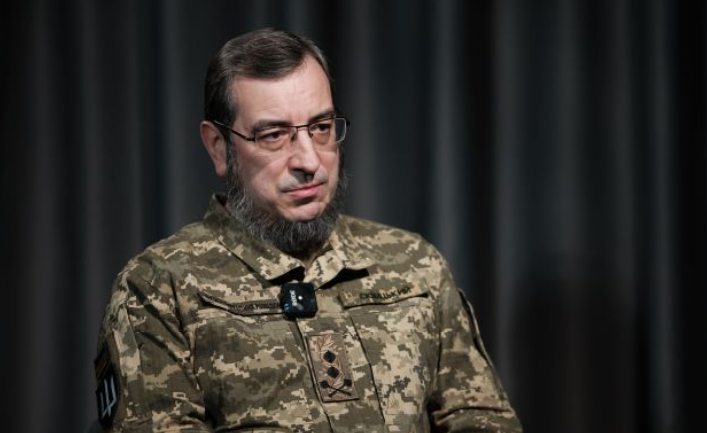
According to recent assessments by Ukraine's military intelligence agency (HUR), there are no signs that the Kremlin is preparing to end military operations by the end of 2026. Major General Vadym Skibitskyi argues that Russia's General Staff remains focused on achieving military objectives, including the complete capture of the Donetsk region.
That assessment is important.
Yet perhaps even more important is the arithmetic behind it.
Wars are ultimately fought with weapons, technology, logistics, industry and political will. But beneath all those factors lies a simpler reality: combat power begins with people.
The numbers cited by HUR illustrate the challenge.
Russia reportedly lost around 39,000 personnel in June while recruiting approximately 36,000 new contract soldiers. In July, losses reportedly exceeded 40,000 while recruitment reached roughly 39,000.
These figures should not be interpreted as evidence that Russia is running out of soldiers. There is little indication of that.
The Russian military still fields an enormous force. According to HUR, roughly 670,000 troops are currently involved in combat operations against Ukraine, supported by an operational reserve estimated at 65,000 personnel.
That is a formidable military instrument.
But force size and force generation are not the same thing.
The critical issue is whether Russia can do more than replace losses.
Replacing casualties allows offensive operations to continue.
Building new formations is something entirely different.
This distinction may define the strategic choices facing Moscow over the next year.
A military organization can accept heavy losses if it can replenish them. It can continue attacks, maintain pressure and preserve the front line.
However, creating additional divisions, expanding strike groups and generating fresh offensive capacity requires manpower beyond replacement needs.
That is where the challenge becomes more difficult.
According to Skibitskyi, current recruitment levels may not be sufficient to transform existing brigades into larger formations or create substantial new combat structures. He also argues that Russia has struggled to recruit personnel for some emerging capabilities, including its Unmanned Systems Forces.
This matters because Russia is also learning.
Like Ukraine, the Russian military has spent years adapting to a battlefield dominated by drones, precision strikes, electronic warfare and persistent surveillance. Moscow continues to search for ways to regain operational maneuver and break the positional nature of the conflict.
Learning, however, requires resources.
The army that wants to innovate also needs people.
Technology can multiply combat effectiveness, but it rarely eliminates the need for manpower entirely.
This brings attention to a date that may become strategically significant: September 20, when Russia holds parliamentary elections.
HUR does not claim that mobilization is inevitable. But intelligence officials suggest that the period after the elections could offer Moscow greater political flexibility if additional manpower becomes necessary.
Should a new mobilization occur, Russia could potentially generate a stronger offensive grouping by early 2027.
Without such measures, the situation looks different.
Russia may be able to sustain pressure.
It may be able to continue attritional warfare.
It may be able to keep replacing losses.
But expanding combat power while simultaneously absorbing battlefield attrition becomes considerably harder.
For military planners, this is the more revealing indicator.
Negotiations are ultimately political.
Force generation is measurable.
Political intentions can change rapidly. Recruitment trends, casualty replacement rates and force structure development often provide a clearer view of what a military organization can realistically achieve.
This is also why NATO planners watch manpower as closely as they watch tanks, missiles and drones.
The relevant question is not simply how many soldiers Russia possesses today.
The more important question is how quickly Russia can transform recruitment into deployable combat power while maintaining ongoing operations.
That answer will heavily influence what military options are available in 2027.
Peace remains possible.
War remains possible.
But before either outcome becomes reality, there is a more fundamental constraint.
Every strategy eventually collides with arithmetic.
And in modern warfare, manpower is often the number that matters most.